---
title: Northern Lights This Weekend: Will Clouds Block the View? | WeatherBug | WeatherBug
description: Aurora could reach parts of the northern United States Saturday night, but the cloud forecast may decide who actually sees it.
canonical: https://www.weatherbug.com/news/Northern-Lights-This-Weekend:-Will-Clouds-Block-the-View
og:title: Northern Lights This Weekend: Will Clouds Block the View? | WeatherBug | WeatherBug
og:description: Aurora could reach parts of the northern United States Saturday night, but the cloud forecast may decide who actually sees it.
og:url: https://www.weatherbug.com/news/Northern-Lights-This-Weekend:-Will-Clouds-Block-the-View
og:site_name: WeatherBug
og:locale: en_US
og:image: https://cms-assets-con.cdn.weatherbug.net/assets/contentitems/41/41a05359-09bd-4816-8216-ddd712da1ef0/52e0ce98-d40a-4283-82d1-d0fe816ebf4b/af4275a1-5f0f-4d61-ac3d-baee29d12c6f.png
og:image:width: 800
og:image:height: 600
og:image:alt: Northern Lights This Weekend: Will Clouds Block the View?
og:type: article
article:published_time: 2026-10-10T13:39:39Z
article:modified_time: 2026-10-10T13:39:39Z
article:author: WeatherBug Meteorologist, Madison Ryke
twitter:card: summary_large_image
twitter:title: Northern Lights This Weekend: Will Clouds Block the View? | WeatherBug
twitter:description: Aurora could reach parts of the northern United States Saturday night, but the cloud forecast may decide who actually sees it.
twitter:image: https://cms-assets-con.cdn.weatherbug.net/assets/contentitems/41/41a05359-09bd-4816-8216-ddd712da1ef0/52e0ce98-d40a-4283-82d1-d0fe816ebf4b/af4275a1-5f0f-4d61-ac3d-baee29d12c6f.png
---
[](/weather-forecast/now)
[Back to forecast](/weather-forecast/now)
# Northern Lights This Weekend: Will Clouds Block the View?
October 10, 2026 at 09:39 AM EDT
WeatherBug Meteorologist, Madison Ryke
Two forecasts have to cooperate for you to see the northern lights Saturday night.
First, activity from the Sun has to be strong enough to push the aurora farther south. Then, the weather over your backyard has to keep the clouds out of the way.
Right now, both may line up for parts of the northern Plains and Upper Midwest. Other areas could have enough geomagnetic activity but too many clouds to enjoy the show.
## When Could the Northern Lights Be Visible?
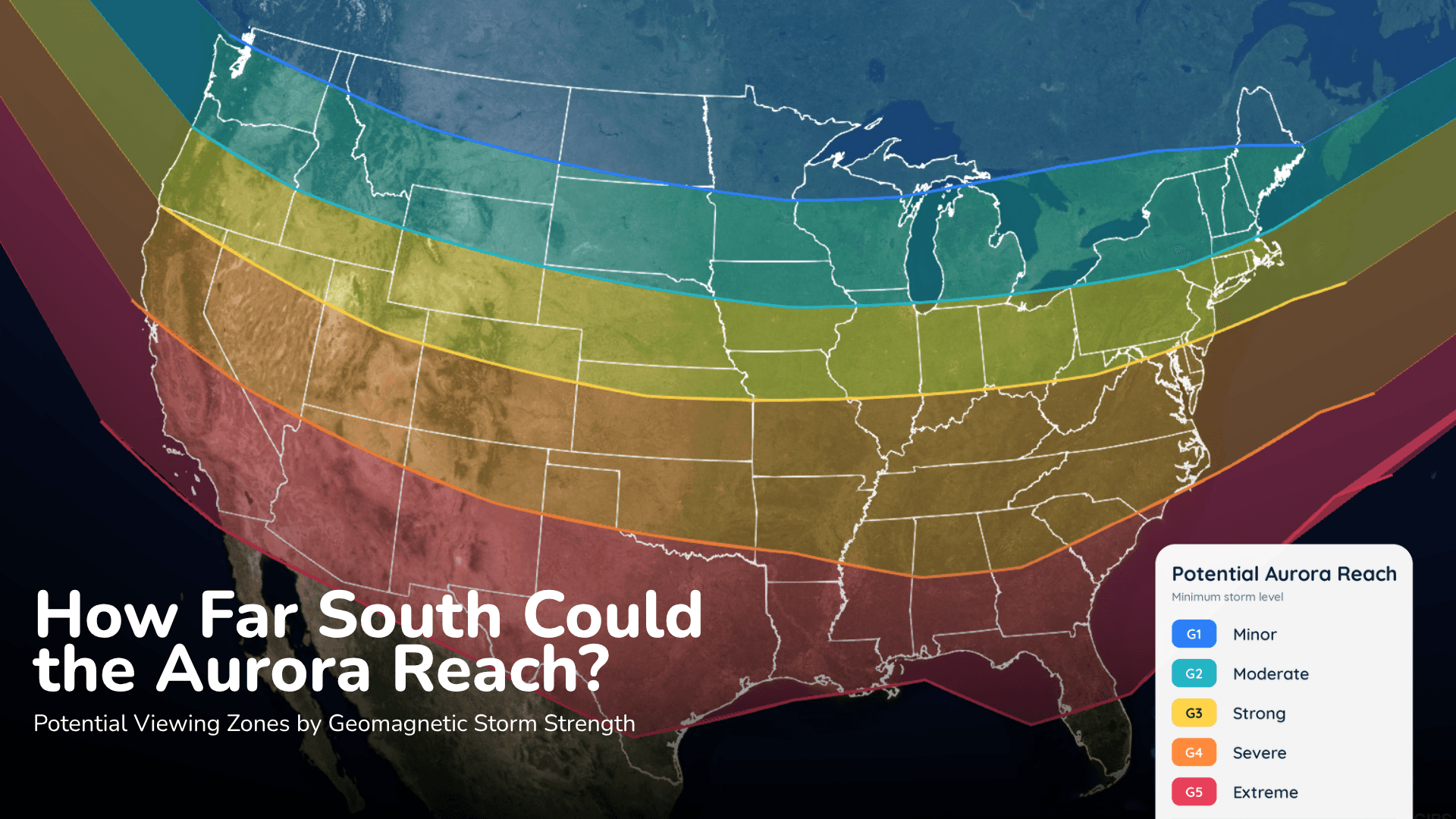
NOAA’s current forecast calls for a period of G1, or minor, geomagnetic storm conditions between roughly 11 p.m. Saturday and 2 a.m. Sunday Eastern time.
That could make the aurora visible across parts of the northern United States, particularly from the Dakotas through the Upper Midwest and into northern New England.
However, that window is not set in stone. Several coronal mass ejections, or CMEs, have been traveling toward Earth, and their arrival times and interactions are difficult to predict precisely.
The northern lights may appear earlier, later or not as strongly as forecast. Even under G1 conditions, visibility this far south is never guaranteed.
## Where Could the Weather Cooperate?
**The best overall viewing opportunities may develop where stronger aurora potential overlaps with clearer skies.**
**Dakotas and Upper Midwest:** This region may have one of the better combinations of aurora potential and relatively clear skies. Parts of the Dakotas, Minnesota and Wisconsin could offer some of Saturday night’s best viewing conditions.
**Northern Great Lakes:** Skies look generally favorable across northern Wisconsin and Michigan’s Upper Peninsula, although clouds may vary near the lakes. This remains one of the stronger regions to watch.
**Northern New York and New England:** Viewing conditions look more mixed. Some locations may find clear breaks, while high or passing clouds could make a faint aurora harder to spot.
**Pacific Northwest and Northern Rockies:** Widespread clouds and possible showers could create problems. The aurora may reach portions of this region, but the weather may not cooperate.
**Central Midwest and Ohio Valley:** Some locations could have relatively clear skies, but the aurora itself is less certain this far south. If it appears, it may be faint and low on the northern horizon.
**Right now, the Upper Midwest looks like the sweet spot. Areas from the Dakotas through Minnesota, Wisconsin and Michigan’s Upper Peninsula may have both a reasonable aurora chance and fewer clouds.**
**Cloud cover can change quickly. Before heading somewhere dark, check the latest hourly conditions for your location in the [WeatherBug app](https://apps.apple.com/us/app/weatherbug-weather-forecast/id281940292).**
## Could the Northern Lights Reach Farther South?
Possibly, but expectations should stay grounded.
If the geomagnetic storm becomes stronger than forecast, faint aurora could reach farther south into portions of Iowa, Nebraska, Illinois, Indiana, Ohio, Pennsylvania or nearby areas.
At those latitudes, the display may look more like a faint glow low on the northern horizon than the bright, dancing curtains seen in photos from Alaska. Your phone may also capture color that your eyes cannot see.
A clear sky does not automatically mean you will see the northern lights. It only means the weather is giving you a chance.
## How to Improve Your Chances
If you plan to look Saturday night:
* Find a dark area away from streetlights and city glow.
* Choose a location with a clear view toward the northern horizon.
* Give your eyes at least 15 minutes to adjust to the darkness.
* Use Night Mode or a longer exposure on your phone.
* Keep the phone steady against a tripod, railing or other solid surface.
* Check both the latest aurora forecast and your hourly cloud cover before leaving.
The NOAA Space Weather Prediction Center also provides a [30-minute aurora forecast](https://www.swpc.noaa.gov/products/aurora-30-minute-forecast), which becomes more useful as the potential viewing window approaches.
## Why the Forecast Can Change So Quickly
Scientists can track a CME as it travels away from the Sun, but one crucial detail remains difficult to measure until it reaches Earth: the direction of its magnetic field.
If that magnetic field connects favorably with Earth’s, the geomagnetic storm and aurora can become stronger. If it does not, an event that looked promising may underperform.
Timing is another complication. A CME can arrive hours earlier or later than forecast, and in this case, multiple eruptions may interact before reaching Earth.
That is why the final viewing outlook may come down to real-time information Saturday night.
The Sun may start the show, but the weather above your backyard gets the final say.
The regional cloud outlook is based on Friday forecasts showing clearer conditions across much of the northern Plains and Upper Great Lakes, with more cloud and precipitation concerns in the Northwest and northern Rockies. Conditions in the Northeast appear more mixed.
We use technologies, such as cookies, to analyze your use (i.e., pages visited), to customize content, for our internal analytics purposes and for security and other purposes. By continuing to use this website, you agree to this usage. Please review our [privacy policy](/legal/privacy) for more details as well as for information on how to contact us to object to these activities. [Ad Choices](/legal/privacy#digitaladvertisingandyourchoices)
```json
{"@context":"https://schema.org","@type":"NewsArticle","mainEntityOfPage":{"@type":"WebPage","@id":"https://www.weatherbug.com/news/Northern-Lights-This-Weekend:-Will-Clouds-Block-the-View"},"headline":"Northern Lights This Weekend: Will Clouds Block the View?","description":"Aurora could reach parts of the northern United States Saturday night, but the cloud forecast may decide who actually sees it.","image":["https://cms-assets-con.cdn.weatherbug.net/assets/contentitems/41/41a05359-09bd-4816-8216-ddd712da1ef0/52e0ce98-d40a-4283-82d1-d0fe816ebf4b/af4275a1-5f0f-4d61-ac3d-baee29d12c6f.png"],"datePublished":"2026-10-10T13:39:39Z","dateModified":"2026-10-10T13:39:39Z","dateCreated":"2026-10-10T11:00:34Z","articleSection":"Weather News","keywords":"","articleBody":"Two forecasts have to cooperate for you to see the northern lights Saturday night.
First, activity from the Sun has to be strong enough to push the aurora farther south. Then, the weather over your backyard has to keep the clouds out of the way.
Right now, both may line up for parts of the northern Plains and Upper Midwest. Other areas could have enough geomagnetic activity but too many clouds to enjoy the show.
When Could the Northern Lights Be Visible?
NOAA’s current forecast calls for a period of G1, or minor, geomagnetic storm conditions between roughly 11 p.m. Saturday and 2 a.m. Sunday Eastern time.
That could make the aurora visible across parts of the northern United States, particularly from the Dakotas through the Upper Midwest and into northern New England.
However, that window is not set in stone. Several coronal mass ejections, or CMEs, have been traveling toward Earth, and their arrival times and interactions are difficult to predict precisely.
The northern lights may appear earlier, later or not as strongly as forecast. Even under G1 conditions, visibility this far south is never guaranteed.
Where Could the Weather Cooperate?
The best overall viewing opportunities may develop where stronger aurora potential overlaps with clearer skies.
Dakotas and Upper Midwest: This region may have one of the better combinations of aurora potential and relatively clear skies. Parts of the Dakotas, Minnesota and Wisconsin could offer some of Saturday night’s best viewing conditions.
Northern Great Lakes: Skies look generally favorable across northern Wisconsin and Michigan’s Upper Peninsula, although clouds may vary near the lakes. This remains one of the stronger regions to watch.
Northern New York and New England: Viewing conditions look more mixed. Some locations may find clear breaks, while high or passing clouds could make a faint aurora harder to spot.
Pacific Northwest and Northern Rockies: Widespread clouds and possible showers could create problems. The aurora may reach portions of this region, but the weather may not cooperate.
Central Midwest and Ohio Valley: Some locations could have relatively clear skies, but the aurora itself is less certain this far south. If it appears, it may be faint and low on the northern horizon.
Right now, the Upper Midwest looks like the sweet spot. Areas from the Dakotas through Minnesota, Wisconsin and Michigan’s Upper Peninsula may have both a reasonable aurora chance and fewer clouds.
Cloud cover can change quickly. Before heading somewhere dark, check the latest hourly conditions for your location in the WeatherBug app.
Could the Northern Lights Reach Farther South?
Possibly, but expectations should stay grounded.
If the geomagnetic storm becomes stronger than forecast, faint aurora could reach farther south into portions of Iowa, Nebraska, Illinois, Indiana, Ohio, Pennsylvania or nearby areas.
At those latitudes, the display may look more like a faint glow low on the northern horizon than the bright, dancing curtains seen in photos from Alaska. Your phone may also capture color that your eyes cannot see.
A clear sky does not automatically mean you will see the northern lights. It only means the weather is giving you a chance.
How to Improve Your Chances
If you plan to look Saturday night:
Find a dark area away from streetlights and city glow.
Choose a location with a clear view toward the northern horizon.
Give your eyes at least 15 minutes to adjust to the darkness.
Use Night Mode or a longer exposure on your phone.
Keep the phone steady against a tripod, railing or other solid surface.
Check both the latest aurora forecast and your hourly cloud cover before leaving.
The NOAA Space Weather Prediction Center also provides a 30-minute aurora forecast, which becomes more useful as the potential viewing window approaches.
Why the Forecast Can Change So Quickly
Scientists can track a CME as it travels away from the Sun, but one crucial detail remains difficult to measure until it reaches Earth: the direction of its magnetic field.
If that magnetic field connects favorably with Earth’s, the geomagnetic storm and aurora can become stronger. If it does not, an event that looked promising may underperform.
Timing is another complication. A CME can arrive hours earlier or later than forecast, and in this case, multiple eruptions may interact before reaching Earth.
That is why the final viewing outlook may come down to real-time information Saturday night.
The Sun may start the show, but the weather above your backyard gets the final say.
The regional cloud outlook is based on Friday forecasts showing clearer conditions across much of the northern Plains and Upper Great Lakes, with more cloud and precipitation concerns in the Northwest and northern Rockies. Conditions in the Northeast appear more mixed.
","author":{"@type":"Person","name":"WeatherBug Meteorologist, Madison Ryke","url":"https://www.weatherbug.com"},"publisher":{"@type":"Organization","name":"WeatherBug","logo":{"@type":"ImageObject","url":"https://www.weatherbug.com/images/sharing/f1ff28ba-6f06-4745-a782-011a20397e16.png"}}}
{"@context":"https://schema.org","@type":"WebSite","mainEntityOfPage":{"@type":"WebPage","@id":"https://www.weatherbug.com/news/Northern-Lights-This-Weekend%3A-Will-Clouds-Block-the-View","relatedLink":"https://www.weatherbug.com/news/Northern-Lights-This-Weekend%3A-Will-Clouds-Block-the-View"},"name":"WeatherBug","url":"https://www.weatherbug.com/news/Northern-Lights-This-Weekend%3A-Will-Clouds-Block-the-View","headline":"Northern Lights This Weekend: Will Clouds Block the View?","description":"Aurora could reach parts of the northern United States Saturday night, but the cloud forecast may decide who actually sees it.","dateModified":"2026-10-10T13:39:39Z","publisher":{"@type":"Organization","name":"WeatherBug","url":"https://www.weatherbug.com","sameAs":["https://www.facebook.com/WeatherBug","https://instagram.com/WeatherBug","https://www.linkedin.com/company/weatherbug","https://www.pinterest.com/weatherbug","https://twitter.com/WeatherBug","https://www.youtube.com/user/WeatherBugVideo"],"logo":{"@type":"ImageObject","url":"https://www.weatherbug.com/images/logos/weatherbug_logo_620x447.png"}},"author":{"@type":"Organization","name":"WeatherBug","url":"https://www.weatherbug.com","sameAs":["https://www.facebook.com/WeatherBug","https://instagram.com/WeatherBug","https://www.linkedin.com/company/weatherbug","https://www.pinterest.com/weatherbug","https://twitter.com/WeatherBug","https://www.youtube.com/user/WeatherBugVideo"],"logo":{"@type":"ImageObject","url":"https://www.weatherbug.com/images/logos/weatherbug_logo_620x447.png"}}}
{"@context":"https://schema.org","@type":"Organization","name":"WeatherBug","logo":"https://www.weatherbug.com/images/logos/weatherbug_logo_620x447.png","url":"https://www.weatherbug.com","sameAs":["https://www.facebook.com/WeatherBug","https://instagram.com/WeatherBug","https://www.linkedin.com/company/weatherbug","https://www.pinterest.com/weatherbug","https://twitter.com/WeatherBug","https://www.youtube.com/user/WeatherBugVideo"]}
```