---
title: Sunscreen: Tips To Wear It Well | WeatherBug | WeatherBug
description: Before you head outdoors, follow some of these tips to maximize your sunscreen’s protection.
canonical: https://www.weatherbug.com/news/Sunscreen-Tips-To-Wear-It-Well
og:title: Sunscreen: Tips To Wear It Well | WeatherBug | WeatherBug
og:description: Before you head outdoors, follow some of these tips to maximize your sunscreen’s protection.
og:url: https://www.weatherbug.com/news/Sunscreen-Tips-To-Wear-It-Well
og:site_name: WeatherBug
og:locale: en_US
og:image: https://cms-assets-con.cdn.weatherbug.net/assets/contentitems/e8/e816be3c-5b58-4ac5-9d33-f4d2e5900990/52e0ce98-d40a-4283-82d1-d0fe816ebf4b/1636f31d-4c5e-4007-abd6-0ffbef7872c0.jpg
og:image:width: 800
og:image:height: 600
og:image:alt: Female hands with sun protection cream on sky background. (Africa Studio via Shutterstock)
og:type: article
article:published_time: 2025-08-08T16:38:33Z
article:modified_time: 2025-08-08T16:38:33Z
article:author: By WeatherBug Meteorologist, Alyssa Robinette
article:tag: map
article:tag: maps
article:tag: summer
article:tag: sun
article:tag: sunscreen
twitter:card: summary_large_image
twitter:title: Sunscreen: Tips To Wear It Well | WeatherBug
twitter:description: Before you head outdoors, follow some of these tips to maximize your sunscreen’s protection.
twitter:image: https://cms-assets-con.cdn.weatherbug.net/assets/contentitems/e8/e816be3c-5b58-4ac5-9d33-f4d2e5900990/52e0ce98-d40a-4283-82d1-d0fe816ebf4b/1636f31d-4c5e-4007-abd6-0ffbef7872c0.jpg
---
[](/)
[Back to forecast](/)
# Sunscreen: Tips To Wear It Well
August 8, 2025 at 12:38 PM EDT
By WeatherBug Meteorologist, Alyssa Robinette
There are so many options to choose from when it comes to sunscreen, including lotions, sprays and gels. The type of sunscreen you choose is just as important as how you use it. So, before you head outdoors, follow some of these tips to maximize your sunscreen’s protection.
**Get UV-A and UV-B protection.** Always opt for sunscreen that provides both UV-A and UV-B protection. UV-B rays cause sunburns and skin damage, while UV-A rays increase your risk for skin cancer. Sunscreen that also contains zinc oxide or titanium oxide will help to block both UV-A and UV-B rays.
**Choose SPF 30 or higher.** Always make sure you use sunscreen with SPF, or Sun Protection Factor, 30 or higher. The SPF in your sunscreen absorbs and reflects the sun’s rays so they do not burn or damage your skin. No sunscreen provides 100 percent protection from the Sun, but a sunscreen with SPF 30 provides around 97 percent protection.
**Apply sunscreen early and liberally.** Your skin can take up to 30 minutes to absorb sunscreen. So, make sure you plan ahead and apply sunscreen 30 minutes before going outside. You should also not hold back on sunscreen. For sunscreen to do its job effectively, you should apply 1 ounce of sunscreen, or the size of a golf ball, to every part of your body exposed to the sun, including your ears, feet and back of the neck.
**Reapply sunscreen every two hours.** Forget all-day protection as sunscreen wears off after just a couple of hours. Make sure you lather on another golf-ball sized amount every two hours. However, you should reapply sunscreen every 60 to 90 minutes if:
* You use spray sunscreen as it washes off more easily.
* You are swimming or sweating. Water, snow and sand can intensify the sun’s rays and cause a greater burn.
**Check your sunscreen expiration date.** Sunscreen expires after 3 years and will become less effective. If you buy sunscreen that does not have an expiration date, write the date of purchase on the bottle.
**Wear sunscreen even on cloudy days.** UV rays can pass through clouds up to 80 percent of the time, so it is still possible to get sunburned or have skin damage when there is significant cloud cover.
**Two times the SPF does not mean two times the protection.** If you choose a sunscreen with a SPF higher than 30, all of the same rules still apply. You must apply sunscreen early, liberally and frequently. A sunscreen with a SPF 50 protects against 98 percent of the sun’s rays, while sunscreen with a SPF of 100 covers 99 percent.
**Don’t rely on sunscreen alone.** Unfortunately, sunscreen cannot completely prevent sunburns, blisters and skin cancer. You can give your skin some added protection by wearing:
* Lip balm with SPF 30 or higher
* A tightly woven hat with a wide brim.
* Wrap-around sunglasses with UV protection.
* A tightly woven, dark long-sleeved shirt or special sun-protective clothing.
You can also protect your skin by seeking shade from the sun from 10 a.m. to 4 p.m. That is usually when the sun’s harmful UV rays are strongest.
Source: MD Anderson Cancer Center, Advantage Dermatology, Mayo Clinic
**\------**
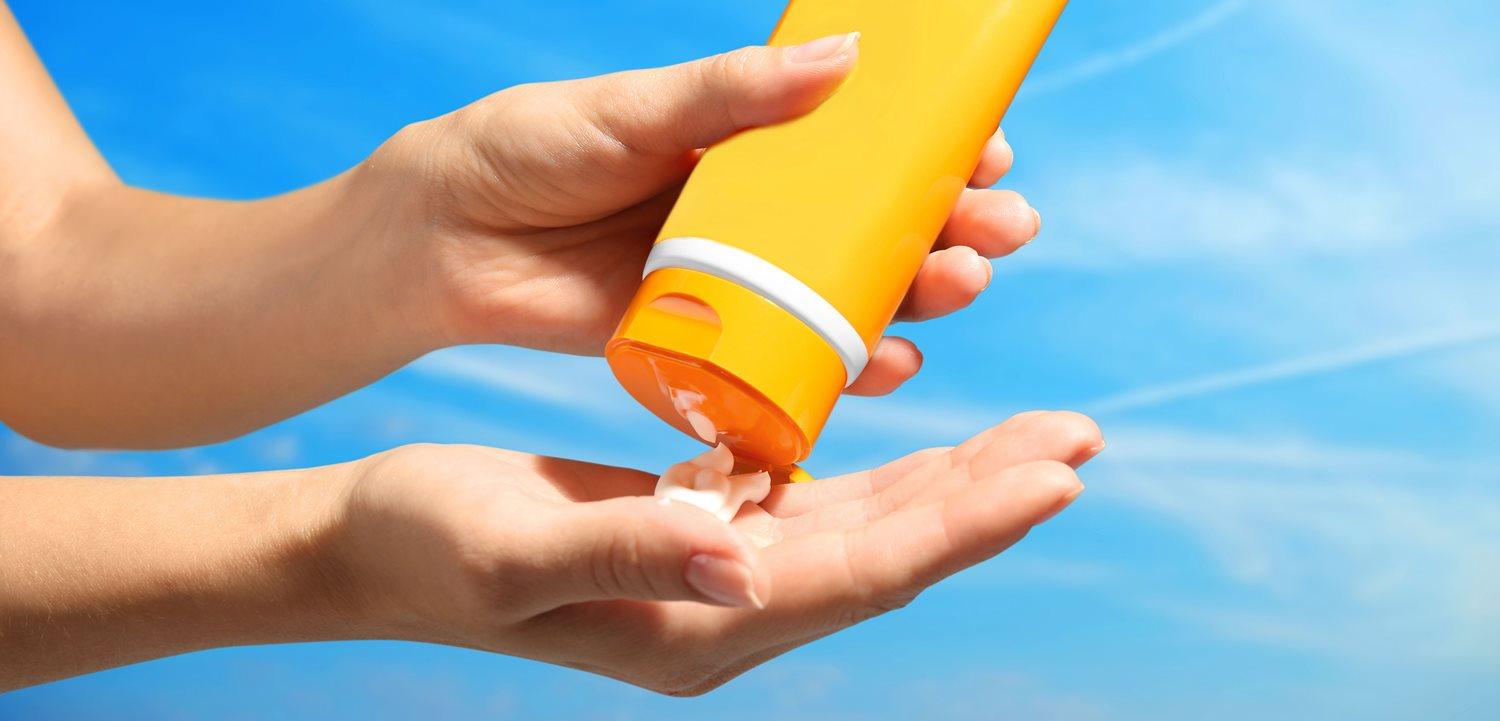
_Image: Female hands with sun protection cream on sky background. (Africa Studio via Shutterstock)_
We use technologies, such as cookies, to analyze your use (i.e., pages visited), to customize content, for our internal analytics purposes and for security and other purposes. By continuing to use this website, you agree to this usage. Please review our [privacy policy](/legal/privacy) for more details as well as for information on how to contact us to object to these activities. [Ad Choices](/legal/privacy#digitaladvertisingandyourchoices)
```json
{"@context":"https://schema.org","@type":"NewsArticle","mainEntityOfPage":{"@type":"WebPage","@id":"https://www.weatherbug.com/news/Sunscreen-Tips-To-Wear-It-Well"},"headline":"Sunscreen: Tips To Wear It Well","description":"Before you head outdoors, follow some of these tips to maximize your sunscreen’s protection.","image":["https://cms-assets-con.cdn.weatherbug.net/assets/contentitems/e8/e816be3c-5b58-4ac5-9d33-f4d2e5900990/52e0ce98-d40a-4283-82d1-d0fe816ebf4b/1636f31d-4c5e-4007-abd6-0ffbef7872c0.jpg"],"datePublished":"2025-08-08T16:38:33Z","dateModified":"2025-08-08T16:38:33Z","dateCreated":"2025-08-08T16:38:33Z","articleSection":"Weather News","keywords":"map,maps,summer,sun,sunscreen","articleBody":"There are so many options to choose from when it comes to sunscreen, including lotions, sprays and gels. The type of sunscreen you choose is just as important as how you use it. So, before you head outdoors, follow some of these tips to maximize your sunscreen’s protection.
\r\n
\r\nGet UV-A and UV-B protection. Always opt for sunscreen that provides both UV-A and UV-B protection. UV-B rays cause sunburns and skin damage, while UV-A rays increase your risk for skin cancer. Sunscreen that also contains zinc oxide or titanium oxide will help to block both UV-A and UV-B rays.
\r\n
\r\nChoose SPF 30 or higher. Always make sure you use sunscreen with SPF, or Sun Protection Factor, 30 or higher. The SPF in your sunscreen absorbs and reflects the sun’s rays so they do not burn or damage your skin. No sunscreen provides 100 percent protection from the Sun, but a sunscreen with SPF 30 provides around 97 percent protection.
\r\n
\r\nApply sunscreen early and liberally. Your skin can take up to 30 minutes to absorb sunscreen. So, make sure you plan ahead and apply sunscreen 30 minutes before going outside. You should also not hold back on sunscreen. For sunscreen to do its job effectively, you should apply 1 ounce of sunscreen, or the size of a golf ball, to every part of your body exposed to the sun, including your ears, feet and back of the neck.
\r\n
\r\nReapply sunscreen every two hours. Forget all-day protection as sunscreen wears off after just a couple of hours. Make sure you lather on another golf-ball sized amount every two hours. However, you should reapply sunscreen every 60 to 90 minutes if:\r\n\r\n\t- You use spray sunscreen as it washes off more easily.
\r\n\t- You are swimming or sweating. Water, snow and sand can intensify the sun’s rays and cause a greater burn.
\r\n
\r\nCheck your sunscreen expiration date. Sunscreen expires after 3 years and will become less effective. If you buy sunscreen that does not have an expiration date, write the date of purchase on the bottle.
\r\n
\r\nWear sunscreen even on cloudy days. UV rays can pass through clouds up to 80 percent of the time, so it is still possible to get sunburned or have skin damage when there is significant cloud cover.
\r\n
\r\nTwo times the SPF does not mean two times the protection. If you choose a sunscreen with a SPF higher than 30, all of the same rules still apply. You must apply sunscreen early, liberally and frequently. A sunscreen with a SPF 50 protects against 98 percent of the sun’s rays, while sunscreen with a SPF of 100 covers 99 percent.
\r\n
\r\nDon’t rely on sunscreen alone. Unfortunately, sunscreen cannot completely prevent sunburns, blisters and skin cancer. You can give your skin some added protection by wearing:\r\n\r\n\r\n\t- Lip balm with SPF 30 or higher
\r\n\t- A tightly woven hat with a wide brim.
\r\n\t- Wrap-around sunglasses with UV protection.
\r\n\t- A tightly woven, dark long-sleeved shirt or special sun-protective clothing.
\r\n
\r\nYou can also protect your skin by seeking shade from the sun from 10 a.m. to 4 p.m. That is usually when the sun’s harmful UV rays are strongest.
\r\n
\r\nSource: MD Anderson Cancer Center, Advantage Dermatology, Mayo Clinic
\r\n------
\r\nImage: Female hands with sun protection cream on sky background. (Africa Studio via Shutterstock)","author":{"@type":"Person","name":"By WeatherBug Meteorologist, Alyssa Robinette","url":"https://www.weatherbug.com"},"publisher":{"@type":"Organization","name":"WeatherBug","logo":{"@type":"ImageObject","url":"https://www.weatherbug.com/images/sharing/f1ff28ba-6f06-4745-a782-011a20397e16.png"}}}
{"@context":"https://schema.org","@type":"WebSite","mainEntityOfPage":{"@type":"WebPage","@id":"https://www.weatherbug.com/news/Sunscreen-Tips-To-Wear-It-Well","relatedLink":"https://www.weatherbug.com/news/Sunscreen-Tips-To-Wear-It-Well"},"name":"WeatherBug","url":"https://www.weatherbug.com/news/Sunscreen-Tips-To-Wear-It-Well","headline":"Sunscreen: Tips To Wear It Well","description":"Before you head outdoors, follow some of these tips to maximize your sunscreen’s protection.","dateModified":"2025-08-08T16:38:33Z","publisher":{"@type":"Organization","name":"WeatherBug","url":"https://www.weatherbug.com","sameAs":["https://www.facebook.com/WeatherBug","https://instagram.com/WeatherBug","https://www.linkedin.com/company/weatherbug","https://www.pinterest.com/weatherbug","https://twitter.com/WeatherBug","https://www.youtube.com/user/WeatherBugVideo"],"logo":{"@type":"ImageObject","url":"https://www.weatherbug.com/images/logos/weatherbug_logo_620x447.png"}},"author":{"@type":"Organization","name":"WeatherBug","url":"https://www.weatherbug.com","sameAs":["https://www.facebook.com/WeatherBug","https://instagram.com/WeatherBug","https://www.linkedin.com/company/weatherbug","https://www.pinterest.com/weatherbug","https://twitter.com/WeatherBug","https://www.youtube.com/user/WeatherBugVideo"],"logo":{"@type":"ImageObject","url":"https://www.weatherbug.com/images/logos/weatherbug_logo_620x447.png"}}}
{"@context":"https://schema.org","@type":"Organization","name":"WeatherBug","logo":"https://www.weatherbug.com/images/logos/weatherbug_logo_620x447.png","url":"https://www.weatherbug.com","sameAs":["https://www.facebook.com/WeatherBug","https://instagram.com/WeatherBug","https://www.linkedin.com/company/weatherbug","https://www.pinterest.com/weatherbug","https://twitter.com/WeatherBug","https://www.youtube.com/user/WeatherBugVideo"]}
```