


When Fall Colors Peak at 12 Top US Destinations
Driving through peak fall colors along M-22 in Northern Michigan, is to this day one of the most beautiful things I've ever seen. The only problem is, once you've seen it once, you have to see it again and planning a trip to see fall colors can be a gamble.
if you picked a week in late October but colors peaked a weak prior, you just put of luck.
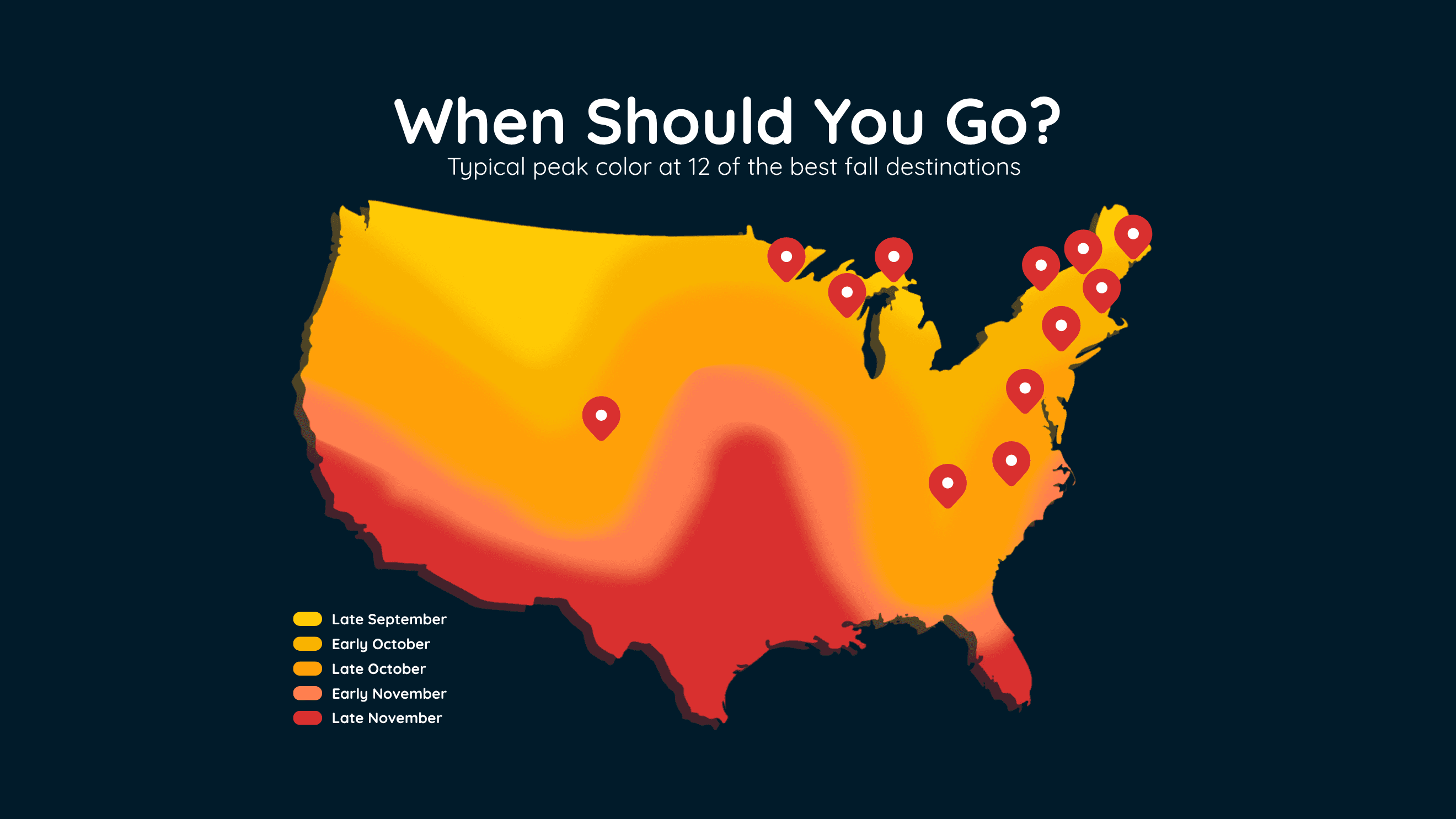
Still, most popular leaf-peeping destinations have a some sort of reliable window when colors usually look their best. In the United States, peak color often begins in September across the highest mountains and farthest northern regions. It then spreads south and into lower elevations through October, reaching some southern destinations in early November.
So, when is the best time to see fall colors in places like Vermont, the Great Smoky Mountains, Michigan or Colorado? Here is a quick guide to the usual peak fall foliage dates at 12 of the country's most popular destinations.
Peak fall color dates at a glance
These are historical averages, not guaranteed dates. Temperatures, rainfall, drought, wind and elevation can push peak color earlier or later each year. Even two places within the same park can peak weeks apart.
When do fall colors peak in New England and the Northeast?
Stowe and the Green Mountains, Vermont
Typical peak: Late September to mid-October
Vermont is practically the celebrity spokesperson for fall, and Stowe is one of its most popular leaf-peeping destinations around. Color often develops first at higher elevations and in the northern Green Mountains during late September. Lower elevations and valleys commonly look their best in early to mid-October.
If you want the broadest chance of catching strong color around Stowe, the first two weeks of October are usually a good target. Just remember that a warm September can slow the change, while an early freeze or a windy storm can shorten the show.
Kancamagus Highway and the White Mountains, New Hampshire
Typical peak: Late September to mid-October
The Kancamagus Highway winds through the White Mountain National Forest, where elevation makes timing a little complicated. Higher and more northern areas can approach peak color in late September, while lower portions of the route often peak during the first half of October.
That staggered timing is useful. If one area is running early or late, a change in elevation may help you find better color without changing your entire trip.
Acadia National Park and Bar Harbor, Maine
Typical peak: Mid- to late October
Fall color begins much earlier in northern and inland Maine, but coastal areas such as Acadia National Park and Bar Harbor usually take longer to reach peak. The ocean helps moderate temperatures, often pushing the brightest color into mid- or late October.
Maine's official fall foliage reports begin in September and are worth checking as your trip gets closer. Peak in northern Maine can arrive several weeks before peak along the coast.
Adirondack Mountains, New York
Typical peak: Late September to mid-October
The Adirondacks cover a huge area, so there is no single peak date for the entire region. Color often appears first in the highest terrain and northern communities during late September. It then spreads into lower and more southern areas through the first half of October.
For a trip centered on the High Peaks, plan earlier. For lakes and lower-elevation communities farther south, early to mid-October is often the better bet.
Pocono Mountains, Pennsylvania
Typical peak: Early to mid-October
The Poconos normally begin showing noticeable color by late September, with many higher locations reaching peak in early or mid-October. Lower and warmer areas may hold onto color later in the month.
Because the region includes ridges, valleys and lakes, conditions can vary over relatively short distances. That makes a live local foliage report more useful than one statewide date.
When do fall colors peak in the Appalachians?
Shenandoah National Park, Virginia
Typical peak: Mid- to late October
Skyline Drive follows the crest of the Blue Ridge Mountains, so the view can change dramatically with elevation. The highest ridges often begin turning in early October, but the most widespread color usually arrives from the middle to the end of the month. Valleys below the park can remain colorful into early November.
If the ridges have already passed peak, look toward the lower slopes. Fall color works its way downhill as cooler air arrives.
Blue Ridge Parkway, Virginia and North Carolina
Typical peak: Early October to early November
The Blue Ridge Parkway has one of the longest fall color seasons on this list because it travels nearly 470 miles and climbs from relatively low valleys to some of the highest terrain in the eastern United States.
The highest mountains of North Carolina can begin peaking in early October. Color then moves into middle elevations during mid- to late October before reaching lower valleys around the end of October or early November. There may not be one perfect weekend for the entire parkway, but there is often great color somewhere along it for several weeks.
Great Smoky Mountains National Park, Tennessee and North Carolina
Typical peak: Mid-October to early November
In the Great Smoky Mountains, elevation is everything. Trees near the highest peaks can begin changing in September and reach peak by early or mid-October. The better-known color across middle and lower elevations usually arrives from late October into early November.
That long transition gives visitors some flexibility. If higher overlooks are past peak, lower roads and valleys may still be approaching their brightest color.
When do fall colors peak around the Great Lakes?
Upper Peninsula, Michigan
Typical peak: Late September to mid-October
Michigan's fall color season usually starts in the western and northern Upper Peninsula. The best color often arrives between the final days of September and the middle of October, depending on latitude and proximity to Lake Superior.
Color then spreads south through the Lower Peninsula during October. Michigan maintains an official fall color map that can help narrow down the timing as conditions change.
Door County, Wisconsin
Typical peak: Mid- to late October
Door County's position between Green Bay and Lake Michigan can delay color compared with inland northern Wisconsin. The brightest display often arrives around the middle of October and may continue into the latter part of the month.
Lake temperatures, wind and the exact location on the peninsula can create noticeable differences, so color near the shoreline may not match what is happening farther inland.
North Shore, Minnesota
Typical peak: Late September to mid-October
Minnesota's North Shore can deliver more than one version of peak. Inland hills filled with maples often reach their strongest reds and oranges in late September or very early October. Closer to Lake Superior, birch and aspen can bring a later wave of yellow into early or mid-October.
The state's Fall Color Finder tracks actual color progression during the season. Its future view uses historical averages, which is a helpful reminder that long-range foliage dates are estimates, not forecasts carved into a pumpkin.
When do fall colors peak in Colorado?
Aspen and Maroon Bells, Colorado
Typical peak: Mid- to late September
Colorado's high country runs on an earlier fall schedule. Aspen leaves near Maroon Bells and other mountain destinations often turn gold from the middle to the end of September. Some lower elevations can stay colorful into early October.
The window can be brief. Elevation, overnight freezes, wind and an early snowstorm can move the season along quickly, so Colorado is one place where checking current conditions immediately before a trip really matters.
What can change the timing of peak fall color?
Leaves respond to shorter days, but the weather helps determine when colors appear, how bright they become and how long they remain on the trees.
Warm early-fall temperatures can delay color change.
Cool nights and mild, sunny days often support brighter displays.
Drought can stress trees, causing some leaves to turn early, look dull or fall before reaching full color.
A hard freeze can damage leaves and bring the season to a quick end.
Strong wind and heavy rain can strip colorful leaves from trees.
Elevation and latitude can shift peak timing by days or even weeks within the same region.
That is why the "normal" peak window is a starting point, not a promise.
How far ahead should you plan a fall color trip?
Use the typical windows to choose your destination and make general travel plans. Then check local foliage reports, recent photos, webcams and the WeatherBug forecast about seven to 10 days before you leave.
If possible, give yourself some flexibility. A route that crosses several elevations gives you a better chance of finding strong color if the season is ahead of or behind schedule. Weekday travel can also help you avoid some of the traffic at the most popular overlooks.
For this year's expected timing, read our latest fall foliage forecast. You can also learn why leaves change color before heading out.