---
title: Why Fall Has a Second Severe Weather Season | WeatherBug | WeatherBug
description: Cooler weather doesn’t end the tornado threat. In parts of the U.S., fall brings another round of conditions that can fuel dangerous storms.
canonical: https://www.weatherbug.com/news/Why-Fall-Has-a-Second-Severe-Weather-Season
og:title: Why Fall Has a Second Severe Weather Season | WeatherBug | WeatherBug
og:description: Cooler weather doesn’t end the tornado threat. In parts of the U.S., fall brings another round of conditions that can fuel dangerous storms.
og:url: https://www.weatherbug.com/news/Why-Fall-Has-a-Second-Severe-Weather-Season
og:site_name: WeatherBug
og:locale: en_US
og:image: https://cms-assets-con.cdn.weatherbug.net/assets/contentitems/5b/5bea53b9-5cf8-4868-a62f-6e85162fda27/52e0ce98-d40a-4283-82d1-d0fe816ebf4b/b9c5581b-3bc8-4398-af35-a9e6fc2d5554.png
og:image:width: 800
og:image:height: 600
og:image:alt: Why Fall Has a Second Severe Weather Season
og:type: article
article:published_time: 2026-10-17T11:00:19Z
article:modified_time: 2026-10-17T11:00:19Z
article:author: WeatherBug Meteorologist, Madison Ryke
article:tag: fall
article:tag: noreaster
article:tag: flooding
article:tag: rain
article:tag: tornadoes
article:tag: severe
article:tag: storms
twitter:card: summary_large_image
twitter:title: Why Fall Has a Second Severe Weather Season | WeatherBug
twitter:description: Cooler weather doesn’t end the tornado threat. In parts of the U.S., fall brings another round of conditions that can fuel dangerous storms.
twitter:image: https://cms-assets-con.cdn.weatherbug.net/assets/contentitems/5b/5bea53b9-5cf8-4868-a62f-6e85162fda27/52e0ce98-d40a-4283-82d1-d0fe816ebf4b/b9c5581b-3bc8-4398-af35-a9e6fc2d5554.png
---
[](/)
[Back to forecast](/)
# Why Fall Has a Second Severe Weather Season
October 17, 2026 at 07:00 AM EDT
WeatherBug Meteorologist, Madison Ryke
Tornado warnings probably weren’t what people in Fort Stockton, Texas, had in mind for an October afternoon.
But on October 14, storms produced two confirmed tornadoes in the area. No injuries or deaths were reported, according to local reports
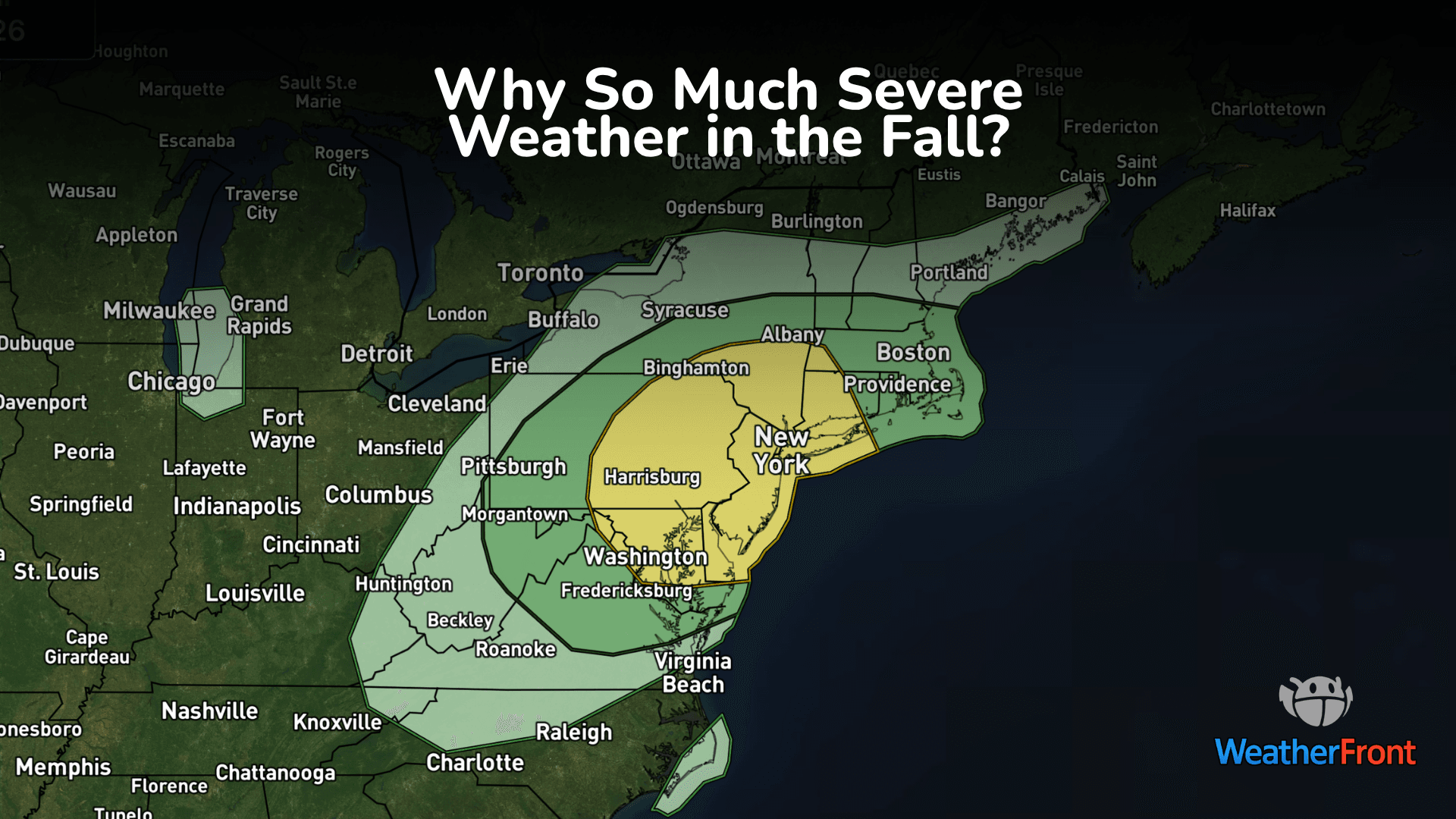
We tend to associate tornadoes with spring. In parts of the country, though, severe weather has a second season, and the transition toward winter helps set it up.
### The Quick Breakdown:
* Changing seasons make weather patterns more unstable
* Instability leads to another spike in severe weather from October to December.
* The southeast sees the most fall tornadoes
* Overnight tornadoes can happen more often
## Why Can Severe Weather Pick Up Again in Fall?
Spring and fall have something in common: the atmosphere is going through a transition.
As fall progresses, stronger storm systems and faster winds aloft become more common farther south. Meanwhile, warm, humid air can still spread north from the Gulf.
When moisture, unstable air and a lifting mechanism come together with those stronger winds, thunderstorms can become organized enough to produce damaging gusts, hail or tornadoes.
One ingredient is **wind shear**, a change in wind speed or direction with height. It can help storms organize and rotate. Fall storms sometimes develop with less instability than a classic spring setup, but substantial wind shear can still make them dangerous.
A cool morning, in other words, doesn’t tell you everything about the afternoon’s storm potential.
## Where Is a Second Tornado Season Most Noticeable?
The seasonal increase is especially noticeable across parts of the South, including the Lower Mississippi Valley, Mid-South and Gulf Coast states.
The timing varies by location. In the Mid-South, damaging-wind activity has a secondary increase in October and November, while the fall tornado increase is more pronounced in November. Farther south, the secondary severe-weather season can extend into December.
This isn’t a second nationwide spring peak. Different regions have different patterns, and severe storms remain possible outside those typical windows.
## Why Fall Tornadoes Can Be Harder to See
Shorter days mean more of our daily activities happen after sunset. In parts of the South, nighttime tornadoes are a particular concern during fall and winter.
Darkness makes it harder to recognize an approaching storm, and people who are asleep may miss a warning. Waiting to see a funnel before taking shelter is especially dangerous under those conditions.
Even during daylight, the visible funnel doesn’t always show the full extent of the circulation. Our explainer on [whether tornadoes actually “touch down”](https://www.weatherbug.com/news/Do-Tornadoes-Actually-Touch-Down?source=news) takes a closer look at what you’re seeing.
## What Should You Do Before Fall Storms Arrive?
Start with a warning plan that works while you’re sleeping.
Keep Wireless Emergency Alerts enabled and have another way to receive warnings, such as a NOAA Weather Radio with battery backup. Know which room you’ll use before a warning arrives: a basement or small interior room on the lowest floor of a sturdy building, away from windows.
If you live in a mobile home, identify a nearby sturdy shelter and allow time to reach it before dangerous weather arrives.
Check your local forecast and alerts in the WeatherBug app, especially when thunderstorms are expected overnight. Fall plans might call for a jacket, but some days still call for a storm plan, too.
We use technologies, such as cookies, to analyze your use (i.e., pages visited), to customize content, for our internal analytics purposes and for security and other purposes. By continuing to use this website, you agree to this usage. Please review our [privacy policy](/legal/privacy) for more details as well as for information on how to contact us to object to these activities. [Ad Choices](/legal/privacy#digitaladvertisingandyourchoices)
```json
{"@context":"https://schema.org","@type":"NewsArticle","mainEntityOfPage":{"@type":"WebPage","@id":"https://www.weatherbug.com/news/Why-Fall-Has-a-Second-Severe-Weather-Season"},"headline":" Why Fall Has a Second Severe Weather Season","description":"Cooler weather doesn’t end the tornado threat. In parts of the U.S., fall brings another round of conditions that can fuel dangerous storms.","image":["https://cms-assets-con.cdn.weatherbug.net/assets/contentitems/5b/5bea53b9-5cf8-4868-a62f-6e85162fda27/52e0ce98-d40a-4283-82d1-d0fe816ebf4b/b9c5581b-3bc8-4398-af35-a9e6fc2d5554.png"],"datePublished":"2026-10-17T11:00:19Z","dateModified":"2026-10-17T11:00:19Z","dateCreated":"2026-10-17T11:00:19Z","articleSection":"Weather News","keywords":"fall,noreaster,flooding,rain,tornadoes,severe,storms","articleBody":"Tornado warnings probably weren’t what people in Fort Stockton, Texas, had in mind for an October afternoon.
But on October 14, storms produced two confirmed tornadoes in the area. No injuries or deaths were reported, according to local reports
We tend to associate tornadoes with spring. In parts of the country, though, severe weather has a second season, and the transition toward winter helps set it up.
The Quick Breakdown:
- Changing seasons make weather patterns more unstable
- Instability leads to another spike in severe weather from October to December.
- The southeast sees the most fall tornadoes
- Overnight tornadoes can happen more often
Why Can Severe Weather Pick Up Again in Fall?
Spring and fall have something in common: the atmosphere is going through a transition.
As fall progresses, stronger storm systems and faster winds aloft become more common farther south. Meanwhile, warm, humid air can still spread north from the Gulf.
When moisture, unstable air and a lifting mechanism come together with those stronger winds, thunderstorms can become organized enough to produce damaging gusts, hail or tornadoes.
One ingredient is wind shear, a change in wind speed or direction with height. It can help storms organize and rotate. Fall storms sometimes develop with less instability than a classic spring setup, but substantial wind shear can still make them dangerous.
A cool morning, in other words, doesn’t tell you everything about the afternoon’s storm potential.
Where Is a Second Tornado Season Most Noticeable?
The seasonal increase is especially noticeable across parts of the South, including the Lower Mississippi Valley, Mid-South and Gulf Coast states.
The timing varies by location. In the Mid-South, damaging-wind activity has a secondary increase in October and November, while the fall tornado increase is more pronounced in November. Farther south, the secondary severe-weather season can extend into December.
This isn’t a second nationwide spring peak. Different regions have different patterns, and severe storms remain possible outside those typical windows.
Why Fall Tornadoes Can Be Harder to See
Shorter days mean more of our daily activities happen after sunset. In parts of the South, nighttime tornadoes are a particular concern during fall and winter.
Darkness makes it harder to recognize an approaching storm, and people who are asleep may miss a warning. Waiting to see a funnel before taking shelter is especially dangerous under those conditions.
Even during daylight, the visible funnel doesn’t always show the full extent of the circulation. Our explainer on whether tornadoes actually “touch down” takes a closer look at what you’re seeing.
What Should You Do Before Fall Storms Arrive?
Start with a warning plan that works while you’re sleeping.
Keep Wireless Emergency Alerts enabled and have another way to receive warnings, such as a NOAA Weather Radio with battery backup. Know which room you’ll use before a warning arrives: a basement or small interior room on the lowest floor of a sturdy building, away from windows.
If you live in a mobile home, identify a nearby sturdy shelter and allow time to reach it before dangerous weather arrives.
Check your local forecast and alerts in the WeatherBug app, especially when thunderstorms are expected overnight. Fall plans might call for a jacket, but some days still call for a storm plan, too.
","author":{"@type":"Person","name":"WeatherBug Meteorologist, Madison Ryke","url":"https://www.weatherbug.com"},"publisher":{"@type":"Organization","name":"WeatherBug","logo":{"@type":"ImageObject","url":"https://www.weatherbug.com/images/sharing/f1ff28ba-6f06-4745-a782-011a20397e16.png"}}}
{"@context":"https://schema.org","@type":"WebSite","mainEntityOfPage":{"@type":"WebPage","@id":"https://www.weatherbug.com/news/Why-Fall-Has-a-Second-Severe-Weather-Season","relatedLink":"https://www.weatherbug.com/news/Why-Fall-Has-a-Second-Severe-Weather-Season"},"name":"WeatherBug","url":"https://www.weatherbug.com/news/Why-Fall-Has-a-Second-Severe-Weather-Season","headline":" Why Fall Has a Second Severe Weather Season","description":"Cooler weather doesn’t end the tornado threat. In parts of the U.S., fall brings another round of conditions that can fuel dangerous storms.","dateModified":"2026-10-17T11:00:19Z","publisher":{"@type":"Organization","name":"WeatherBug","url":"https://www.weatherbug.com","sameAs":["https://www.facebook.com/WeatherBug","https://instagram.com/WeatherBug","https://www.linkedin.com/company/weatherbug","https://www.pinterest.com/weatherbug","https://twitter.com/WeatherBug","https://www.youtube.com/user/WeatherBugVideo"],"logo":{"@type":"ImageObject","url":"https://www.weatherbug.com/images/logos/weatherbug_logo_620x447.png"}},"author":{"@type":"Organization","name":"WeatherBug","url":"https://www.weatherbug.com","sameAs":["https://www.facebook.com/WeatherBug","https://instagram.com/WeatherBug","https://www.linkedin.com/company/weatherbug","https://www.pinterest.com/weatherbug","https://twitter.com/WeatherBug","https://www.youtube.com/user/WeatherBugVideo"],"logo":{"@type":"ImageObject","url":"https://www.weatherbug.com/images/logos/weatherbug_logo_620x447.png"}}}
{"@context":"https://schema.org","@type":"Organization","name":"WeatherBug","logo":"https://www.weatherbug.com/images/logos/weatherbug_logo_620x447.png","url":"https://www.weatherbug.com","sameAs":["https://www.facebook.com/WeatherBug","https://instagram.com/WeatherBug","https://www.linkedin.com/company/weatherbug","https://www.pinterest.com/weatherbug","https://twitter.com/WeatherBug","https://www.youtube.com/user/WeatherBugVideo"]}
```