---
title: Wildfire Alerts - What Do They Mean? | WeatherBug | WeatherBug
description: In its arsenal to protect people from fires, the NWS has Red Flag Warnings, Fire Weather Watches and Extreme Fire Behavior alerts to send to citizens
canonical: https://www.weatherbug.com/news/Wildfire-Alerts-What-Do-They-Mean
og:title: Wildfire Alerts - What Do They Mean? | WeatherBug | WeatherBug
og:description: In its arsenal to protect people from fires, the NWS has Red Flag Warnings, Fire Weather Watches and Extreme Fire Behavior alerts to send to citizens
og:url: https://www.weatherbug.com/news/Wildfire-Alerts-What-Do-They-Mean
og:site_name: WeatherBug
og:locale: en_US
og:image: https://cms-assets-con.cdn.weatherbug.net/assets/contentitems/a2/a23ff6b8-645d-459b-a91f-97842e1e198f/52e0ce98-d40a-4283-82d1-d0fe816ebf4b/e25d7aeb-f2d4-4c5e-b508-db92bc80c86d.jpg
og:image:width: 800
og:image:height: 600
og:image:alt: A fire whirl takes off during an ongoing wildfire (Wikimedia Commons)
og:type: article
article:published_time: 2025-01-12T09:35:09Z
article:modified_time: 2025-01-12T09:35:09Z
article:author: UPDATED By WeatherBug Meteorologist, Andrew Rosenthal
article:tag: fire
article:tag: "Fire Weather Watch"
article:tag: "Red Flag Warning"
article:tag: safety
article:tag: wildfire
twitter:card: summary_large_image
twitter:title: Wildfire Alerts - What Do They Mean? | WeatherBug
twitter:description: In its arsenal to protect people from fires, the NWS has Red Flag Warnings, Fire Weather Watches and Extreme Fire Behavior alerts to send to citizens
twitter:image: https://cms-assets-con.cdn.weatherbug.net/assets/contentitems/a2/a23ff6b8-645d-459b-a91f-97842e1e198f/52e0ce98-d40a-4283-82d1-d0fe816ebf4b/e25d7aeb-f2d4-4c5e-b508-db92bc80c86d.jpg
---
[](/)
[Back to forecast](/)
# Wildfire Alerts - What Do They Mean?
January 12, 2025 at 04:35 AM EST
UPDATED By WeatherBug Meteorologist, Andrew Rosenthal
Wildfires can mean big dangers to your family and your property. The National Weather Service issues advisories and warnings on a regular basis to help you be prepared for wildfire risk. Here’s a look at some of the alerts that are sent out:
* **Red Flag Warning**
A Red Flag Warning is issued when conditions that could lead to a fire are ongoing or are expected to start shortly. _Be extremely careful around open flames!_
Red Flag Warnings are often issued when the humidity is very low – the exact percentage of relative humidity varies from location to location depending on climate – coupled with high or erratic winds in the forecast. These two conditions together mean that a small fire (such as burning leaves or a campfire) has the ingredients to burn out of control if not properly monitored.
Not surprisingly, Red Flag Warnings are very common in the summer across the foothills of the Rockies, where the lack of rainfall can keep vegetation in a near-permanent dry state. Thus, strong daytime breezes are sufficient to produce Red Flag-type conditions.
* **Fire Weather Watch**
A Fire Weather Watch is issued when weather conditions that could produce a widespread wildland fire are possible.
Similar to a Red Flag Warning, the watch denotes that dangerous fire conditions – low humidity and windy conditions - are in the forecast, but that these could occur over a larger scale. Often, a Fire Weather Watch is issued 12 to as much as 48 hours ahead of the expected conditions. This allows fire management agencies to be prepared in the event that a wildfire does develop; they can keep it localized and not turn into a giant conflagration.
* **Extreme Fire Behavior**
This rarely-used alert is available in the event that an ongoing wildfire is about to go out of control. The behavior of a fire in these conditions can be quite erratic, making it far more difficult to evacuate people if the fire is heading in their direction.
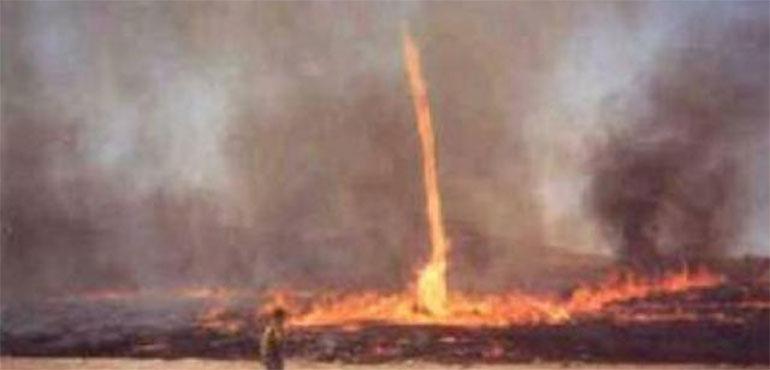
In order for an Extreme Fire Behavior alert to be issued, at least one of the following must be occurring: high rate of the fire’s spread, making it difficult to predict; significant “crowning” – when the fire is moving through the treetops independently of the surface fire, indicative of extreme heat and fuel just above the surface; presence of fire whirls and fire tornadoes – also an indication of extreme heat and erratic winds above the surface; or strong “convective columns” – clouds from the fire reaching 25 to 30,000 feet, which can produce its own lightning and lead to fresh fire development.
If you have any of these alerts issued for your area, be prepared to take action to stay fire safe!
_Source:_ NWS
\------
_Story Image:_ A fire whirl takes off during an ongoing wildfire (Wikimedia Commons)
We use technologies, such as cookies, to analyze your use (i.e., pages visited), to customize content, for our internal analytics purposes and for security and other purposes. By continuing to use this website, you agree to this usage. Please review our [privacy policy](/legal/privacy) for more details as well as for information on how to contact us to object to these activities. [Ad Choices](/legal/privacy#digitaladvertisingandyourchoices)
```json
{"@context":"https://schema.org","@type":"NewsArticle","mainEntityOfPage":{"@type":"WebPage","@id":"https://www.weatherbug.com/news/Wildfire-Alerts-What-Do-They-Mean"},"headline":"Wildfire Alerts - What Do They Mean?","description":"In its arsenal to protect people from fires, the NWS has Red Flag Warnings, Fire Weather Watches and Extreme Fire Behavior alerts to send to citizens","image":["https://cms-assets-con.cdn.weatherbug.net/assets/contentitems/a2/a23ff6b8-645d-459b-a91f-97842e1e198f/52e0ce98-d40a-4283-82d1-d0fe816ebf4b/e25d7aeb-f2d4-4c5e-b508-db92bc80c86d.jpg"],"datePublished":"2025-01-12T09:35:09Z","dateModified":"2025-01-12T09:35:09Z","dateCreated":"2025-01-12T09:35:09Z","articleSection":"Weather News","keywords":"fire,\"Fire Weather Watch\",\"Red Flag Warning\",safety,wildfire","articleBody":"Wildfires can mean big dangers to your family and your property. The National Weather Service issues advisories and warnings on a regular basis to help you be prepared for wildfire risk. Here’s a look at some of the alerts that are sent out:\r\n\r\n\t- Red Flag Warning
\r\n
\r\nA Red Flag Warning is issued when conditions that could lead to a fire are ongoing or are expected to start shortly. Be extremely careful around open flames!
\r\n
\r\nRed Flag Warnings are often issued when the humidity is very low – the exact percentage of relative humidity varies from location to location depending on climate – coupled with high or erratic winds in the forecast. These two conditions together mean that a small fire (such as burning leaves or a campfire) has the ingredients to burn out of control if not properly monitored.
\r\n
\r\nNot surprisingly, Red Flag Warnings are very common in the summer across the foothills of the Rockies, where the lack of rainfall can keep vegetation in a near-permanent dry state. Thus, strong daytime breezes are sufficient to produce Red Flag-type conditions.\r\n\r\n\t- Fire Weather Watch
\r\n
\r\nA Fire Weather Watch is issued when weather conditions that could produce a widespread wildland fire are possible.
\r\n
\r\nSimilar to a Red Flag Warning, the watch denotes that dangerous fire conditions – low humidity and windy conditions - are in the forecast, but that these could occur over a larger scale. Often, a Fire Weather Watch is issued 12 to as much as 48 hours ahead of the expected conditions. This allows fire management agencies to be prepared in the event that a wildfire does develop; they can keep it localized and not turn into a giant conflagration.\r\n\r\n\t- Extreme Fire Behavior
\r\n
\r\nThis rarely-used alert is available in the event that an ongoing wildfire is about to go out of control. The behavior of a fire in these conditions can be quite erratic, making it far more difficult to evacuate people if the fire is heading in their direction.
\r\n
\r\nIn order for an Extreme Fire Behavior alert to be issued, at least one of the following must be occurring: high rate of the fire’s spread, making it difficult to predict; significant “crowning” – when the fire is moving through the treetops independently of the surface fire, indicative of extreme heat and fuel just above the surface; presence of fire whirls and fire tornadoes – also an indication of extreme heat and erratic winds above the surface; or strong “convective columns” – clouds from the fire reaching 25 to 30,000 feet, which can produce its own lightning and lead to fresh fire development.
\r\n
\r\nIf you have any of these alerts issued for your area, be prepared to take action to stay fire safe!
\r\n
\r\nSource: NWS
\r\n------
\r\nStory Image: A fire whirl takes off during an ongoing wildfire (Wikimedia Commons)","author":{"@type":"Person","name":"UPDATED By WeatherBug Meteorologist, Andrew Rosenthal","url":"https://www.weatherbug.com"},"publisher":{"@type":"Organization","name":"WeatherBug","logo":{"@type":"ImageObject","url":"https://www.weatherbug.com/images/sharing/f1ff28ba-6f06-4745-a782-011a20397e16.png"}}}
{"@context":"https://schema.org","@type":"WebSite","mainEntityOfPage":{"@type":"WebPage","@id":"https://www.weatherbug.com/news/Wildfire-Alerts-What-Do-They-Mean","relatedLink":"https://www.weatherbug.com/news/Wildfire-Alerts-What-Do-They-Mean"},"name":"WeatherBug","url":"https://www.weatherbug.com/news/Wildfire-Alerts-What-Do-They-Mean","headline":"Wildfire Alerts - What Do They Mean?","description":"In its arsenal to protect people from fires, the NWS has Red Flag Warnings, Fire Weather Watches and Extreme Fire Behavior alerts to send to citizens","dateModified":"2025-01-12T09:35:09Z","publisher":{"@type":"Organization","name":"WeatherBug","url":"https://www.weatherbug.com","sameAs":["https://www.facebook.com/WeatherBug","https://instagram.com/WeatherBug","https://www.linkedin.com/company/weatherbug","https://www.pinterest.com/weatherbug","https://twitter.com/WeatherBug","https://www.youtube.com/user/WeatherBugVideo"],"logo":{"@type":"ImageObject","url":"https://www.weatherbug.com/images/logos/weatherbug_logo_620x447.png"}},"author":{"@type":"Organization","name":"WeatherBug","url":"https://www.weatherbug.com","sameAs":["https://www.facebook.com/WeatherBug","https://instagram.com/WeatherBug","https://www.linkedin.com/company/weatherbug","https://www.pinterest.com/weatherbug","https://twitter.com/WeatherBug","https://www.youtube.com/user/WeatherBugVideo"],"logo":{"@type":"ImageObject","url":"https://www.weatherbug.com/images/logos/weatherbug_logo_620x447.png"}}}
{"@context":"https://schema.org","@type":"Organization","name":"WeatherBug","logo":"https://www.weatherbug.com/images/logos/weatherbug_logo_620x447.png","url":"https://www.weatherbug.com","sameAs":["https://www.facebook.com/WeatherBug","https://instagram.com/WeatherBug","https://www.linkedin.com/company/weatherbug","https://www.pinterest.com/weatherbug","https://twitter.com/WeatherBug","https://www.youtube.com/user/WeatherBugVideo"]}
```