---
title: AEM Predicts Above-Normal 2025 Atlantic Hurricane Season | WeatherBug | WeatherBug
description: AEM forecasts a slightly above-normal 2025 Atlantic hurricane season.
canonical: https://www.weatherbug.com/news/AEM-Predicts-Above-Normal-2025-Atlantic-Hurricane
og:title: AEM Predicts Above-Normal 2025 Atlantic Hurricane Season | WeatherBug | WeatherBug
og:description: AEM forecasts a slightly above-normal 2025 Atlantic hurricane season.
og:url: https://www.weatherbug.com/news/AEM-Predicts-Above-Normal-2025-Atlantic-Hurricane
og:site_name: WeatherBug
og:locale: en_US
og:image: https://cms-assets-con.cdn.weatherbug.net/assets/contentitems/fc/fca71597-8c12-44ce-b401-7252e7a6426e/52e0ce98-d40a-4283-82d1-d0fe816ebf4b/1a127812-225d-4659-98a1-f1bdfeec1c8f.jpg
og:image:width: 800
og:image:height: 600
og:image:alt: 2025 AEM Atlantic Hurricane Forecast
og:type: article
article:published_time: 2025-05-13T18:53:14Z
article:modified_time: 2025-05-13T18:53:14Z
article:author: By WeatherBug Meteorologists
article:tag: Atlantic
article:tag: hurricane
article:tag: outlook
twitter:card: summary_large_image
twitter:title: AEM Predicts Above-Normal 2025 Atlantic Hurricane Season | WeatherBug
twitter:description: AEM forecasts a slightly above-normal 2025 Atlantic hurricane season.
twitter:image: https://cms-assets-con.cdn.weatherbug.net/assets/contentitems/fc/fca71597-8c12-44ce-b401-7252e7a6426e/52e0ce98-d40a-4283-82d1-d0fe816ebf4b/1a127812-225d-4659-98a1-f1bdfeec1c8f.jpg
---
[](/weather-forecast/now)
[Missing translation for key: backTo forecast](/weather-forecast/now)
# AEM Predicts Above-Normal 2025 Atlantic Hurricane Season
May 13, 2025 at 02:53 PM EDT
By WeatherBug Meteorologists
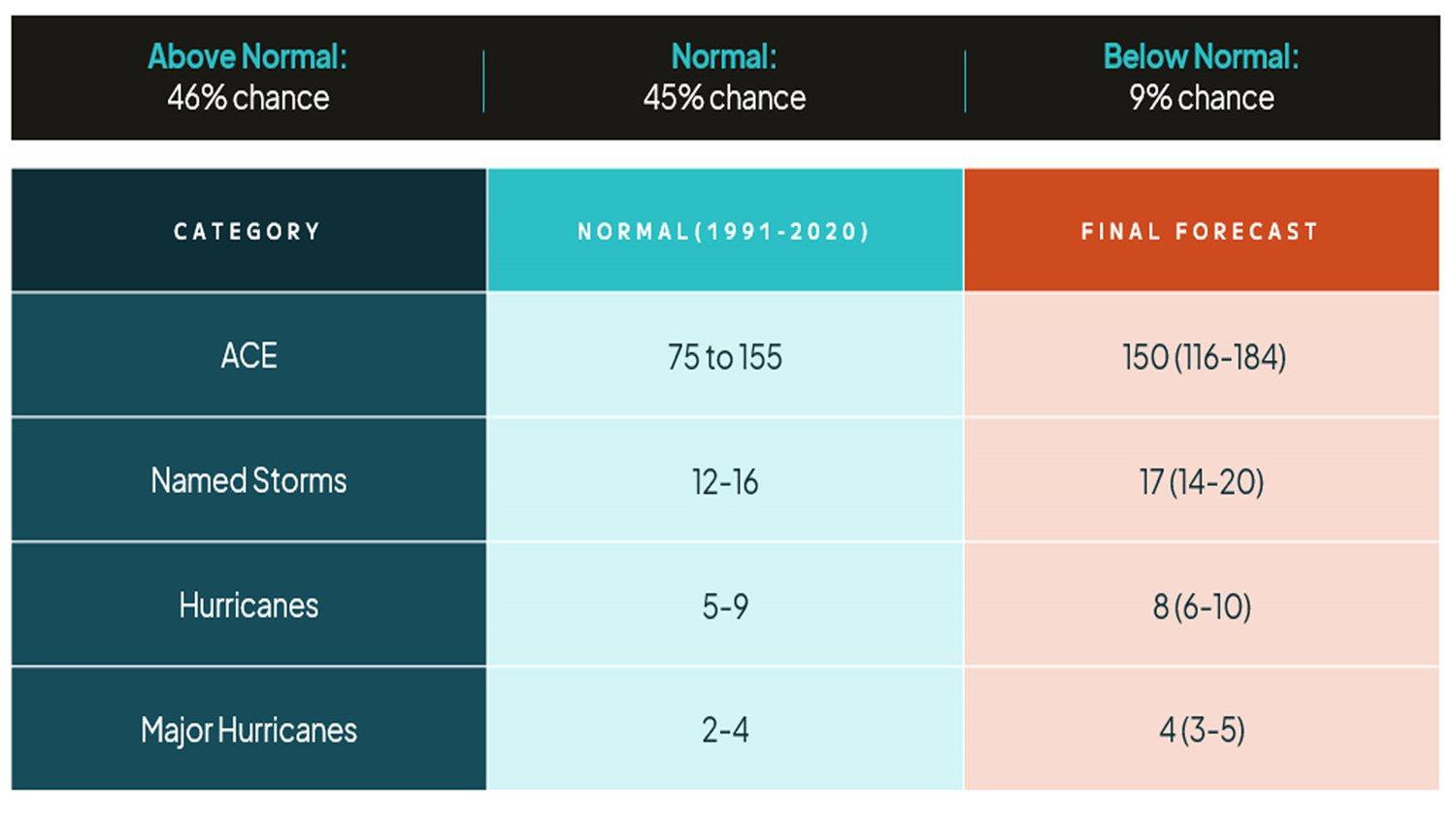
AEM released its 2025 Atlantic Hurricane Outlook, forecasting a slightly above-normal hurricane season. The hurricane season runs from June 1 to November 30 and covers the North Atlantic, Caribbean Sea, and Gulf of Mexico.
The AEM Meteorology Team predicts 14 to 20 named storms forming, with six to ten becoming hurricanes and three to five of those hurricanes becoming major hurricanes with sustained winds of at least 111 mph. This is above the long-term Atlantic season average. Between 1991 and 2020, the Atlantic Hurricane Basin produced an average of 14.4 named storms, 7.2 hurricanes and 3 major hurricanes per year.
“ENSO-neutral conditions are expected to persist through the summer and into fall, meaning neither El Niño nor La Niña is present across the key monitoring region of the Pacific Ocean,” said Matt Mehallow, AEM Meteorologist. “In the absence of El Niño, wind shear patterns across the Atlantic Basin are expected to be relatively favorable for hurricane development this summer and fall,” added Andrew Rosenthal, AEM Meteorologist.
El Niño contributes to increased wind shear, changes in wind direction and speed with altitude, in the Atlantic hurricane basin. This elevated wind shear makes it more difficult for tropical systems to develop, and those that do often struggle to intensify. In contrast, La Niña and neutral conditions typically lead to reduced wind shear in the Atlantic. Lower wind shear creates a more favorable environment for tropical systems to organize and strengthen into tropical storms or hurricanes.
“With neither El Niño nor La Niña as a decisive influence this season, factors that are less predictable months in advance may play a larger role in shaping overall activity,” stated Rob Richards, AEM Meteorologist. A strong West African Monsoon could enhance hurricane activity by generating frequent and vigorous tropical waves that move into the Atlantic Main Development Region.
Conversely, the Saharan Air Layer (SAL), a mass of very dry, dusty air originating over the Sahara Desert, can suppress tropical activity as it drifts across the Atlantic. SAL activity typically ramps up in mid-June and peaks from late June to mid-August, with new outbreaks occurring every three to five days. The warmth, dryness, and strong winds associated with the SAL act to limit tropical cyclone formation and intensification.
Last year featured well above-average activity, with a record-breaking ramp up following a peak-season lull. Twelve named storms formed after the climatological peak of the season in early September. The Atlantic basin saw 18 named storms in 2024, 11 of those were hurricanes and five intensified into major hurricanes. Five hurricanes made landfall in the continental U.S., with two storms making landfall as major hurricanes. It was also the first since 2019 to have multiple Category 5 hurricanes.
The World Meteorological Organization retired the names Beryl, Helene, and Milton from its rotating name lists due to the severity of the damage and number of deaths the three storms caused.
Remember, it only takes one hurricane to cause devastating winds and storm surge. If you live in an area vulnerable to hurricanes, now is the time to prepare. Update your emergency plans, refresh your emergency kits, and ensure your flood and hurricane insurance policies are current.
We use technologies, such as cookies, to analyze your use (i.e., pages visited), to customize content, for our internal analytics purposes and for security and other purposes. By continuing to use this website, you agree to this usage. Please review our [privacy policy](/legal/privacy) for more details as well as for information on how to contact us to object to these activities. [Ad Choices](/legal/privacy#digitaladvertisingandyourchoices)
```json
{"@context":"https://schema.org","@type":"NewsArticle","mainEntityOfPage":{"@type":"WebPage","@id":"https://www.weatherbug.com/news/AEM-Predicts-Above-Normal-2025-Atlantic-Hurricane"},"headline":"AEM Predicts Above-Normal 2025 Atlantic Hurricane Season","description":"AEM forecasts a slightly above-normal 2025 Atlantic hurricane season.","image":["https://cms-assets-con.cdn.weatherbug.net/assets/contentitems/fc/fca71597-8c12-44ce-b401-7252e7a6426e/52e0ce98-d40a-4283-82d1-d0fe816ebf4b/1a127812-225d-4659-98a1-f1bdfeec1c8f.jpg"],"datePublished":"2025-05-13T18:53:14Z","dateModified":"2025-05-13T18:53:14Z","dateCreated":"2025-05-13T18:53:14Z","articleSection":"Weather News","keywords":"Atlantic,hurricane,outlook","articleBody":"AEM released its 2025 Atlantic Hurricane Outlook, forecasting a slightly above-normal hurricane season. The hurricane season runs from June 1 to November 30 and covers the North Atlantic, Caribbean Sea, and Gulf of Mexico.
\r\n
\r\nThe AEM Meteorology Team predicts 14 to 20 named storms forming, with six to ten becoming hurricanes and three to five of those hurricanes becoming major hurricanes with sustained winds of at least 111 mph. This is above the long-term Atlantic season average. Between 1991 and 2020, the Atlantic Hurricane Basin produced an average of 14.4 named storms, 7.2 hurricanes and 3 major hurricanes per year.
\r\n
\r\n“ENSO-neutral conditions are expected to persist through the summer and into fall, meaning neither El Niño nor La Niña is present across the key monitoring region of the Pacific Ocean,” said Matt Mehallow, AEM Meteorologist. “In the absence of El Niño, wind shear patterns across the Atlantic Basin are expected to be relatively favorable for hurricane development this summer and fall,” added Andrew Rosenthal, AEM Meteorologist.
\r\n
\r\nEl Niño contributes to increased wind shear, changes in wind direction and speed with altitude, in the Atlantic hurricane basin. This elevated wind shear makes it more difficult for tropical systems to develop, and those that do often struggle to intensify. In contrast, La Niña and neutral conditions typically lead to reduced wind shear in the Atlantic. Lower wind shear creates a more favorable environment for tropical systems to organize and strengthen into tropical storms or hurricanes.
\r\n
\r\n“With neither El Niño nor La Niña as a decisive influence this season, factors that are less predictable months in advance may play a larger role in shaping overall activity,” stated Rob Richards, AEM Meteorologist. A strong West African Monsoon could enhance hurricane activity by generating frequent and vigorous tropical waves that move into the Atlantic Main Development Region.
\r\n
\r\nConversely, the Saharan Air Layer (SAL), a mass of very dry, dusty air originating over the Sahara Desert, can suppress tropical activity as it drifts across the Atlantic. SAL activity typically ramps up in mid-June and peaks from late June to mid-August, with new outbreaks occurring every three to five days. The warmth, dryness, and strong winds associated with the SAL act to limit tropical cyclone formation and intensification.
\r\n
\r\nLast year featured well above-average activity, with a record-breaking ramp up following a peak-season lull. Twelve named storms formed after the climatological peak of the season in early September. The Atlantic basin saw 18 named storms in 2024, 11 of those were hurricanes and five intensified into major hurricanes. Five hurricanes made landfall in the continental U.S., with two storms making landfall as major hurricanes. It was also the first since 2019 to have multiple Category 5 hurricanes.
\r\n
\r\nThe World Meteorological Organization retired the names Beryl, Helene, and Milton from its rotating name lists due to the severity of the damage and number of deaths the three storms caused.
\r\n
\r\nRemember, it only takes one hurricane to cause devastating winds and storm surge. If you live in an area vulnerable to hurricanes, now is the time to prepare. Update your emergency plans, refresh your emergency kits, and ensure your flood and hurricane insurance policies are current.","author":{"@type":"Person","name":"By WeatherBug Meteorologists","url":"https://www.weatherbug.com"},"publisher":{"@type":"Organization","name":"WeatherBug","logo":{"@type":"ImageObject","url":"https://www.weatherbug.com/images/sharing/f1ff28ba-6f06-4745-a782-011a20397e16.png"}}}
{"@context":"https://schema.org","@type":"WebSite","mainEntityOfPage":{"@type":"WebPage","@id":"https://www.weatherbug.com/news/AEM-Predicts-Above-Normal-2025-Atlantic-Hurricane","relatedLink":"https://www.weatherbug.com/news/AEM-Predicts-Above-Normal-2025-Atlantic-Hurricane"},"name":"WeatherBug","url":"https://www.weatherbug.com/news/AEM-Predicts-Above-Normal-2025-Atlantic-Hurricane","headline":"AEM Predicts Above-Normal 2025 Atlantic Hurricane Season","description":"AEM forecasts a slightly above-normal 2025 Atlantic hurricane season.","dateModified":"2025-05-13T18:53:14Z","publisher":{"@type":"Organization","name":"WeatherBug","url":"https://www.weatherbug.com","sameAs":["https://www.facebook.com/WeatherBug","https://instagram.com/WeatherBug","https://www.linkedin.com/company/weatherbug","https://www.pinterest.com/weatherbug","https://twitter.com/WeatherBug","https://www.youtube.com/user/WeatherBugVideo"],"logo":{"@type":"ImageObject","url":"https://www.weatherbug.com/images/logos/weatherbug_logo_620x447.png"}},"author":{"@type":"Organization","name":"WeatherBug","url":"https://www.weatherbug.com","sameAs":["https://www.facebook.com/WeatherBug","https://instagram.com/WeatherBug","https://www.linkedin.com/company/weatherbug","https://www.pinterest.com/weatherbug","https://twitter.com/WeatherBug","https://www.youtube.com/user/WeatherBugVideo"],"logo":{"@type":"ImageObject","url":"https://www.weatherbug.com/images/logos/weatherbug_logo_620x447.png"}}}
{"@context":"https://schema.org","@type":"Organization","name":"WeatherBug","logo":"https://www.weatherbug.com/images/logos/weatherbug_logo_620x447.png","url":"https://www.weatherbug.com","sameAs":["https://www.facebook.com/WeatherBug","https://instagram.com/WeatherBug","https://www.linkedin.com/company/weatherbug","https://www.pinterest.com/weatherbug","https://twitter.com/WeatherBug","https://www.youtube.com/user/WeatherBugVideo"]}
```