Back to forecast
All About Ice
December 16, 2022 at 06:14 AM EST
By WeatherBug's Ali Husain
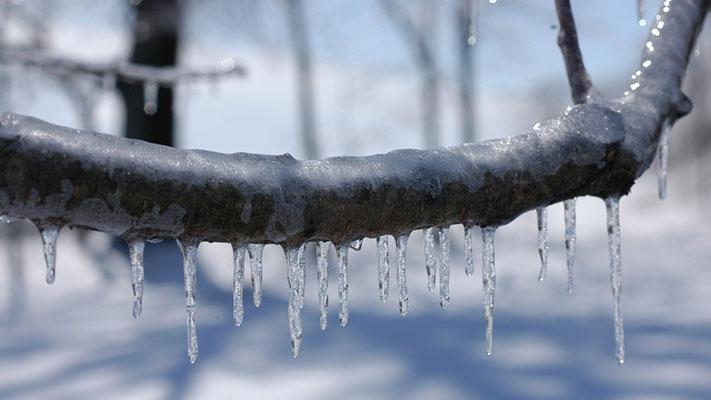
Water is the life-giving substance on our planet, but when it falls from the sky in the form of ice, chaos can ensue.
When ice accumulates on surfaces, it can wreak havoc. The weight of the ice can topple trees, utility poles and even communications towers, while just a fraction of ice accumulation can be extremely dangerous to anybody moving through the world, whether on foot or on a vehicle.
Some surfaces freeze faster than others. Our roads are composed of asphalt, which traps heat very well and allows roads to remain ice-free even below 32 degrees. On the contrary, bridges and overpasses are not only made of steel and concrete (which don’t trap heat like asphalt) but are exposed on top and bottom to cold air. This allows bridges and overpasses to chill quickly. Signs you have likely seen before crossing a bridge warn drivers that bridges freeze first.
This doesn’t mean that ice can’t form on roads. When that happens, it can lead to serious consequences such as black ice. Black ice is simply patches of ice that can’t be easily spotted. Black ice is often clear instead of white, and most commonly occurs during early morning hours when snowmelt refreezes after a cold night. The ice is clear, and the road underneath is black, leading to the term “black ice”.
It’s very hard to spot black ice, especially when driving on expressways or freeways, so exercise extreme caution when driving during or just after a winter storm. An errant patch of black ice can cause your vehicle to spin out, and an accident to occur. The takeaway: be wary of black ice on the road.
The dangers of ice extend beyond the roadways. Long periods of sub-freezing temperatures can cause lakes and rivers to freeze over and to the joy of some, allow for ice fishing and ice skating. Don’t go on the ice if it’s less than two inches thick! You run a serious risk of breaking through into the frigid waters below and immediately suffering from hypothermia.
In order to safely ice fish, skate and walk on ice, it should be at least 4 inches thick and for snowmobiles and ATV’s, that number should be boosted to five inches. If you’re considering driving a car or a small pickup truck onto the ice, it should be 8 to 12 inches thick, and 12 to 15 inches thick for medium-sized trucks. Check with local officials who monitor the body of water before venturing onto the ice to make sure it’s safe. If you see any cracks, holes or breaks in the ice, flowing water around the edges or over the top of the ice, or any ice that has thawed and refrozen, avoid it at all costs.
When the ice begins to thaw, it can break into large chunks as the water flows downriver. At manmade or natural obstructions, the ice can become jammed, acting as an impromptu dam. When this happens, serious flooding can occur further downriver, so be aware of the situation as a nearby frozen river begins to thaw! Typically this occurs in the spring or at the end of a mild period preceded by a cold blast.
Clearly, ice can have serious effects on our lives. This winter, be prepared for icy scenarios by checking WeatherBug for any upcoming wintry weather.
Credit: NWS
-----
Story Image via Pixabay
When ice accumulates on surfaces, it can wreak havoc. The weight of the ice can topple trees, utility poles and even communications towers, while just a fraction of ice accumulation can be extremely dangerous to anybody moving through the world, whether on foot or on a vehicle.
Some surfaces freeze faster than others. Our roads are composed of asphalt, which traps heat very well and allows roads to remain ice-free even below 32 degrees. On the contrary, bridges and overpasses are not only made of steel and concrete (which don’t trap heat like asphalt) but are exposed on top and bottom to cold air. This allows bridges and overpasses to chill quickly. Signs you have likely seen before crossing a bridge warn drivers that bridges freeze first.
This doesn’t mean that ice can’t form on roads. When that happens, it can lead to serious consequences such as black ice. Black ice is simply patches of ice that can’t be easily spotted. Black ice is often clear instead of white, and most commonly occurs during early morning hours when snowmelt refreezes after a cold night. The ice is clear, and the road underneath is black, leading to the term “black ice”.
It’s very hard to spot black ice, especially when driving on expressways or freeways, so exercise extreme caution when driving during or just after a winter storm. An errant patch of black ice can cause your vehicle to spin out, and an accident to occur. The takeaway: be wary of black ice on the road.
The dangers of ice extend beyond the roadways. Long periods of sub-freezing temperatures can cause lakes and rivers to freeze over and to the joy of some, allow for ice fishing and ice skating. Don’t go on the ice if it’s less than two inches thick! You run a serious risk of breaking through into the frigid waters below and immediately suffering from hypothermia.
In order to safely ice fish, skate and walk on ice, it should be at least 4 inches thick and for snowmobiles and ATV’s, that number should be boosted to five inches. If you’re considering driving a car or a small pickup truck onto the ice, it should be 8 to 12 inches thick, and 12 to 15 inches thick for medium-sized trucks. Check with local officials who monitor the body of water before venturing onto the ice to make sure it’s safe. If you see any cracks, holes or breaks in the ice, flowing water around the edges or over the top of the ice, or any ice that has thawed and refrozen, avoid it at all costs.
When the ice begins to thaw, it can break into large chunks as the water flows downriver. At manmade or natural obstructions, the ice can become jammed, acting as an impromptu dam. When this happens, serious flooding can occur further downriver, so be aware of the situation as a nearby frozen river begins to thaw! Typically this occurs in the spring or at the end of a mild period preceded by a cold blast.
Clearly, ice can have serious effects on our lives. This winter, be prepared for icy scenarios by checking WeatherBug for any upcoming wintry weather.
Credit: NWS
-----
Story Image via Pixabay