Back to forecast
Draconids Meteor Shower Peaks October 8-9
October 8, 2022 at 03:27 AM EDT
By WeatherBug Meteorologist, John Benedict
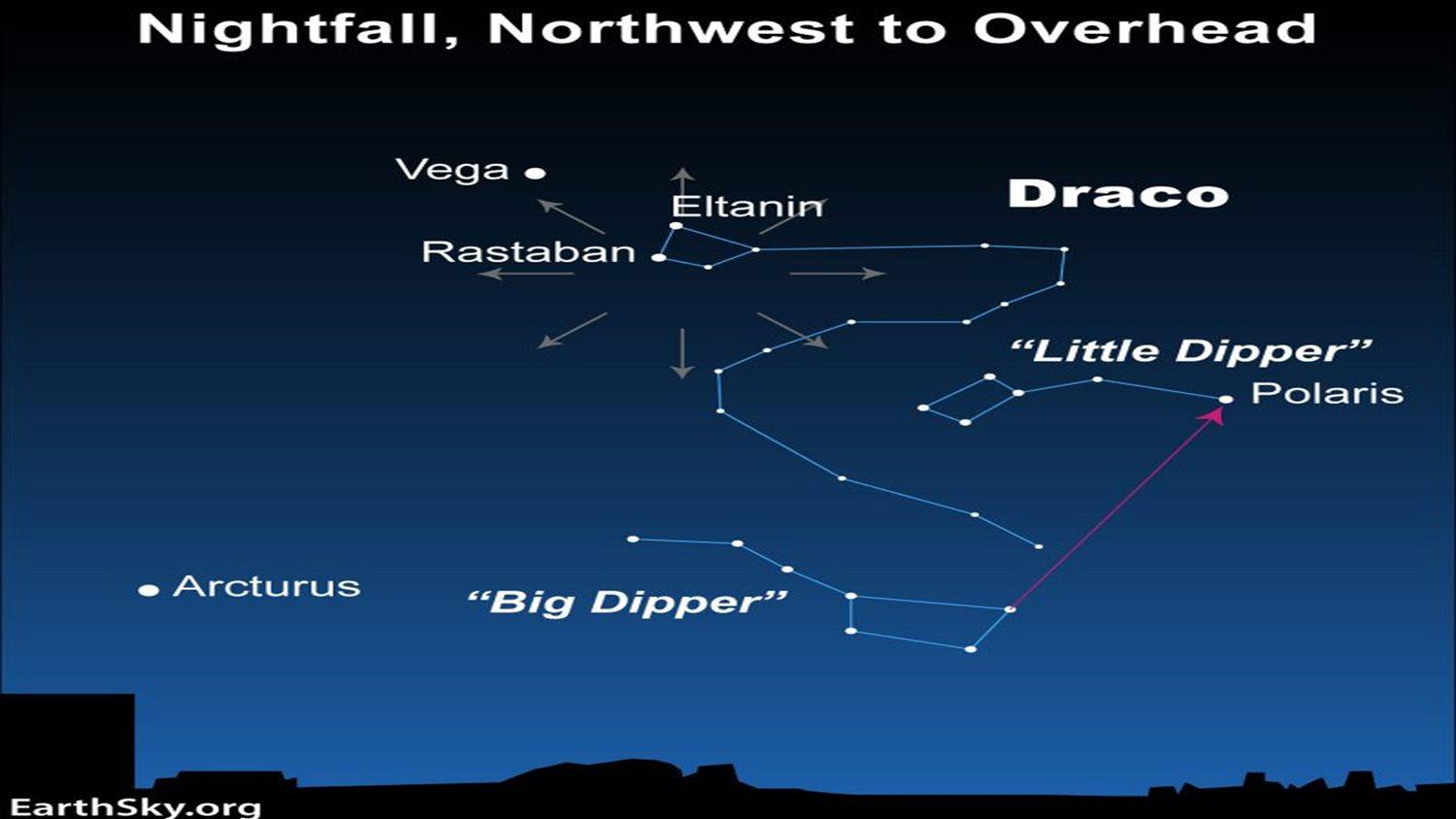
One of the lesser-known meteor showers, the Draconids meteor shower arrives during early October. This meteor shower peaks between October 8th and 9th each year, but is often forgotten about as generally this shower only produces around ten meteors per hour. The radiant for the Draconids is found at the head of Draco which is Latin for Dragon. This constellation can be found in the northwestern sky above the Big Dipper, and between the bright stars Vega and Polaris; or the “north star”.
The Draconids origin comes from a small comet known as Comet 21P/Giacobini-Zinner. The comet is named for the two astronomers who observed the comet in the early twentieth century with Michel Giacobini viewing the comet in December 1900 from France while Ernest Zinner observed the Comet in October 1913 from Germany. This comet has a period of just over six and a half years, which loops between Earth and Jupiter.
The Draconids are a unique meteor shower for a few reasons. Unlike most meteor showers which are visible many nights on end on either side of the peak, the Draconids are short lived, only visible between two and four days. The debris of ice and rock that serves as the source of meteors from this comet is not evenly distributed around its path of orbit, but is instead clustered near the comet, which owes its short duration and low meteor count. Another unique aspect of this meteor shower is that its radiant point is highest in the sky during the first half of the night with Draconid meteors peaking during the evening hours as opposed to the predawn hours like most meteor showers.
Since the debris clusters near the meteor, certain years the Draconids overperform. This happened in 1933 and 1946 when the comet spurred what is known as a meteor storm. A meteor storm is when one thousand meteor or more occur per hour. In 1933, 500 meteors were observed per minute in Europe while between 50 and 100 meteors per minute were observed in the United States in October 1946.
Thanks to an expansive high pressure system over the United States, clear to mostly clear skies are forecast for much of the United States on the evenings of October 8th and 9th, but the a full moon on the night of October 9th will make meteors more difficult to see as the Hunter’s Moon illuminates the night sky.
---------
Image Courtesy of Earthsky.org
The Draconids origin comes from a small comet known as Comet 21P/Giacobini-Zinner. The comet is named for the two astronomers who observed the comet in the early twentieth century with Michel Giacobini viewing the comet in December 1900 from France while Ernest Zinner observed the Comet in October 1913 from Germany. This comet has a period of just over six and a half years, which loops between Earth and Jupiter.
The Draconids are a unique meteor shower for a few reasons. Unlike most meteor showers which are visible many nights on end on either side of the peak, the Draconids are short lived, only visible between two and four days. The debris of ice and rock that serves as the source of meteors from this comet is not evenly distributed around its path of orbit, but is instead clustered near the comet, which owes its short duration and low meteor count. Another unique aspect of this meteor shower is that its radiant point is highest in the sky during the first half of the night with Draconid meteors peaking during the evening hours as opposed to the predawn hours like most meteor showers.
Since the debris clusters near the meteor, certain years the Draconids overperform. This happened in 1933 and 1946 when the comet spurred what is known as a meteor storm. A meteor storm is when one thousand meteor or more occur per hour. In 1933, 500 meteors were observed per minute in Europe while between 50 and 100 meteors per minute were observed in the United States in October 1946.
Thanks to an expansive high pressure system over the United States, clear to mostly clear skies are forecast for much of the United States on the evenings of October 8th and 9th, but the a full moon on the night of October 9th will make meteors more difficult to see as the Hunter’s Moon illuminates the night sky.
---------
Image Courtesy of Earthsky.org