


Missing translation for key: backTo forecast
How Do Cold Thunderstorms Happen?
March 7, 2025 at 11:39 AM EST
By WeatherBug Meteorologist, Mark Ellinwood
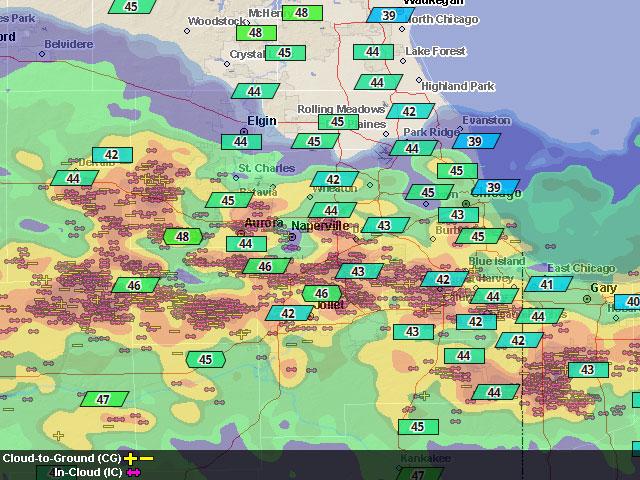
While thunderstorms are generally related to warm weather and summertime, there are also instances where it can be in the 30s and 40s while lightning crackles overhead. How do thunderstorms form when it's that cold?
The most common "cold" thunderstorms are known as elevated thunderstorms. These storms can occur when it is cold at the surface, but there is a warm layer higher up in the atmosphere that provides the energy to the storms.
Elevated thunderstorms occur a lot on the north side of a warm front, where warm air is surging in above our heads, but the warm air at the surface hasn't quite made it into the area yet.
Ever wonder why these elevated storms seem to have long, drawn-out thunder compared to thunderstorms that occur when it's warm at the surface? With cold air at the surface and warm air above it, the warm air will act as a kind of ceiling, or insulator, to things like sound waves. The sound waves from thunder will hit the bottom of the warm air layer and will bounce back to the ground, which causes the sound of thunder to last much longer.
Aside from elevated thunderstorms, there can also be "cold thunderstorms" when it's just very, very cold above the surface. Thunderstorms require unstable air to form, and there is a critical point where the rate of cooling as you go up through the atmosphere is great enough to create an unstable atmosphere.
This kind of situation is most common in early winter over large bodies of water, such as the Great Lakes. When the lakes are not frozen and very cold air moves in from Canada, there is enough of a difference between the water temperature and the very cold air above it to create an unstable atmosphere.
Whether it's raining or snowing, these are the two ways to get lightning and thunder when it's cold outside.
The most common "cold" thunderstorms are known as elevated thunderstorms. These storms can occur when it is cold at the surface, but there is a warm layer higher up in the atmosphere that provides the energy to the storms.
Elevated thunderstorms occur a lot on the north side of a warm front, where warm air is surging in above our heads, but the warm air at the surface hasn't quite made it into the area yet.
Ever wonder why these elevated storms seem to have long, drawn-out thunder compared to thunderstorms that occur when it's warm at the surface? With cold air at the surface and warm air above it, the warm air will act as a kind of ceiling, or insulator, to things like sound waves. The sound waves from thunder will hit the bottom of the warm air layer and will bounce back to the ground, which causes the sound of thunder to last much longer.
Aside from elevated thunderstorms, there can also be "cold thunderstorms" when it's just very, very cold above the surface. Thunderstorms require unstable air to form, and there is a critical point where the rate of cooling as you go up through the atmosphere is great enough to create an unstable atmosphere.
This kind of situation is most common in early winter over large bodies of water, such as the Great Lakes. When the lakes are not frozen and very cold air moves in from Canada, there is enough of a difference between the water temperature and the very cold air above it to create an unstable atmosphere.
Whether it's raining or snowing, these are the two ways to get lightning and thunder when it's cold outside.