


Back to forecast
Hurricanes Still Possible in November
October 29, 2021 at 09:42 PM EDT
By WeatherBug Meteorologist, Chad Merrill
Although November marks the latter half of autumn with leaves changing color and the holiday season not too far away, the Atlantic basin can still be primed for tropical storms and hurricanes.
How Many Form?
The National Hurricane Center data suggests one storm forms every two years in the Atlantic basin during the month of November. The Atlantic Basin consists of the Caribbean, Gulf of Mexico and Atlantic Ocean north of the equator. The last storm of the season typically forms no later than November 23.
Last year, the record trend of activity continued into November. In fact, there were three named storms - two of which rocketed to Category 4. Hurricanes Eta and Iota slammed into Honduras and Nicaragua during the 11th month of the year, causing more than $8 billion in damage between the two storms. Before that, there was no development in 2018 or 2019 - you have to go back to 2017, which was Tropical Storm Rina. It developed and traveled over the open Atlantic. The year 2016 saw Hurricane Otto became a major Category 3 hurricane before making landfall in southern Nicaragua, and in 2015, a tropical depression that formed southeast of the Bahamas became Hurricane Kate and ended up merging with a cold front and producing high wind and flooding in Ireland and Wales.
Looking back at the historical 2005 season, three tropical storms took shape in November with another forming in December. In what was a very unusual hurricane season, 2005 even produced a named storm, Tropical Storm Zeta, on December 30. Zeta was the second latest-forming storm on record. The storm persisted until January 6, 2006, never threatening land.
Where They Form and Why
Most November tropical systems usually form in only one of two spots, the western Atlantic northeast of Cuba and in the southwestern Caribbean near the Central American coast.
Storms that form in November, whether they develop in the Caribbean or the western Atlantic, usually track to the northeast toward the open waters of the western and central Atlantic. These storms can be troublesome for eastern Cuba, the Bahamas and Bermuda. On a rare occasion, storms that form near the Central America coast can track north into the Gulf of Mexico and turn to the northeast toward Florida.
Tropical systems have a better chance of developing and surviving in November in the southern Atlantic or Caribbean because water temperatures, even in November, remain close to the 80-degree threshold needed for storms to form and grow. Additionally, hurricane-killing shear often remains low or non-existent. In other areas of the Atlantic basin, including the Gulf of Mexico, wind shear becomes stronger in the autumn, often tearing apart any waves of thunderstorms that try to organize into a tropical system.
Famous November Hurricanes
At least eight major hurricanes with winds of 111 mph or greater have formed in the Atlantic basin since 1900. 2015`s Otto was the most recent one to form.
The United States is not immune from direct hurricane hits in November. Record books show that four hurricanes have made U.S. landfall since 1900 during this last month of hurricane season. All four storms impacted Florida. The most recent storm, Category 2 Hurricane Kate, roared ashore in northwestern Florida in late November 1985 and produced an estimated $300 million in damage.
The Atlantic tropical season does not "officially" conclude until November 30, although storms have formed in every month of the calendar year.
---
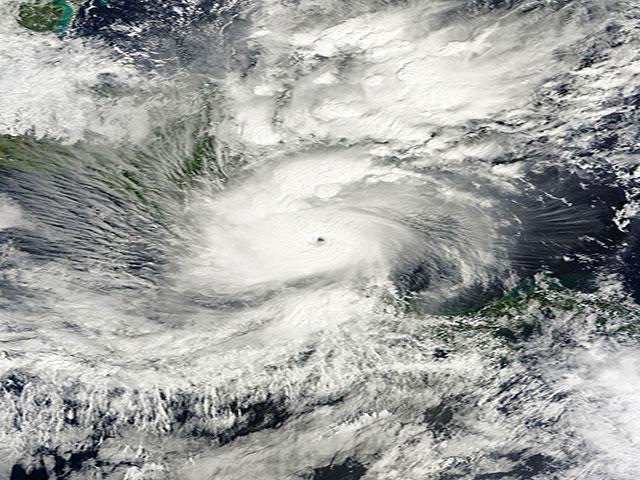
Story Image: Hurricane Otto is seen at peak intensity immediately before making landfall on Nicaragua's southeast coast on November 24, 2016. (Courtesy of NASA)
How Many Form?
The National Hurricane Center data suggests one storm forms every two years in the Atlantic basin during the month of November. The Atlantic Basin consists of the Caribbean, Gulf of Mexico and Atlantic Ocean north of the equator. The last storm of the season typically forms no later than November 23.
Last year, the record trend of activity continued into November. In fact, there were three named storms - two of which rocketed to Category 4. Hurricanes Eta and Iota slammed into Honduras and Nicaragua during the 11th month of the year, causing more than $8 billion in damage between the two storms. Before that, there was no development in 2018 or 2019 - you have to go back to 2017, which was Tropical Storm Rina. It developed and traveled over the open Atlantic. The year 2016 saw Hurricane Otto became a major Category 3 hurricane before making landfall in southern Nicaragua, and in 2015, a tropical depression that formed southeast of the Bahamas became Hurricane Kate and ended up merging with a cold front and producing high wind and flooding in Ireland and Wales.
Looking back at the historical 2005 season, three tropical storms took shape in November with another forming in December. In what was a very unusual hurricane season, 2005 even produced a named storm, Tropical Storm Zeta, on December 30. Zeta was the second latest-forming storm on record. The storm persisted until January 6, 2006, never threatening land.
Where They Form and Why
Most November tropical systems usually form in only one of two spots, the western Atlantic northeast of Cuba and in the southwestern Caribbean near the Central American coast.
Storms that form in November, whether they develop in the Caribbean or the western Atlantic, usually track to the northeast toward the open waters of the western and central Atlantic. These storms can be troublesome for eastern Cuba, the Bahamas and Bermuda. On a rare occasion, storms that form near the Central America coast can track north into the Gulf of Mexico and turn to the northeast toward Florida.
Tropical systems have a better chance of developing and surviving in November in the southern Atlantic or Caribbean because water temperatures, even in November, remain close to the 80-degree threshold needed for storms to form and grow. Additionally, hurricane-killing shear often remains low or non-existent. In other areas of the Atlantic basin, including the Gulf of Mexico, wind shear becomes stronger in the autumn, often tearing apart any waves of thunderstorms that try to organize into a tropical system.
Famous November Hurricanes
At least eight major hurricanes with winds of 111 mph or greater have formed in the Atlantic basin since 1900. 2015`s Otto was the most recent one to form.
The United States is not immune from direct hurricane hits in November. Record books show that four hurricanes have made U.S. landfall since 1900 during this last month of hurricane season. All four storms impacted Florida. The most recent storm, Category 2 Hurricane Kate, roared ashore in northwestern Florida in late November 1985 and produced an estimated $300 million in damage.
The Atlantic tropical season does not "officially" conclude until November 30, although storms have formed in every month of the calendar year.
---
Story Image: Hurricane Otto is seen at peak intensity immediately before making landfall on Nicaragua's southeast coast on November 24, 2016. (Courtesy of NASA)