Back to Pollen Alerts
Active Week of Weather Leads to Mixed Drought Results
December 4, 2025 at 04:04 PM EST
By WeatherBug Meteorologist, Alyssa Robinette

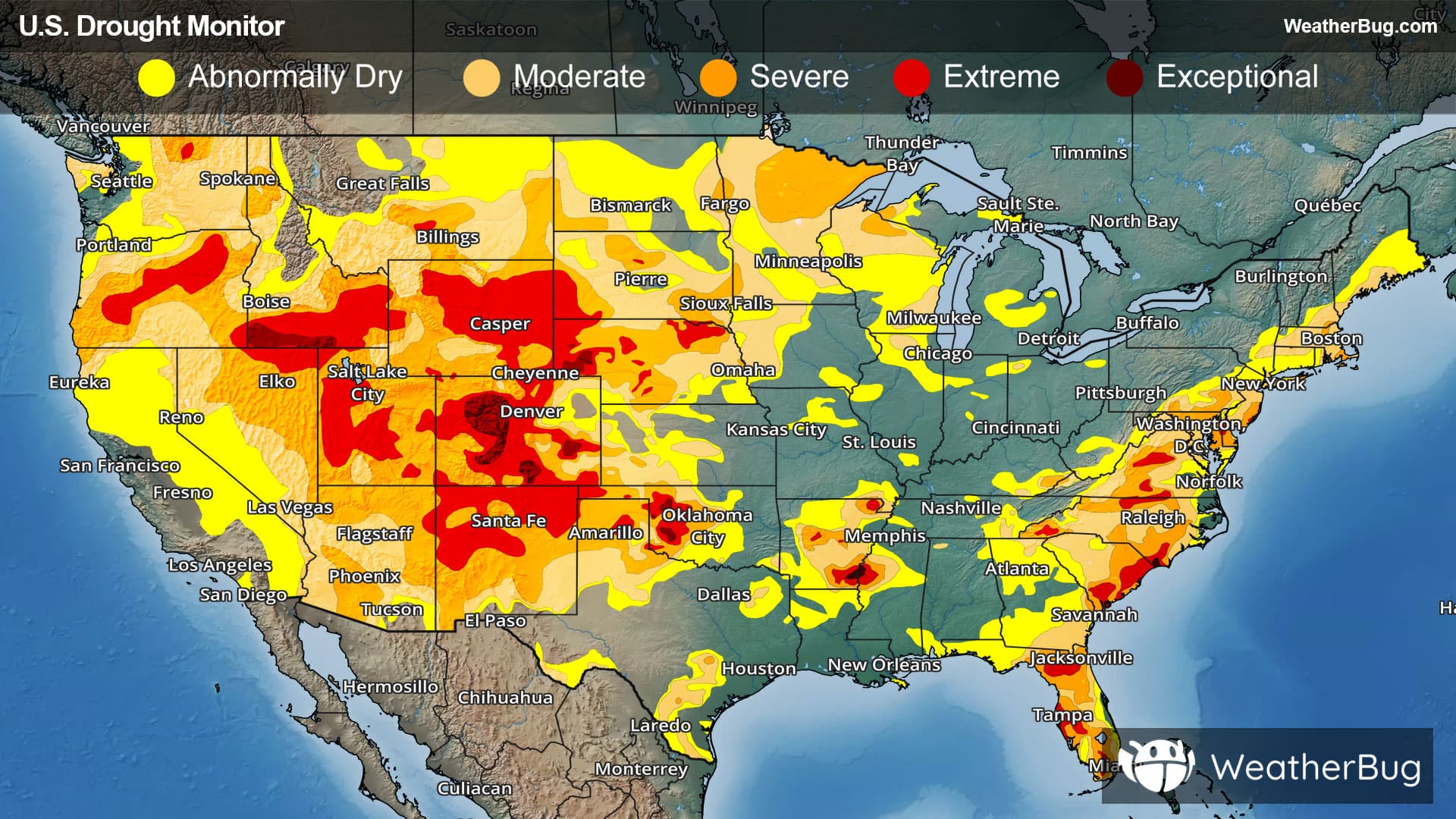
Two significant weather systems impacted the U.S. last week, bringing a swath of snow across the Northern Tier and beneficial rainfall to the South and Southeast. Overall, there was a mix of improvements and degradations to the drought depiction this week.
Northeast
One low pressure system moved across the Northeast early last week, with lake-effect snow ramping up in its wake. There was another low-pressure system that impacted the region toward the end of the period.
Snow was generally limited to interior portions of the Northeast, with areas of upstate New York, Vermont and New Hampshire picking up anywhere from 10 to 27 inches of snow for the week. However, a wintry mix of snow, freezing rain and rain developed across coastal locations and lower elevations initially with the second storm, before transitioning over to plain rain.
Given recovering groundwater, soil moisture and snowpack conditions, there were improvements made across southeastern Maine, northern New Hampshire, much of Vermont, northeastern and far western New York, south-central Pennsylvania and eastern West Virginia. These areas all saw a reduction in abnormal dryness and/or moderate drought (D0-D1) this week.
Despite the significant rain and snow this week, there were a few small areas of degradation in central and far east-central Pennsylvania, a sliver of west-central New Jersey and parts of the Delmarva Peninsula. Severe drought (D2) grew across west-central New Jersey into east-central Pennsylvania. All other areas saw an expansion of abnormal dryness and/or moderate drought (D0-D1).
Southeast
Two cold fronts impacted the Southeast region over the last week, one early in the period and the second towards the end of the period. Light to moderate rainfall accumulations were observed across much of the region, with the highest totals (2 to 4 inches) occurring in central and southern Alabama. There was also a wintry mix of snow, freezing rain and rain that fell over western Virginia.
Improvements to the drought depiction were made across much of Alabama, west-central Georgia near the Atlanta metro area, most of South Carolina, northeastern North Carolina and a small portion of west-central Virginia. Extreme drought (D3) was trimmed back substantially across southeastern Alabama, while a small area of extreme drought (D3) near Atlanta was removed. Severe drought (D2) decreased in coverage across southern Alabama and west-central Georgia, while it was completely removed in northeastern North Carolina. Otherwise, the other spots saw a decrease in abnormal dryness and/or moderate drought (D0-D1).
Conversely, the drought depiction worsened across parts of the Florida Panhandle, central and southeastern Georgia, central North Carolina and southern Virginia. Severe drought (D2) expanded across southeastern Georgia and northern Florida, while an area of severe drought was also added to west-central Florida near Tampa. An area of exceptional drought (D4) remains from around Tallahassee Florida up into the southwest corner of Georgia.
South
The weather was quiet across the Southern region for much of the week. It was not until late in the drought monitoring period that a cold front brought some much-needed rain. The heaviest rain fell across the eastern portions of the region, especially along the Gulf Coast. Lesser amounts were observed elsewhere.
Improvements were made to the drought depiction across most of Texas (excluding western and southeastern Texas), southeastern Oklahoma and west-central Arkansas. Some parts of eastern Texas (just north of Houston) saw a 2-category improvement! Here, areas of severe drought (D2) were downgraded to moderate drought (D1). Abnormal dryness and moderate drought (D0-D1) also decreased in coverage across the rest of eastern Texas. A small area of severe drought (D2) in central Texas was removed, with severe drought also shrinking in northern Texas. Extreme drought (D3) decreased in coverage in south-central (north of Victoria) and far southern (north of Brownsville) Texas. All other locations saw abnormal dryness and/or moderate drought (D0-D1) decrease.
At the same time, a few spots missed out on the beneficial moisture and saw the drought depiction worsen. This includes southeastern Louisiana, southeastern Texas and much of western Texas. Severe drought (D2) increased in coverage along parts of the Texas coast (from south of Victoria to the coast). Extreme and exceptional drought (D3-D4) increased in western Texas (Big Bend National Park). The rest of the spots saw abnormal dryness and/or moderate drought expand.
Midwest
Like much of the eastern half of the U.S., there were two low pressure systems that impacted the Midwest last week. The first one moved through earlier in the forecast period, then lake-effect snow followed in its wake. The second one arrived towards the end of the drought monitoring period. Snow was generally limited to the Upper Midwest with the first system, while rain fell in the Lower Midwest. With the second system, moderate to heavy snow piled up across most of the region, but there could still be some rain or even freezing rain in far southern parts of the region. The highest snowfall totals were observed across areas of northern Michigan, where accumulations ranged from 10 to 34 inches.
Improvements were made across a large portion of Illinois, central Missouri and central Iowa. Most notably, an area of extreme drought (D3) decreased across east-central Illinois, while severe drought (D2) decreased substantially for the rest of Illinois. A few areas of moderate drought (D1) were removed across central Missouri, including across the St. Louis metro area. All other changes were to decrease coverage of abnormal dryness and/or moderate drought (D0-D1).
Despite the beneficial moisture, areas of Michigan did see deterioration in the drought depiction in response to a combination of factors including short-term precipitation deficits, low stream-flows, and low soil moisture levels. Degradations also occurred in southeastern Wisconsin and southeastern Missouri. Moderate drought (D1) expanded across southeastern Missouri, while parts of Michigan and southeastern Wisconsin saw an increase in abnormal dryness.
High Plains
Besides some snow showers in the high portions of Wyoming and Colorado, the week started out quietly. Towards the end of the monitoring period, a cold front dropped south across the region. There was generally light precipitation across Wyoming and Colorado, but the rest of the region saw widespread precipitation. Snow was the predominant precipitation type, but Kansas did see some rain before the changeover to snow.
There were some minor improvements in southwestern Wyoming, a portion of western Colorado and north-central Kansas. Southwestern Wyoming saw moderate to extreme drought (D1-D3) improve this week. Moderate drought (D1) decreased in coverage across western Wyoming, while small areas of moderate drought (D1) were removed in north-central Kansas.
Degradations did occur in southeastern Wyoming and along the Colorado Front Range, including the Denver metro area. Moderate drought expanded into southeastern Wyoming and most of the Colorado Front Range. A small area of severe drought (D2) was added near the Denver metro area and severe and extreme drought (D2-D3) increased in coverage for central Colorado.
West
The Northwest saw two quick weather systems dart across the region early in the week. These brought rain to the lower elevations and snow to the mountains and higher elevations. Otherwise, it was a mostly dry week throughout the West. However, recent storms over the past few weeks and overall improving precipitation deficits, soil moisture and stream-flows did allow for some improvements this week despite the dry weather.
Improvements were made this week to northwest, central and northeastern Montana, eastern Washington, southern Nevada, southeastern California and localized areas in southwestern Utah and western Arizona. Severe drought (D2) improved across northwestern Montana and southern Nevada. All other areas saw improvements to abnormal dryness and/or moderate drought (D0-D1).
Degradations were made this week to much of southern Oregon, west-central Idaho and north-central and southeastern New Mexico. Severe drought (D2) worsened across southeastern New Mexico, while other areas saw abnormal dryness and/or moderate drought (D0-D1) increase in coverage.
In California, the NWS Forecast Office in Los Angeles is reporting that November was one of the wettest Novembers in the last 50+ years across southwestern California. Moreover, the city of Santa Barbara has reported the wettest water-year start on record through November with over 9.5 inches observed. Other areas in Santa Barbara County, including areas of the Santa Ynez Mountains, have received over 15 inches for the contemporaneous period. In mid-October, 39-percent of California was in some level of drought, and now that has dropped to less one percent.
Looking Ahead
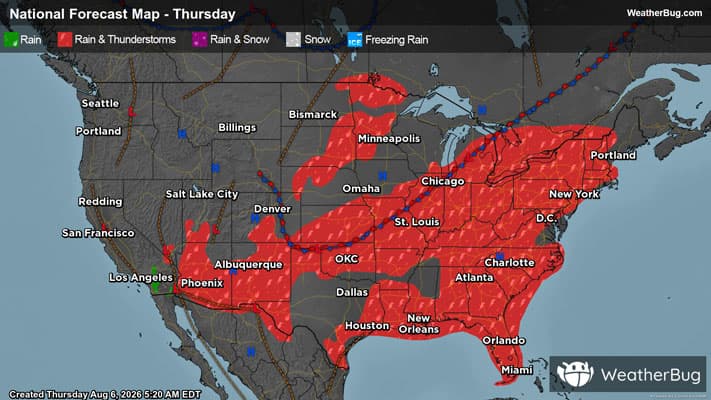
The NWS precipitation forecast highlights two main regions of significant rainfall: the central Gulf Coast and the Pacific Northwest. Along the Gulf Coast—southern Louisiana through the western Florida Panhandle—2 to 5 inches of rain is expected, with southern Georgia and coastal South Carolina receiving 1 to 4 inches. Farther north, the southern Mid-Atlantic may see 1 to 3 inches, while New England is forecast to receive less than 1 inch.
In the Pacific Northwest, a strong feed of moisture is expected to bring 2 to over 7 inches of liquid precipitation to western Washington and Oregon. The Northern Rockies, including northern Idaho, western Montana, and western Wyoming, are forecast to receive 1 to 3 inches of liquid precipitation, which may fall either as rain or snow depending on temperatures.
Most of the Intermountain West, the Desert Southwest, and the central and southern Great Basin will remain largely dry, though northern Utah and Colorado could pick up 0.25 to 2 inches. Much of the Plains and Midwest is expected to see generally light precipitation, staying under 0.5 inch.
-----
Source: U.S. Drought Monitor
Northeast
One low pressure system moved across the Northeast early last week, with lake-effect snow ramping up in its wake. There was another low-pressure system that impacted the region toward the end of the period.
Snow was generally limited to interior portions of the Northeast, with areas of upstate New York, Vermont and New Hampshire picking up anywhere from 10 to 27 inches of snow for the week. However, a wintry mix of snow, freezing rain and rain developed across coastal locations and lower elevations initially with the second storm, before transitioning over to plain rain.
Given recovering groundwater, soil moisture and snowpack conditions, there were improvements made across southeastern Maine, northern New Hampshire, much of Vermont, northeastern and far western New York, south-central Pennsylvania and eastern West Virginia. These areas all saw a reduction in abnormal dryness and/or moderate drought (D0-D1) this week.
Despite the significant rain and snow this week, there were a few small areas of degradation in central and far east-central Pennsylvania, a sliver of west-central New Jersey and parts of the Delmarva Peninsula. Severe drought (D2) grew across west-central New Jersey into east-central Pennsylvania. All other areas saw an expansion of abnormal dryness and/or moderate drought (D0-D1).
Southeast
Two cold fronts impacted the Southeast region over the last week, one early in the period and the second towards the end of the period. Light to moderate rainfall accumulations were observed across much of the region, with the highest totals (2 to 4 inches) occurring in central and southern Alabama. There was also a wintry mix of snow, freezing rain and rain that fell over western Virginia.
Improvements to the drought depiction were made across much of Alabama, west-central Georgia near the Atlanta metro area, most of South Carolina, northeastern North Carolina and a small portion of west-central Virginia. Extreme drought (D3) was trimmed back substantially across southeastern Alabama, while a small area of extreme drought (D3) near Atlanta was removed. Severe drought (D2) decreased in coverage across southern Alabama and west-central Georgia, while it was completely removed in northeastern North Carolina. Otherwise, the other spots saw a decrease in abnormal dryness and/or moderate drought (D0-D1).
Conversely, the drought depiction worsened across parts of the Florida Panhandle, central and southeastern Georgia, central North Carolina and southern Virginia. Severe drought (D2) expanded across southeastern Georgia and northern Florida, while an area of severe drought was also added to west-central Florida near Tampa. An area of exceptional drought (D4) remains from around Tallahassee Florida up into the southwest corner of Georgia.
South
The weather was quiet across the Southern region for much of the week. It was not until late in the drought monitoring period that a cold front brought some much-needed rain. The heaviest rain fell across the eastern portions of the region, especially along the Gulf Coast. Lesser amounts were observed elsewhere.
Improvements were made to the drought depiction across most of Texas (excluding western and southeastern Texas), southeastern Oklahoma and west-central Arkansas. Some parts of eastern Texas (just north of Houston) saw a 2-category improvement! Here, areas of severe drought (D2) were downgraded to moderate drought (D1). Abnormal dryness and moderate drought (D0-D1) also decreased in coverage across the rest of eastern Texas. A small area of severe drought (D2) in central Texas was removed, with severe drought also shrinking in northern Texas. Extreme drought (D3) decreased in coverage in south-central (north of Victoria) and far southern (north of Brownsville) Texas. All other locations saw abnormal dryness and/or moderate drought (D0-D1) decrease.
At the same time, a few spots missed out on the beneficial moisture and saw the drought depiction worsen. This includes southeastern Louisiana, southeastern Texas and much of western Texas. Severe drought (D2) increased in coverage along parts of the Texas coast (from south of Victoria to the coast). Extreme and exceptional drought (D3-D4) increased in western Texas (Big Bend National Park). The rest of the spots saw abnormal dryness and/or moderate drought expand.
Midwest
Like much of the eastern half of the U.S., there were two low pressure systems that impacted the Midwest last week. The first one moved through earlier in the forecast period, then lake-effect snow followed in its wake. The second one arrived towards the end of the drought monitoring period. Snow was generally limited to the Upper Midwest with the first system, while rain fell in the Lower Midwest. With the second system, moderate to heavy snow piled up across most of the region, but there could still be some rain or even freezing rain in far southern parts of the region. The highest snowfall totals were observed across areas of northern Michigan, where accumulations ranged from 10 to 34 inches.
Improvements were made across a large portion of Illinois, central Missouri and central Iowa. Most notably, an area of extreme drought (D3) decreased across east-central Illinois, while severe drought (D2) decreased substantially for the rest of Illinois. A few areas of moderate drought (D1) were removed across central Missouri, including across the St. Louis metro area. All other changes were to decrease coverage of abnormal dryness and/or moderate drought (D0-D1).
Despite the beneficial moisture, areas of Michigan did see deterioration in the drought depiction in response to a combination of factors including short-term precipitation deficits, low stream-flows, and low soil moisture levels. Degradations also occurred in southeastern Wisconsin and southeastern Missouri. Moderate drought (D1) expanded across southeastern Missouri, while parts of Michigan and southeastern Wisconsin saw an increase in abnormal dryness.
High Plains
Besides some snow showers in the high portions of Wyoming and Colorado, the week started out quietly. Towards the end of the monitoring period, a cold front dropped south across the region. There was generally light precipitation across Wyoming and Colorado, but the rest of the region saw widespread precipitation. Snow was the predominant precipitation type, but Kansas did see some rain before the changeover to snow.
There were some minor improvements in southwestern Wyoming, a portion of western Colorado and north-central Kansas. Southwestern Wyoming saw moderate to extreme drought (D1-D3) improve this week. Moderate drought (D1) decreased in coverage across western Wyoming, while small areas of moderate drought (D1) were removed in north-central Kansas.
Degradations did occur in southeastern Wyoming and along the Colorado Front Range, including the Denver metro area. Moderate drought expanded into southeastern Wyoming and most of the Colorado Front Range. A small area of severe drought (D2) was added near the Denver metro area and severe and extreme drought (D2-D3) increased in coverage for central Colorado.
West
The Northwest saw two quick weather systems dart across the region early in the week. These brought rain to the lower elevations and snow to the mountains and higher elevations. Otherwise, it was a mostly dry week throughout the West. However, recent storms over the past few weeks and overall improving precipitation deficits, soil moisture and stream-flows did allow for some improvements this week despite the dry weather.
Improvements were made this week to northwest, central and northeastern Montana, eastern Washington, southern Nevada, southeastern California and localized areas in southwestern Utah and western Arizona. Severe drought (D2) improved across northwestern Montana and southern Nevada. All other areas saw improvements to abnormal dryness and/or moderate drought (D0-D1).
Degradations were made this week to much of southern Oregon, west-central Idaho and north-central and southeastern New Mexico. Severe drought (D2) worsened across southeastern New Mexico, while other areas saw abnormal dryness and/or moderate drought (D0-D1) increase in coverage.
In California, the NWS Forecast Office in Los Angeles is reporting that November was one of the wettest Novembers in the last 50+ years across southwestern California. Moreover, the city of Santa Barbara has reported the wettest water-year start on record through November with over 9.5 inches observed. Other areas in Santa Barbara County, including areas of the Santa Ynez Mountains, have received over 15 inches for the contemporaneous period. In mid-October, 39-percent of California was in some level of drought, and now that has dropped to less one percent.
Looking Ahead
The NWS precipitation forecast highlights two main regions of significant rainfall: the central Gulf Coast and the Pacific Northwest. Along the Gulf Coast—southern Louisiana through the western Florida Panhandle—2 to 5 inches of rain is expected, with southern Georgia and coastal South Carolina receiving 1 to 4 inches. Farther north, the southern Mid-Atlantic may see 1 to 3 inches, while New England is forecast to receive less than 1 inch.
In the Pacific Northwest, a strong feed of moisture is expected to bring 2 to over 7 inches of liquid precipitation to western Washington and Oregon. The Northern Rockies, including northern Idaho, western Montana, and western Wyoming, are forecast to receive 1 to 3 inches of liquid precipitation, which may fall either as rain or snow depending on temperatures.
Most of the Intermountain West, the Desert Southwest, and the central and southern Great Basin will remain largely dry, though northern Utah and Colorado could pick up 0.25 to 2 inches. Much of the Plains and Midwest is expected to see generally light precipitation, staying under 0.5 inch.
-----
Source: U.S. Drought Monitor