Active Weather Creates Mix of Improvements, Degradations to Drought Depiction
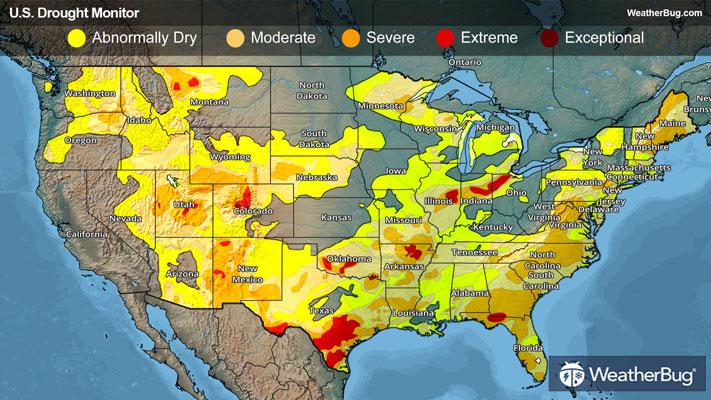
Multiple disturbances impacted the U.S. last week, leading to a more active weather pattern. Overall, there was mix of improvements and degradations to the drought depiction nationwide.
Northeast
A series of weather systems moved across the Northeast last week. The first one pushed through on the first day of the monitoring period. Two more low pressure systems arrived by the middle of the period, then more of a clipper-type system impacted them to end the monitoring period. Precipitation throughout the weekend was above normal for the region. The exception was Pennsylvania through southern New England, which saw only 25 to 50% of normal precipitation. Temperatures ended up above normal for the week. Given these unseasonably mild temperatures, snow was generally limited to higher elevations and interior Northeast with each system, with rain falling elsewhere.
Improvements to abnormally dry and moderate drought (D0-D1) conditions occurred in western and central New York. Northern Pennsylvania continued in a wetter pattern, allowing for moderate drought (D1) improvement, while southern portions remain drier and saw moderate and severe drought (D1-D2) expand. Severe drought (D2) improved in northern New Hampshire and Vermont. Moderate drought (D1) expanded in eastern Massachusetts but improved central centrally, while abnormally dry conditions (D0) expanded in southern Connecticut. Severe drought (D2) continued across southern Maine, with a small area of extreme drought (D3) around Portland, Maine.
Southeast
A slow-moving cold front drifted across the Southeast towards the middle of the drought monitoring period. Significant rainfall occurred along this front from Alabama through the western Carolinas. Areas along and north of this corridor picked up anywhere from 200 to 400% of normal precipitation! Meanwhile, areas south and east of this corridor had only light rainfall. Much of Virginia also saw little to no precipitation for the week.
Drought improvements occurred from west-central Alabama across northern Georgia into western North Carolina. An area of extreme drought (D3) was removed from west-central Alabama. Severe drought (D2) decreased in coverage across northern Georgia, far western South Carolina and western North Carolina. Moderate drought (D1) also contracted in spots.
East of this area, drought conditions worsened, with degradations across central and eastern North Carolina, much of South Carolina, central and southern Georgia, southeastern Alabama and most of Florida. Most notably, extreme drought (D3) expanded across parts of the Florida Panhandle into southwestern Georgia. Severe drought (D2) worsened substantially across southeastern Alabama, the western Florida Panhandle, northern and west-central Florida, western and southeastern South Carolina, central and eastern North Carolina and far southern Virginia. An area of severe drought (D2) was also introduced in far southern Florida. All other areas saw moderate drought (D1) expand.
South
The same cold front that was slow to move across the Southeast also hovered over eastern portions of the Southern region this week. Much of Louisiana, Mississippi, central and eastern Tennessee and southeastern Arkansas received well above normal rainfall, with southern Mississippi reporting 200 to 400% of normal. Another weather disturbance clipper parts of western Texas into the Texas and Oklahoma panhandles early in the week, bringing some snow or a wintry mix. Otherwise, central and southern Texas, eastern Oklahoma and most of Arkansas remained largely dry.
Drought improvements occurred across Mississippi, southern Louisiana and eastern Tennessee. This includes improvements to severe drought (D2) in northern Louisiana, northern Mississippi and eastern Tennessee. All other spots saw moderate drought (D1) contract.
In contrast, drought expanded across much of Arkansas and eastern and southern Texas. Extreme drought (D3) expanded in south Texas and now extends from Austin to San Antonio and then into the lower Rio Grande River. A new area of extreme drought (D3) was added in northeastern Texas and northeastern Arkansas. Moderate and severe drought (D1-D2) also expanded across east Texas into Arkansas, while abnormally dry (D0) conditions increased in central Texas and western Oklahoma. Severe drought (D2) expanded from eastern Arkansas into western Tennessee.
Midwest
The first half of the monitoring period was quite active across the Midwest, with multiple weather systems moving through the region. A clipper-type system then darted across the region during the last day of the period. Above normal precipitation well across much of Iowa, southern Minnesota, Wisconsin, Michigan, northern Illinois and Missouri.
In general, temperatures were above normal, which limited snow generally to the extreme Upper Midwest, while rain fell in the Lower Midwest. The exception was the clipper system at the end of the period, which was colder and the dominant precipitation type was snow. Rain falling across the Midwest in January is unusual. With soils largely unfrozen, the rain was quite beneficial.
Drought conditions improved across much of Wisconsin, Michigan, central Illinois, northern Missouri and southern and eastern Iowa. Severe drought (D2) decreased in coverage across northeastern Wisconsin and a portion of central Illinois. Moderate drought (D1) was removed from the northern half of Michigan’s Lower Peninsula and eastern Iowa. All other spots saw improvements made to abnormally dry and moderate drought (D0-D1) conditions.
High Plains
One low pressure system moved across Wyoming and Colorado into Kansas and southern and eastern Nebraska early in the monitoring period, with a cold front also advancing through the region. This allowed for above normal precipitation in eastern Colorado, Kansas and southeastern Nebraska. Snow generally occurred in Wyoming and Colorado, while rain or a rain/snow mix occurred in Kansas and Nebraska. The northern Plains saw some flurries or light snow towards the middle of the period. However, much of the High Plains region remained dry.
Abnormally and moderate drought (D0-D1) conditions improved in southeastern Nebraska, eastern Kansas and parts of south-central Colorado. An area of severe drought (D2) was also removed in west-central Colorado.
Conversely, drought expanded across eastern Wyoming, west-central South Dakota and northeastern Colorado. Extreme and exceptional (D3-D4) worsened slightly in central Colorado. Just about all of western Colorado is far below normal on snowpack. Abnormal dryness and moderate drought (D0-D1) worsened in northeastern Wyoming. Abnormal dryness expanded in eastern Wyoming.
West
Two weather systems, one in the Northwest and the other in the Southwest, impacted the Western U.S. during the first half of the monitoring period. Temperatures generally remained above normal for most of the region, which limited snowfall to the highest elevations. Rain fell elsewhere. A largely dry weather pattern then took over for the second half of the period. Though, there were some occasional showers in the Pacific Northwest. Above normal precipitation occurred last week across southeastern Arizona, western and central New Mexico and western Washington.
Most drought changes reflected improvement. This includes abnormally dry and moderate drought (D0-D1) in western Montana and central Idaho. Severe to extreme drought (D2-D3) improved as well in eastern Arizona, western New Mexico, eastern Nevada and western Utah.
In contrast, abnormal dryness and moderate drought (D0-D1) expanded in southwestern Idaho and north-central Nevada.
Looking Ahead
During the next drought monitoring period, much of the Western U.S. into the Plains are expected to remain dry. Given the active, soggy pattern over the last few months in the West, there could still be some minor improvements to the drought or at least prevent drought from worsening. However, it is most likely that abnormally dry and drought worsen given the dry weather.
Conversely, the Great Lakes region and the Northeast are likely to see the highest precipitation totals as multiple weather systems bring chances for snow. Toward the end of the forecast period, some coastal rain may develop across parts of south and east Texas as well as Louisiana.
-----
Source: U.S. Drought Monitor