


Back to forecast
On This Day In 1954: Hurricane Hazel Makes Landfall On Carolina Coast
October 15, 2021 at 05:02 AM EDT
By Weatherbug Meteorologist, John Benedict
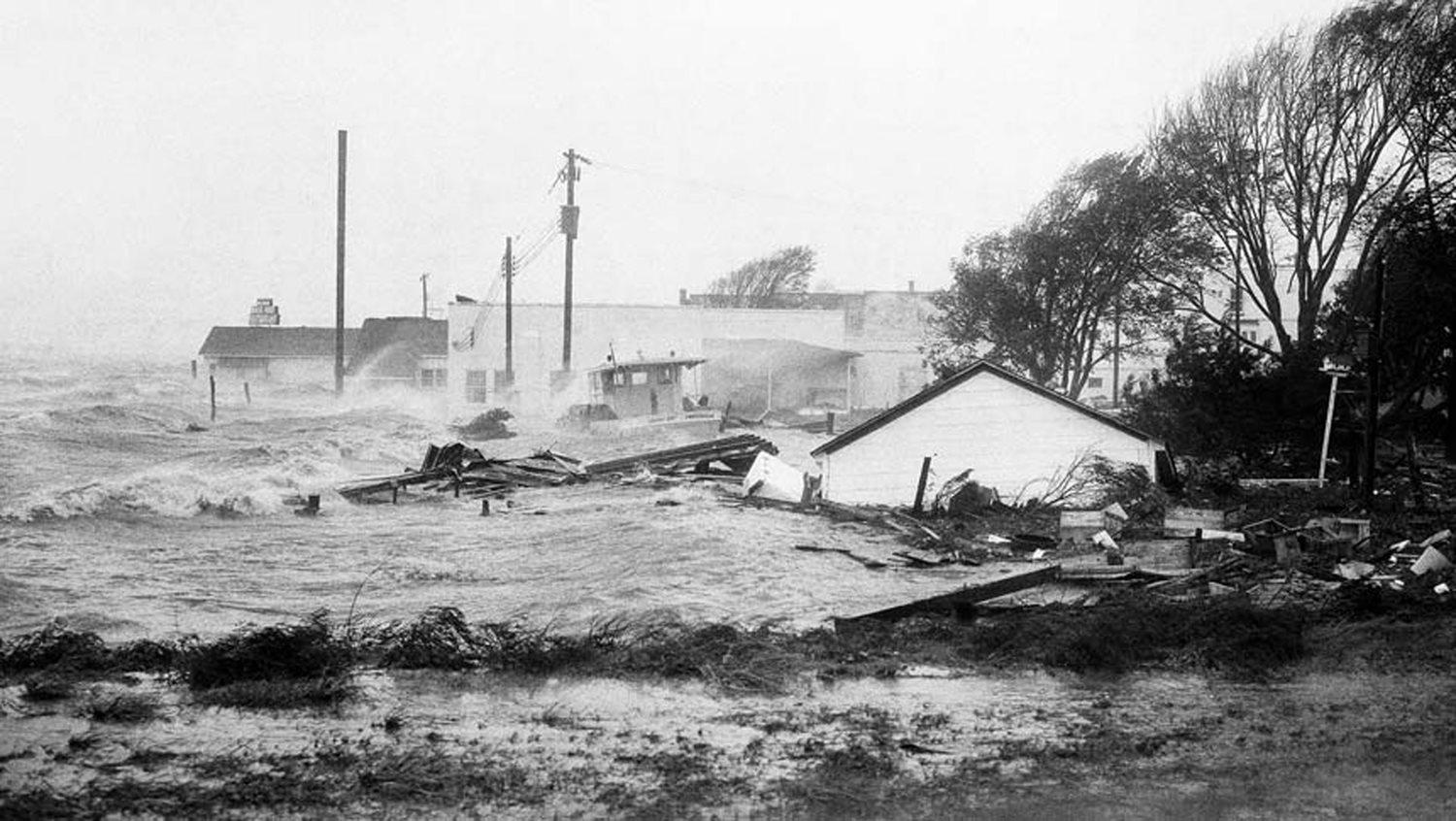
On this day 67 years ago, Hurricane Hazel, the deadliest, costliest and most intense storm of the active 1954 Hurricane Season made landfall near the North Carolina-South Carolina state line as a Category 4 hurricane.
Despite recent storms like Hurricanes Matthew and Florence that caused major flooding and billions of dollars of damage, Hazel remains the strongest and only Category 4 storm to make landfall in North Carolina. Hazel left a path of destruction from the Caribbean, most notably Haiti, to southern Canada where deadly flooding occurred in Ontario.
Hazel’s origins can be traced back to a tropical wave that was discovered just east of the Lesser Antilles on October 5, 1954. From there, thunderstorm activity associated with the tropical wave would continue to organize and push westward into the warm waters of the Caribbean. The storm quickly intensified the same day it was discovered and astonished Hurricane Hunters with flight-level winds of 100 mph and surface winds of 65 to 75 mph. This led to the formation of Hurricane Hazel just east of Grenada the same day.
Hurricane Hazel made first landfall in Grenada with winds estimated at 75 mph. After churning over Grenada, Hazel pushed into the Caribbean Sea before sharply turning northward towards Haiti, which is a climatologically favored track during the month of October. Hazel would have two additional landfalls over western Haiti as the tropical cyclone rumbled through the Windward passage as a major Category 3 hurricane with winds estimated at 120 mph on October 12. The high winds and heavy rain produced severe damage in western Haiti as entire villages and towns were wiped out either by storm surge or flash flooding. It is estimated that between 400 and 1,000 Haitians lives were lost due to Hazel. It was even reported that household items like bowls and plates from Haiti washed up on the Carolina coast after landfall.
After Haiti’s bout with this storm, Hazel would slightly weaken to a Category 2 hurricane before it would make its fourth landfall, this time targeting Inagua, an island of the southern Bahamas on October 13. After clearing the Bahamas, Hazel was on an unstoppable path towards the Carolinas. By October 14, Hurricane Hazel was found with sustained winds of 150 mph, making it a strong Category 4 hurricane. Initial forecasts had Hazel turning northeastward, with the worst of the storm remaining offshore, but instead the storm accelerated northwestward and slammed into the Carolinas.
Hurricane Hazel would make her fifth and final landfall around Noon near Calabash, N.C., on October 15, 1954. An expansive storm surge over 12 feet inundated the Carolina coastline between Myrtle Beach and Cape Fear. Unfortunately, the storm surge was made worse as the Hazel’s landfall coincided with a lunar high tide with some areas reporting up to 18 feet of surge as the system pushed onshore. Hazel’s impacts did not just stop there as heavy rains between 9 to 11 inches and strong winds greater than 90 mph battered the Mid-Atlantic coastline. Hurricane force winds extended well inland which caused severe damage to agriculture and forests. Sustained winds of 75 mph and gusts of 90 mph were recorded in Raleigh, N.C., which is 120 miles inland.
Hazel’s rapid forward speed, which was estimated to be over 50 mph after landfall, helped the storm maintain Category 1 strength as far north as Canada. Heavy rains across the Toronto area in the two weeks prior to Hazel’s arrival had primed the area for flooding. In under 24 hours, Hazel dropped over 8 inches of rain that produced deadly flash flooding. Extreme flooding occurred on the Humber River in Toronto which exploded out of its banks and swept away homes and washed-out roads and bridges. 81 Canadians perished in the flash flooding, making it one of Canada’s most deadly storms in the twentieth century.
Damages over $160 million were calculated across the Carolinas with more than $280 million in total in the U.S, while $100 million was calculated for Canada. Among the damages, nearly 100 people in the U.S. lost their lives to the storm. Due to the shear carnage from this storm between Haiti, the United States and Canada, the name Hazel was among the first set of hurricane names to be retired along with 1954’s Hurricanes Carol and Edna.
Despite recent storms like Hurricanes Matthew and Florence that caused major flooding and billions of dollars of damage, Hazel remains the strongest and only Category 4 storm to make landfall in North Carolina. Hazel left a path of destruction from the Caribbean, most notably Haiti, to southern Canada where deadly flooding occurred in Ontario.
Hazel’s origins can be traced back to a tropical wave that was discovered just east of the Lesser Antilles on October 5, 1954. From there, thunderstorm activity associated with the tropical wave would continue to organize and push westward into the warm waters of the Caribbean. The storm quickly intensified the same day it was discovered and astonished Hurricane Hunters with flight-level winds of 100 mph and surface winds of 65 to 75 mph. This led to the formation of Hurricane Hazel just east of Grenada the same day.
Hurricane Hazel made first landfall in Grenada with winds estimated at 75 mph. After churning over Grenada, Hazel pushed into the Caribbean Sea before sharply turning northward towards Haiti, which is a climatologically favored track during the month of October. Hazel would have two additional landfalls over western Haiti as the tropical cyclone rumbled through the Windward passage as a major Category 3 hurricane with winds estimated at 120 mph on October 12. The high winds and heavy rain produced severe damage in western Haiti as entire villages and towns were wiped out either by storm surge or flash flooding. It is estimated that between 400 and 1,000 Haitians lives were lost due to Hazel. It was even reported that household items like bowls and plates from Haiti washed up on the Carolina coast after landfall.
After Haiti’s bout with this storm, Hazel would slightly weaken to a Category 2 hurricane before it would make its fourth landfall, this time targeting Inagua, an island of the southern Bahamas on October 13. After clearing the Bahamas, Hazel was on an unstoppable path towards the Carolinas. By October 14, Hurricane Hazel was found with sustained winds of 150 mph, making it a strong Category 4 hurricane. Initial forecasts had Hazel turning northeastward, with the worst of the storm remaining offshore, but instead the storm accelerated northwestward and slammed into the Carolinas.
Hurricane Hazel would make her fifth and final landfall around Noon near Calabash, N.C., on October 15, 1954. An expansive storm surge over 12 feet inundated the Carolina coastline between Myrtle Beach and Cape Fear. Unfortunately, the storm surge was made worse as the Hazel’s landfall coincided with a lunar high tide with some areas reporting up to 18 feet of surge as the system pushed onshore. Hazel’s impacts did not just stop there as heavy rains between 9 to 11 inches and strong winds greater than 90 mph battered the Mid-Atlantic coastline. Hurricane force winds extended well inland which caused severe damage to agriculture and forests. Sustained winds of 75 mph and gusts of 90 mph were recorded in Raleigh, N.C., which is 120 miles inland.
Hazel’s rapid forward speed, which was estimated to be over 50 mph after landfall, helped the storm maintain Category 1 strength as far north as Canada. Heavy rains across the Toronto area in the two weeks prior to Hazel’s arrival had primed the area for flooding. In under 24 hours, Hazel dropped over 8 inches of rain that produced deadly flash flooding. Extreme flooding occurred on the Humber River in Toronto which exploded out of its banks and swept away homes and washed-out roads and bridges. 81 Canadians perished in the flash flooding, making it one of Canada’s most deadly storms in the twentieth century.
Damages over $160 million were calculated across the Carolinas with more than $280 million in total in the U.S, while $100 million was calculated for Canada. Among the damages, nearly 100 people in the U.S. lost their lives to the storm. Due to the shear carnage from this storm between Haiti, the United States and Canada, the name Hazel was among the first set of hurricane names to be retired along with 1954’s Hurricanes Carol and Edna.