Back to forecast
On This Day in 1811: New Madrid Earthquakes Devastate Missouri
December 15, 2020 at 11:59 PM EST
By WeatherBug's Chris Sayles
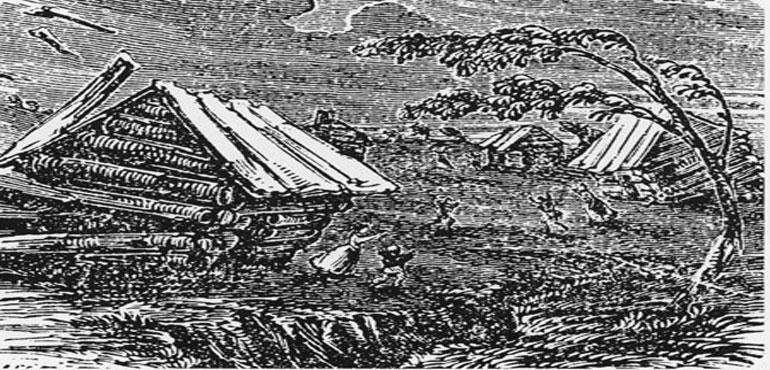
Today marks the 209th anniversary of the New Madrid Earthquakes that were responsible for shaking the very fabric of the eastern U.S.
This event included a series of devastating earthquakes which began in the early hours of December 16, 1811. The way that earthquakes are registered or recorded is through the Richter scale which was developed by seismologist Charles Richter. On this scale, the first earthquake registered as a magnitude of 7.5 which resulted in damage to structures from northeast Arkansas to New Madrid, Mo.
This quake was so powerful that it was even said to have been felt as far east as New York City. However, multiple aftershocks including some that registered over 7.0 were felt following this massive quake. This served as a prominent warning for the events to come.
A second earthquake of magnitude 7.3 shook the New Madrid area on January 23, 1812, and a third earthquake of magnitude 7.5 rumbled on February 7, 1812. According to the reports, landslides, trees bending, uplifted land, and huge waves crashing along the Mississippi River were just some of the effects following the quakes. These quakes took place near the Reelfoot fault which led to regional biomass being projected upward as they went off. The third and final quake was said to be greater than the initial December 16 quake. In its wake, New Madrid was left destroyed along with many cities in the surrounding area.
Even amid all of this wreckage, surprisingly only one person lost their life due to a building collapse in New Madrid. The low death rate is mostly due to how little of the population was around this region during this time. More than 200 aftershocks were felt up to a year following these events.
As devastating as this event was for the New Madrid region, the city is no stranger to this kind of seismic activity. Earthquake troubles date back to about 750 million years ago when the supercontinent of Rodinia broke apart, leading to the creation of the Reelfoot fault right along with the formation of North America. This fault has been known to be the cause for earthquake activity, with over four thousand quakes being recorded since 1974.
Seeing as population has grown over the last couple of centuries, this region is ripe for an even more destructive event. New Madrid sits dangerously close to very populated cities such as St. Louis, Memphis and Nashville, Tenn. When the next big quake does erupt in this region, over 2 million people will be at risk.
Source(s): usgs.gov, wikipedia.org
--------------
Story Image: Drawing of the New Madrid Earthquake. (Henry Howe/Wikimedia Commons)
This event included a series of devastating earthquakes which began in the early hours of December 16, 1811. The way that earthquakes are registered or recorded is through the Richter scale which was developed by seismologist Charles Richter. On this scale, the first earthquake registered as a magnitude of 7.5 which resulted in damage to structures from northeast Arkansas to New Madrid, Mo.
This quake was so powerful that it was even said to have been felt as far east as New York City. However, multiple aftershocks including some that registered over 7.0 were felt following this massive quake. This served as a prominent warning for the events to come.
A second earthquake of magnitude 7.3 shook the New Madrid area on January 23, 1812, and a third earthquake of magnitude 7.5 rumbled on February 7, 1812. According to the reports, landslides, trees bending, uplifted land, and huge waves crashing along the Mississippi River were just some of the effects following the quakes. These quakes took place near the Reelfoot fault which led to regional biomass being projected upward as they went off. The third and final quake was said to be greater than the initial December 16 quake. In its wake, New Madrid was left destroyed along with many cities in the surrounding area.
Even amid all of this wreckage, surprisingly only one person lost their life due to a building collapse in New Madrid. The low death rate is mostly due to how little of the population was around this region during this time. More than 200 aftershocks were felt up to a year following these events.
As devastating as this event was for the New Madrid region, the city is no stranger to this kind of seismic activity. Earthquake troubles date back to about 750 million years ago when the supercontinent of Rodinia broke apart, leading to the creation of the Reelfoot fault right along with the formation of North America. This fault has been known to be the cause for earthquake activity, with over four thousand quakes being recorded since 1974.
Seeing as population has grown over the last couple of centuries, this region is ripe for an even more destructive event. New Madrid sits dangerously close to very populated cities such as St. Louis, Memphis and Nashville, Tenn. When the next big quake does erupt in this region, over 2 million people will be at risk.
Source(s): usgs.gov, wikipedia.org
--------------
Story Image: Drawing of the New Madrid Earthquake. (Henry Howe/Wikimedia Commons)