


Back to forecast
On This Day in 1815 – Mount Tambora Explodes
April 3, 2021 at 03:38 PM EDT
By WeatherBug's Chris Sayles
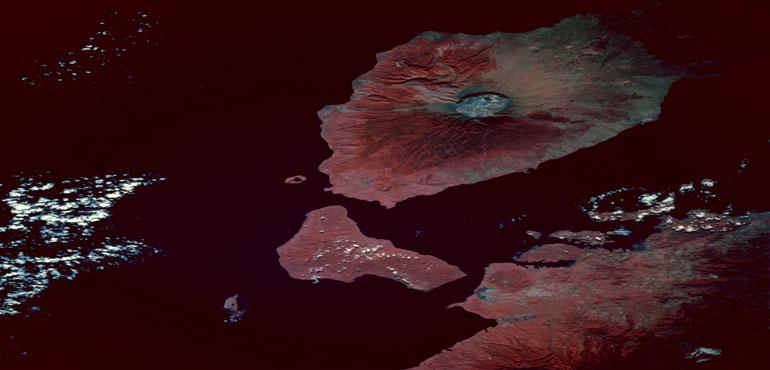
More than 200 years ago today, Mount Tambora blew its gasket with an eruption that left the planet scarred for years.
Deemed as the strongest eruption in recent history, Mount Tambora was a ticking time bomb waiting to explode. The volcano is located along the chain of islands of the Dutch East Indies in southern Indonesia. This region is unfortunately located near one of the more tectonically active regions in the world, the Pacific Ocean’s “Ring of Fire.” Mount Tambora is one of many volcanoes in this region and it remained dormant until a few years prior to April 5, 1815.
Due to its lava chamber remaining closed off for many centuries, this allowed for an increase of pressure as the heat from the chamber continued to swell. As a result, a massive eruption heard nearly 900 miles away was unleashed by this deadly volcano. In fact, the eruption on April 10, 1815 was so powerful that it would be heard more than 1,500 miles from the volcano.
The eruptions laid waste to the island, leaving it covered with lava. Vegetation, livestock and villages were destroyed, and famines around the world were unleashed. Pyroclastic flows, superheated ash clouds that race down the spine of the volcanoes, eradicated the Tambora village soon after the first eruption. Due to the lack of information at the time, the death toll is estimated to be between 80,000 to 100,000 people directly from the volcano’s eruption.
All that is left from this historical eruption is a caldera on the island that remains active to this day. Prior to the eruption, Mount Tambora was more than 14,000 feet high but dropped to roughly 9,000 feet after the eruption.
These volcanic eruptions are also known for their role in the year without a summer in 1816. Ash clouds packed with roughly 60 megatons of sulfur was rocketed more than 140,000 feet high allowing for it to become trapped in the stratosphere for months and even years. This led to the Earth’s global temperatures cooling by a degree in Fahrenheit thus producing one of the coolest summers in history.
Source(s): USGS, Wikimedia.org
Story Image: Infrared image of Mount Tambora, Sumbawa Island, Indonesia. Taken from the space shuttle Endeavour at 0:54 GMT on 13 May 1992. (NASA/Wikimedia Commons)