---
title: On This Day in 1888: India Hailstorm | WeatherBug | WeatherBug
description: Hail can occur all around the world, and on this day in 1888, one of the deadliest hailstorms struck India.
canonical: https://www.weatherbug.com/news/On-This-Day-in-1888-India-Hailstorm
og:title: On This Day in 1888: India Hailstorm | WeatherBug | WeatherBug
og:description: Hail can occur all around the world, and on this day in 1888, one of the deadliest hailstorms struck India.
og:url: https://www.weatherbug.com/news/On-This-Day-in-1888-India-Hailstorm
og:site_name: WeatherBug
og:locale: en_US
og:image: https://cms-assets-con.cdn.weatherbug.net/assets/contentitems/22/22f6b089-8def-43a6-bd67-64ec1537b8c4/52e0ce98-d40a-4283-82d1-d0fe816ebf4b/8d6169c9-51e0-4418-a7d5-5d107d79186f.jpg
og:image:width: 800
og:image:height: 600
og:image:alt: Moradabad, India, the location of the devastating April 30, 1888 hailstorm.
og:type: article
article:published_time: 2021-04-29T20:28:52Z
article:modified_time: 2021-04-29T20:28:52Z
article:author: By WeatherBug's Christopher Smith
article:tag: destruction
article:tag: hail
article:tag: India
article:tag: map
article:tag: maps
article:tag: severe
article:tag: storm
twitter:card: summary_large_image
twitter:title: On This Day in 1888: India Hailstorm | WeatherBug
twitter:description: Hail can occur all around the world, and on this day in 1888, one of the deadliest hailstorms struck India.
twitter:image: https://cms-assets-con.cdn.weatherbug.net/assets/contentitems/22/22f6b089-8def-43a6-bd67-64ec1537b8c4/52e0ce98-d40a-4283-82d1-d0fe816ebf4b/8d6169c9-51e0-4418-a7d5-5d107d79186f.jpg
---
[](/weather-forecast/now)
[Missing translation for key: backTo forecast](/weather-forecast/now)
# On This Day in 1888: India Hailstorm
April 29, 2021 at 04:28 PM EDT
By WeatherBug's Christopher Smith
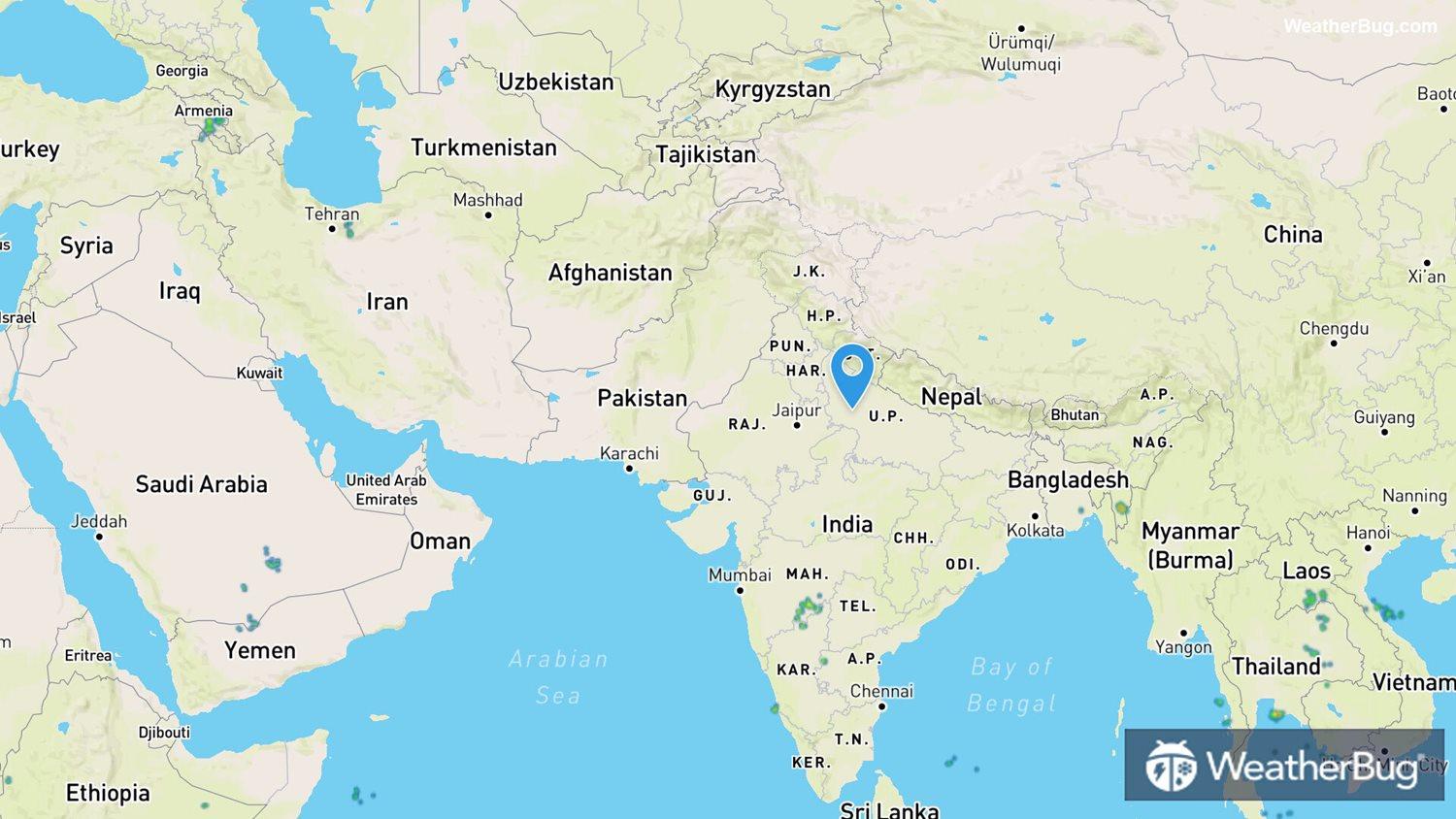
When thinking of a location with large hail, your mind may pop to somewhere in the Plains, such as Texas. However, hail can occur all around the world, and on this day in 1888, one of the deadliest hailstorms struck India.
On April 30, 1888, Moradabad, India, a city located in the northern area of the nation, was the center of a devastating hailstorm. Raining down from the sky, hail ranging from the size of a goose-egg, about 3 inches in length, to the size of oranges, pelted down on the town below, causing harm to everything in its path.
In total, 230 people are to have died in Moradabad, India, alone. Most of the deaths were a direct cause of people being unable to find shelter from the hail that delt catastrophic blows.
Besides humans, up to 1,600 livestock such as sheep and cattle were also killed due to the large hail. Within a few miles of the cities, windows were smashed out of most buildings and roofs were damaged to the point they collapsed.
Back in the late 1800s, there were not nearly as many meteorological instruments or forecasting tools to verify or predict such a hailstorm with great accuracy. The main account of the hailstorm arises from Sir John Eliot, who went on to become India’s first Director General of Meteorology. Eliot stated that northern and central India were in an abnormal period of very intense weather when the hailstorm of 1888 terrorized Moradabad, India.
Hopefully, today’s improved weather forecasting and infrastructure would avoid another tragedy like the April 30, 1888, India hailstorm.
_Source:_ Arizona State University/World Meteorological Organization
We use technologies, such as cookies, to analyze your use (i.e., pages visited), to customize content, for our internal analytics purposes and for security and other purposes. By continuing to use this website, you agree to this usage. Please review our [privacy policy](/legal/privacy) for more details as well as for information on how to contact us to object to these activities. [Ad Choices](/legal/privacy#digitaladvertisingandyourchoices)
```json
{"@context":"https://schema.org","@type":"NewsArticle","mainEntityOfPage":{"@type":"WebPage","@id":"https://www.weatherbug.com/news/On-This-Day-in-1888-India-Hailstorm"},"headline":"On This Day in 1888: India Hailstorm","description":"Hail can occur all around the world, and on this day in 1888, one of the deadliest hailstorms struck India. ","image":["https://cms-assets-con.cdn.weatherbug.net/assets/contentitems/22/22f6b089-8def-43a6-bd67-64ec1537b8c4/52e0ce98-d40a-4283-82d1-d0fe816ebf4b/8d6169c9-51e0-4418-a7d5-5d107d79186f.jpg"],"datePublished":"2021-04-29T20:28:52Z","dateModified":"2021-04-29T20:28:52Z","dateCreated":"2021-04-29T20:28:52Z","articleSection":"Weather News","keywords":"destruction,hail,India,map,maps,severe,storm","articleBody":"When thinking of a location with large hail, your mind may pop to somewhere in the Plains, such as Texas. However, hail can occur all around the world, and on this day in 1888, one of the deadliest hailstorms struck India.
\r\n
\r\nOn April 30, 1888, Moradabad, India, a city located in the northern area of the nation, was the center of a devastating hailstorm. Raining down from the sky, hail ranging from the size of a goose-egg, about 3 inches in length, to the size of oranges, pelted down on the town below, causing harm to everything in its path.
\r\n
\r\nIn total, 230 people are to have died in Moradabad, India, alone. Most of the deaths were a direct cause of people being unable to find shelter from the hail that delt catastrophic blows.
\r\n
\r\nBesides humans, up to 1,600 livestock such as sheep and cattle were also killed due to the large hail. Within a few miles of the cities, windows were smashed out of most buildings and roofs were damaged to the point they collapsed.
\r\n
\r\nBack in the late 1800s, there were not nearly as many meteorological instruments or forecasting tools to verify or predict such a hailstorm with great accuracy. The main account of the hailstorm arises from Sir John Eliot, who went on to become India’s first Director General of Meteorology. Eliot stated that northern and central India were in an abnormal period of very intense weather when the hailstorm of 1888 terrorized Moradabad, India.
\r\n
\r\nHopefully, today’s improved weather forecasting and infrastructure would avoid another tragedy like the April 30, 1888, India hailstorm.
\r\n
\r\nSource: Arizona State University/World Meteorological Organization","author":{"@type":"Person","name":"By WeatherBug's Christopher Smith","url":"https://www.weatherbug.com"},"publisher":{"@type":"Organization","name":"WeatherBug","logo":{"@type":"ImageObject","url":"https://www.weatherbug.com/images/sharing/f1ff28ba-6f06-4745-a782-011a20397e16.png"}}}
{"@context":"https://schema.org","@type":"WebSite","mainEntityOfPage":{"@type":"WebPage","@id":"https://www.weatherbug.com/news/On-This-Day-in-1888-India-Hailstorm","relatedLink":"https://www.weatherbug.com/news/On-This-Day-in-1888-India-Hailstorm"},"name":"WeatherBug","url":"https://www.weatherbug.com/news/On-This-Day-in-1888-India-Hailstorm","headline":"On This Day in 1888: India Hailstorm","description":"Hail can occur all around the world, and on this day in 1888, one of the deadliest hailstorms struck India. ","dateModified":"2021-04-29T20:28:52Z","publisher":{"@type":"Organization","name":"WeatherBug","url":"https://www.weatherbug.com","sameAs":["https://www.facebook.com/WeatherBug","https://instagram.com/WeatherBug","https://www.linkedin.com/company/weatherbug","https://www.pinterest.com/weatherbug","https://twitter.com/WeatherBug","https://www.youtube.com/user/WeatherBugVideo"],"logo":{"@type":"ImageObject","url":"https://www.weatherbug.com/images/logos/weatherbug_logo_620x447.png"}},"author":{"@type":"Organization","name":"WeatherBug","url":"https://www.weatherbug.com","sameAs":["https://www.facebook.com/WeatherBug","https://instagram.com/WeatherBug","https://www.linkedin.com/company/weatherbug","https://www.pinterest.com/weatherbug","https://twitter.com/WeatherBug","https://www.youtube.com/user/WeatherBugVideo"],"logo":{"@type":"ImageObject","url":"https://www.weatherbug.com/images/logos/weatherbug_logo_620x447.png"}}}
{"@context":"https://schema.org","@type":"Organization","name":"WeatherBug","logo":"https://www.weatherbug.com/images/logos/weatherbug_logo_620x447.png","url":"https://www.weatherbug.com","sameAs":["https://www.facebook.com/WeatherBug","https://instagram.com/WeatherBug","https://www.linkedin.com/company/weatherbug","https://www.pinterest.com/weatherbug","https://twitter.com/WeatherBug","https://www.youtube.com/user/WeatherBugVideo"]}
```