


Back to forecast
On This Day in 1931: The Yangtze River in China Floods
August 17, 2021 at 12:26 PM EDT
By WeatherBug Meteorologist, Alyssa Robinette
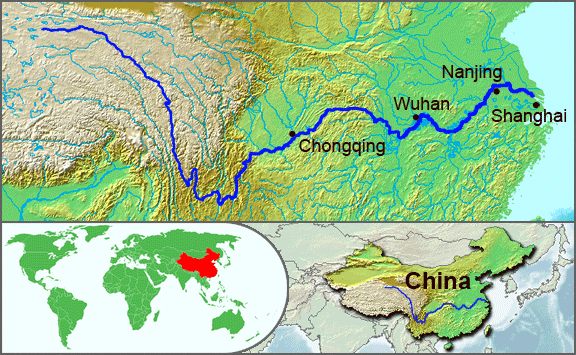
On August 18, 1931, the Yangtze River in China reached its peaked, resulting in millions of deaths and is known as perhaps the worst natural disaster of the 20th century.
The Yangtze River is the longest river in Asia and is also one of the world’s major waterways. It runs through southern China, originating at an elevation around 16,000 feet above sea level in the Plateau of Tibet. It generally moves eastward until it empties into the East China Sea near Shanghai. The highest point along the Yangtze River is found at 17,526 feet above sea level in the Tanggula Mountains. The people who live within the Yangtze river-basin area depend on the river for water for both their personal and farming needs.
Before the 1931 flood, China was impacted by a long drought from 1928 to 1930. Typically during a drought, soil becomes so dry that it turns into a packed, hard ground, which makes it difficult to absorb any moisture that does fall. This drought was followed by a harsh winter in 1930-1931, with large amounts of snow and ice found in the mountains. The spring of 1931 resulted in heavy rain as well as melting of snow and ice that flowed downstream from the higher elevations.
Far above-average rainfall continued into the beginning of the summer of 1931. There was also extreme tropical cyclone activity. In July 1931 alone, there were nine cyclones that hit the region, which only average two per year. The rising waters drove 500,000 people from their homes by the beginning of August. Heavy rain persisted and water levels continued to rise in the first half of August. The rice fields that were found throughout the river-basin were now flooded, destroying the crops. Major cities such as Wuhan and Nanjing were dependent on this rice and the ultimately starved to death without it.
Everything came to a head on August 18, 1931, when the Yangtze River reached its peak and the floods inundated 69,000 square miles. This would be the equivalent to the size of England and half of Scotland, or the states of New York, New Jersey and Connecticut combined. The high-water mark recorded on August 19, 1931, in Wuhan showed water levels of 53 feet above the average.
At the time, the government estimated that 25 million people had been affected by the flood. It is now believed that the number is closer to 53 million people. The death toll both direct and non-directly from the flood is estimated somewhere between 3.7 and 4 million people. This includes people who died from flooding, or from famine and disease that came after the flood.
The Yangtze River does continue to occasionally flood since the 1931 floods. There were some lessons learned to prevent death and destruction. The Yangtze does carry large amounts of sediment, which accumulates in certain areas of the river and must be cleared regularly. More effective dams and levees were built. This was shown in the summer of 2010 when the dams were able to hold back much of the floodwaters caused by the extraordinarily rainy summer. However, flooding and landslides during the summer of 2010 in the Yangtze basin killed hundreds of people and caused extensive property damage.
----------------------
Image source: Yangtze River Map (Papayoung via Wikimedia Commons)
The Yangtze River is the longest river in Asia and is also one of the world’s major waterways. It runs through southern China, originating at an elevation around 16,000 feet above sea level in the Plateau of Tibet. It generally moves eastward until it empties into the East China Sea near Shanghai. The highest point along the Yangtze River is found at 17,526 feet above sea level in the Tanggula Mountains. The people who live within the Yangtze river-basin area depend on the river for water for both their personal and farming needs.
Before the 1931 flood, China was impacted by a long drought from 1928 to 1930. Typically during a drought, soil becomes so dry that it turns into a packed, hard ground, which makes it difficult to absorb any moisture that does fall. This drought was followed by a harsh winter in 1930-1931, with large amounts of snow and ice found in the mountains. The spring of 1931 resulted in heavy rain as well as melting of snow and ice that flowed downstream from the higher elevations.
Far above-average rainfall continued into the beginning of the summer of 1931. There was also extreme tropical cyclone activity. In July 1931 alone, there were nine cyclones that hit the region, which only average two per year. The rising waters drove 500,000 people from their homes by the beginning of August. Heavy rain persisted and water levels continued to rise in the first half of August. The rice fields that were found throughout the river-basin were now flooded, destroying the crops. Major cities such as Wuhan and Nanjing were dependent on this rice and the ultimately starved to death without it.
Everything came to a head on August 18, 1931, when the Yangtze River reached its peak and the floods inundated 69,000 square miles. This would be the equivalent to the size of England and half of Scotland, or the states of New York, New Jersey and Connecticut combined. The high-water mark recorded on August 19, 1931, in Wuhan showed water levels of 53 feet above the average.
At the time, the government estimated that 25 million people had been affected by the flood. It is now believed that the number is closer to 53 million people. The death toll both direct and non-directly from the flood is estimated somewhere between 3.7 and 4 million people. This includes people who died from flooding, or from famine and disease that came after the flood.
The Yangtze River does continue to occasionally flood since the 1931 floods. There were some lessons learned to prevent death and destruction. The Yangtze does carry large amounts of sediment, which accumulates in certain areas of the river and must be cleared regularly. More effective dams and levees were built. This was shown in the summer of 2010 when the dams were able to hold back much of the floodwaters caused by the extraordinarily rainy summer. However, flooding and landslides during the summer of 2010 in the Yangtze basin killed hundreds of people and caused extensive property damage.
----------------------
Image source: Yangtze River Map (Papayoung via Wikimedia Commons)