


Back to forecast
On This Day in 1935: Black Sunday Dust Storm
April 13, 2023 at 04:17 PM EDT
By WeatherBug Meteorologist, Matt Mehallow
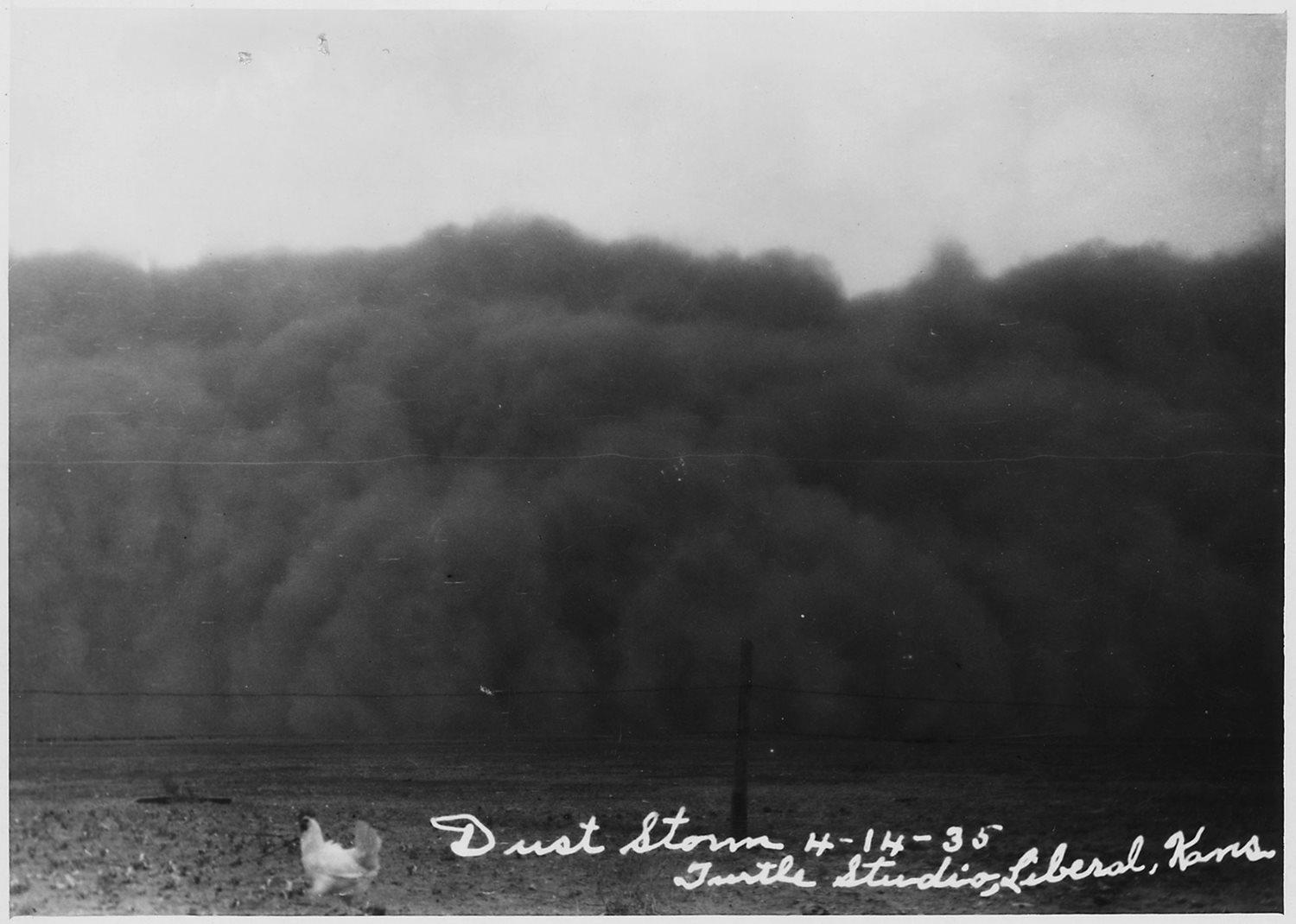
Today marks the 88th anniversary of one of the most devastating events in the history of the Great Plains, which occurred on Palm Sunday afternoon in 1935. The "Black Sunday" dust storm is regarded as one of the worst to have hit the Plains during the severe drought of the 1930s.
The morning of April 14, 1935, began with a strong Canadian cold front located over the Northern Plains moving rapidly south. Ahead of the front, strong southerly winds caused temperatures to rise swiftly during the day. In fact, the warmest temperatures of the month were recorded that afternoon despite a cold start. By late in the afternoon, eyewitnesses reported a massive black cloud on the horizon.
The cold front and the accompanying massive black cloud of dust rolled at speeds between 50 to 60 mph across several states, including Oklahoma, Kansas, Colorado, New Mexico and Texas. Temperatures dropped quickly and the wall of blowing sand and dirt coated everything, turning day into night, and reducing visibility to near zero. Total darkness lasted anywhere from 12 minutes to 1 hour, depending on the location.
Most people were not prepared for the great wall of black dust that blasted through the Central to Southern Plains. Dust covered cars, trees and fences leaving many families stranded without sufficient food and water. Frightened families took shelter in basements and cellars in fear of the Black Blizzard. Some residents fled the area while some rode out the storm to protect their home and way of life.
The Black Sunday storm is credited with causing loss of crops and livestock, which led to its reputation as the worst single storm of the Dust Bowl. The storm is also considered the result of years of drought and poor land management practices.
Dust from the Great Plains storms was transported all the way to the East Coast, blotting out the sun, even in the nation’s capital. This helped spur on Congress to pass the Soil Conservation Act, which was enacted on April 27, 1935. Franklin D. Roosevelt signed the Act into law on February 29, 1936. Fortunately, there has not been another dust bowl because farmers adopted new methods to replenish the topsoil and keep it in place.
Source: weather.gov
----------
Story Image: Dust Storm in Liberal, Kansas on April 14, 1935 (Wikimedia Commons).
The morning of April 14, 1935, began with a strong Canadian cold front located over the Northern Plains moving rapidly south. Ahead of the front, strong southerly winds caused temperatures to rise swiftly during the day. In fact, the warmest temperatures of the month were recorded that afternoon despite a cold start. By late in the afternoon, eyewitnesses reported a massive black cloud on the horizon.
The cold front and the accompanying massive black cloud of dust rolled at speeds between 50 to 60 mph across several states, including Oklahoma, Kansas, Colorado, New Mexico and Texas. Temperatures dropped quickly and the wall of blowing sand and dirt coated everything, turning day into night, and reducing visibility to near zero. Total darkness lasted anywhere from 12 minutes to 1 hour, depending on the location.
Most people were not prepared for the great wall of black dust that blasted through the Central to Southern Plains. Dust covered cars, trees and fences leaving many families stranded without sufficient food and water. Frightened families took shelter in basements and cellars in fear of the Black Blizzard. Some residents fled the area while some rode out the storm to protect their home and way of life.
The Black Sunday storm is credited with causing loss of crops and livestock, which led to its reputation as the worst single storm of the Dust Bowl. The storm is also considered the result of years of drought and poor land management practices.
Dust from the Great Plains storms was transported all the way to the East Coast, blotting out the sun, even in the nation’s capital. This helped spur on Congress to pass the Soil Conservation Act, which was enacted on April 27, 1935. Franklin D. Roosevelt signed the Act into law on February 29, 1936. Fortunately, there has not been another dust bowl because farmers adopted new methods to replenish the topsoil and keep it in place.
Source: weather.gov
----------
Story Image: Dust Storm in Liberal, Kansas on April 14, 1935 (Wikimedia Commons).