


Back to forecast
On This Day in 1943: The Black Hills Remarkable Temperature Change
January 20, 2021 at 02:00 PM EST
By WeatherBug's Christopher Smith
On this day in 1943, a remarkable temperature change occurred across the Black Hills of South Dakota, with the temperature fluctuating as much as 50 degrees in the matter of minutes.
The Black Hills of western South Dakota and eastern Wyoming are a geographical area that sit above the Great Plains just to their east. Occasionally a unique weather feature, called “Chinook winds” can develop, causing air to warm rapidly as it descends from the higher elevations of the Black Hills to down to the Plains.
During the morning of January 22, 1943, a stationary front developed across the Black Hills and locations such as Rapid City, S.D. While the higher elevations of the Black Hills were on the warm side of the front, locations in the foothills were enveloped in cold air.
Throughout the day, the stationary front slowly wavered, allowing the winds to shift and change the air temperature drastically in a short period of time. As the stationary front moved north and east of Rapid City, S.D., Chinook winds quickly developed with a change of wind direction and the temperature rose from a bone-chilling 5 degrees at 9:20 a.m., to an unseasonably warm 54 degrees by 9:40 a.m. The temperature rose an astonishing 49 degrees in just 20 minutes!
If the temperature change from Rapid City, S.D., surprises you, that wasn’t even the most extreme fluctuation of the day. In Spearfish, S.D., northwest of Rapid City, S.D., the temperature also rose 49 degrees, not in 20 minutes, but in only 2 minutes! Just a couple of hours later, the temperature dropped like a rock by 58 degrees from 54 degrees to 4 degrees below zero in 27 minutes.
The setup of a stationary front straddling the unique geographical feature of the Black Hills allowed Chinook winds to develop and create impressive temperature swings in the matter of minutes. Chinook winds also occur in other areas, such as the Rockies-Foothills area of Colorado and are not all that rare.
Source: weather.gov
----------
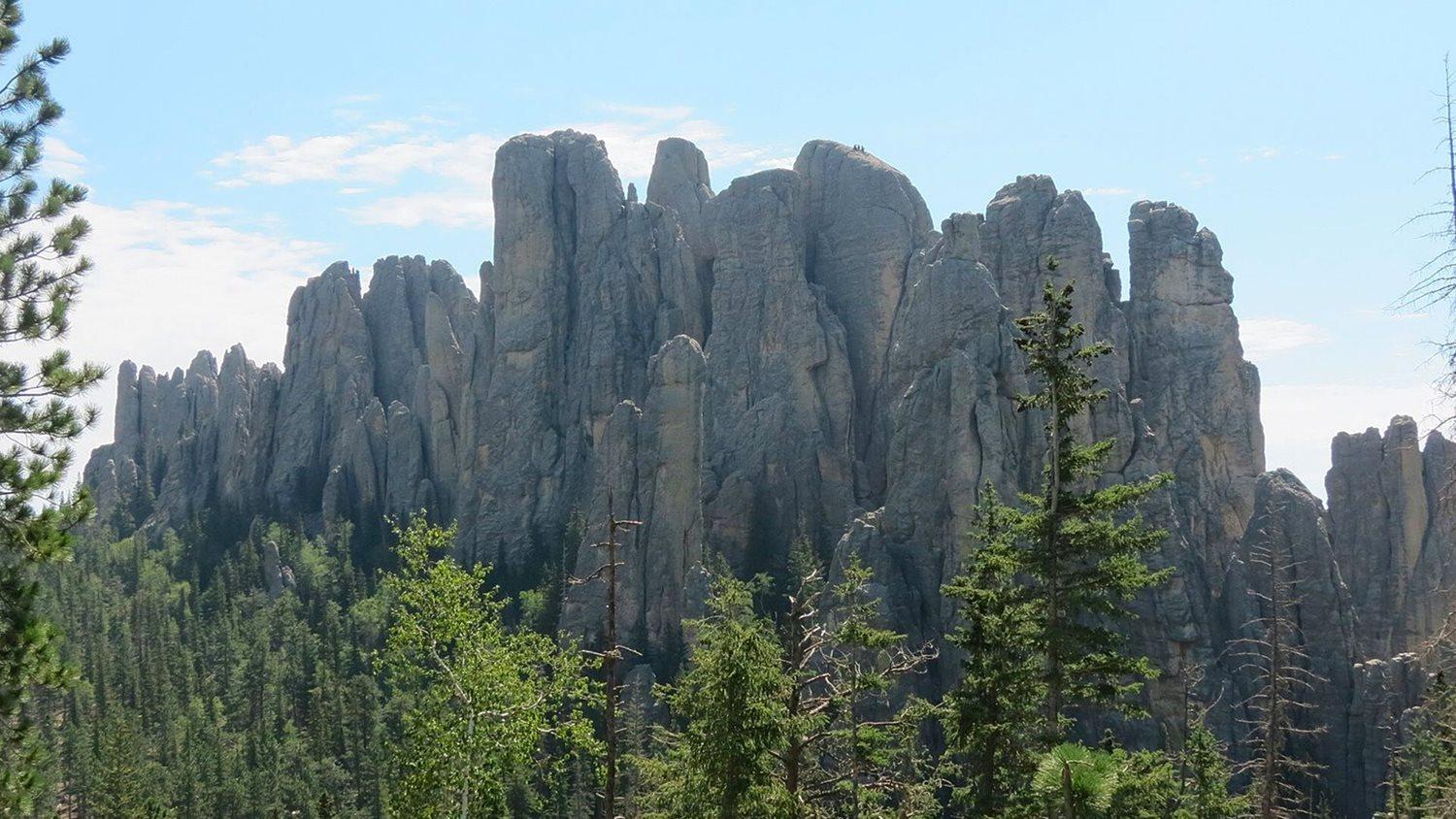
Story Image: The Needles of the Black Hills in South Dakota (Wikimedia Commons).
The Black Hills of western South Dakota and eastern Wyoming are a geographical area that sit above the Great Plains just to their east. Occasionally a unique weather feature, called “Chinook winds” can develop, causing air to warm rapidly as it descends from the higher elevations of the Black Hills to down to the Plains.
During the morning of January 22, 1943, a stationary front developed across the Black Hills and locations such as Rapid City, S.D. While the higher elevations of the Black Hills were on the warm side of the front, locations in the foothills were enveloped in cold air.
Throughout the day, the stationary front slowly wavered, allowing the winds to shift and change the air temperature drastically in a short period of time. As the stationary front moved north and east of Rapid City, S.D., Chinook winds quickly developed with a change of wind direction and the temperature rose from a bone-chilling 5 degrees at 9:20 a.m., to an unseasonably warm 54 degrees by 9:40 a.m. The temperature rose an astonishing 49 degrees in just 20 minutes!
If the temperature change from Rapid City, S.D., surprises you, that wasn’t even the most extreme fluctuation of the day. In Spearfish, S.D., northwest of Rapid City, S.D., the temperature also rose 49 degrees, not in 20 minutes, but in only 2 minutes! Just a couple of hours later, the temperature dropped like a rock by 58 degrees from 54 degrees to 4 degrees below zero in 27 minutes.
The setup of a stationary front straddling the unique geographical feature of the Black Hills allowed Chinook winds to develop and create impressive temperature swings in the matter of minutes. Chinook winds also occur in other areas, such as the Rockies-Foothills area of Colorado and are not all that rare.
Source: weather.gov
----------
Story Image: The Needles of the Black Hills in South Dakota (Wikimedia Commons).