


Back to forecast
On This Day in 1958: Explorer 1 Launched Into Orbit
January 30, 2023 at 06:29 PM EST
By WeatherBug Meteorologist Alyssa Robinette
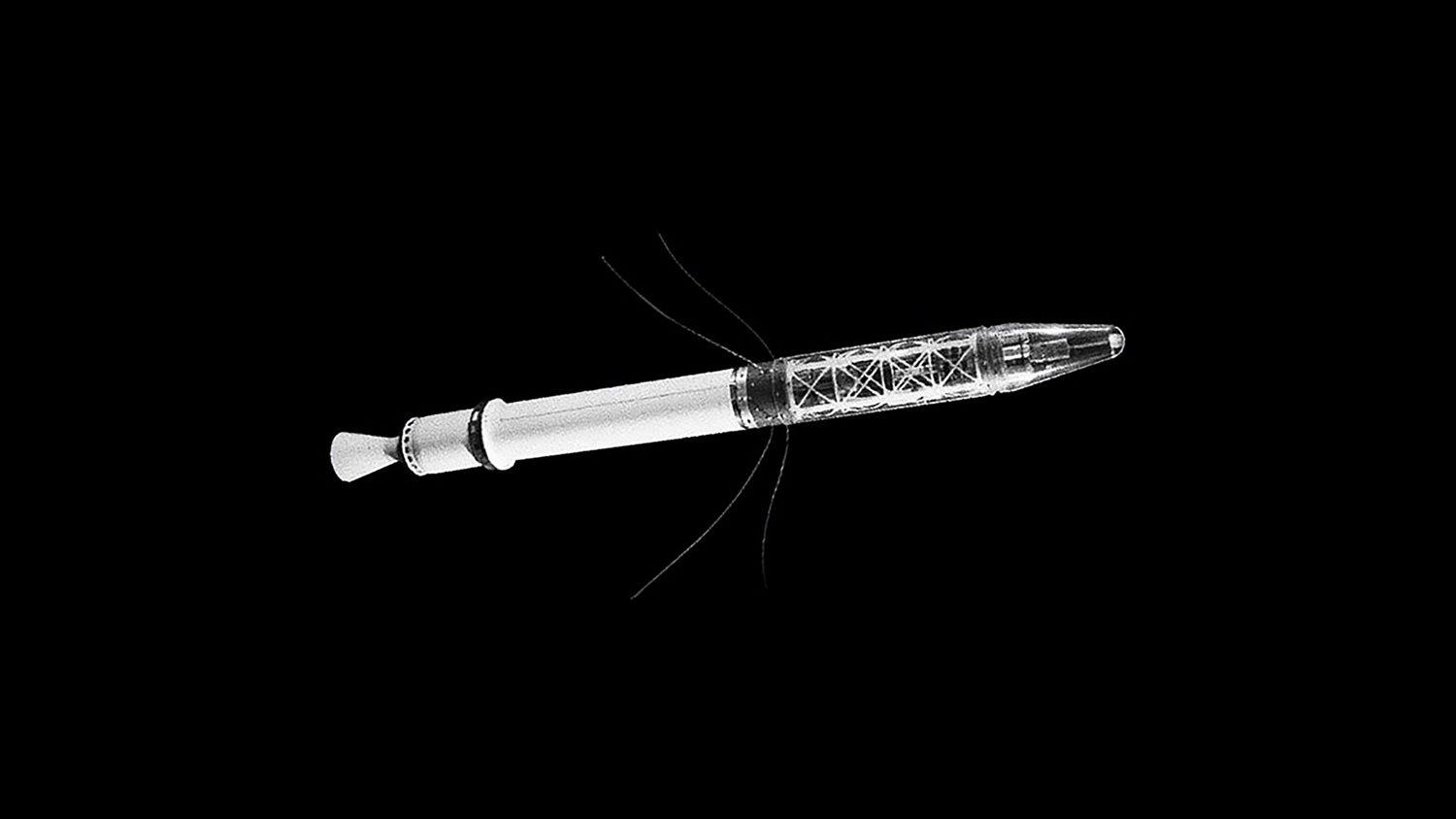
On this day 65 years ago, the U.S. launched Explorer 1, which would be the first U.S. satellite into space. This was just four months after the Soviet Union launched Sputnik 1, the first ever satellite into space, and about a month after Sputnik 2, which was the first to carry a living animal into orbit. The launch of Explorer 1 would set off the “Space Race” between the U.S. and the Soviet Union.
The U.S. Earth satellite program began in 1954 as a joint proposal between the U.S. Army and the U.S. Navy, called Project Orbiter. The proposal was initially rejected in 1955 by the Eisenhower Administration in favor of another Navy project. However, the program was revived following the launch of the Soviet Union’s satellite Sputnik 1 on October 4, 1957, in hopes of catching up with the Soviet Union.
Explorer 1 was designed and built by the California Institute of Technology’s Jet Propulsion Laboratory (JPL) under the direction of Dr. William H. Pickering. Meanwhile, the Army Ballistic Missile Agency (ABMA) worked on a Jupiter-C rocket to accommodate the satellite payload. Working closely together, AMBA and JPL completed the job of modifying the Jupiter-C rocket and building Explorer 1 in 84 days. However, before work was completed, the Soviet Union launched a second satellite, Sputnik 2, on November 3, 1957. The U.S. Navy’s attempt to put the first U.S. satellite into orbit failed with the launch of the Vanguard TV-3 on December 6, 1957.
The satellite weighed about 30.7 pounds, of which 18 pounds were instrumentation. In comparison, the first Soviet satellite, Sputnik 1, was 184 pounds. The satellite itself was 80 inches long and 6.25 inches in diameter.
The primary science instrument on Explorer 1 was a cosmic ray detector designed to measure the radiation environment in Earth orbit. Once in space, this experiment revealed a much lower cosmic ray count than expected. Dr. James Van Allen of the University of Iowa theorized that the instrument may have been saturated by very strong radiation from a belt of charged particles trapped in space by Earth’s magnetic field. The existence of these radiation belts was confirmed by another U.S. satellite launched two months later.
Explorer 1 revolved around Earth in a looping orbit that took it as close as 220 miles to Earth and as far as 1,563 miles. It made one orbit every 114.8 minutes, or a total of 12.54 orbits per day. Explorer 1 made its final transmission on May 23, 1958. However, it finally entered Earth’s atmosphere and would burn up on March 31, 1970, after 58,000 orbits.
A launch attempt of a similar satellite, Explorer 2, was made on March 5, 1958, but the fourth stage of the Jupiter-C rocket failed to ignite. Explorer 3 was successfully launched on March 26, 1958, and operated until June 16 of that year. Explorer 4 was launched July 26, 1958, and operated until October 6 of that year. Launch of Explorer 5 on August 24, 1958, failed when the rocket's booster collided with its second stage after separation, causing the firing angle of the upper stage to be incorrect.
Sources: NASA, Wikipedia
------
Image: Explorer 1 was the first U.S. satellite and the first to carry scientific instruments. (NASA Kennedy, January 15, 1958)
The U.S. Earth satellite program began in 1954 as a joint proposal between the U.S. Army and the U.S. Navy, called Project Orbiter. The proposal was initially rejected in 1955 by the Eisenhower Administration in favor of another Navy project. However, the program was revived following the launch of the Soviet Union’s satellite Sputnik 1 on October 4, 1957, in hopes of catching up with the Soviet Union.
Explorer 1 was designed and built by the California Institute of Technology’s Jet Propulsion Laboratory (JPL) under the direction of Dr. William H. Pickering. Meanwhile, the Army Ballistic Missile Agency (ABMA) worked on a Jupiter-C rocket to accommodate the satellite payload. Working closely together, AMBA and JPL completed the job of modifying the Jupiter-C rocket and building Explorer 1 in 84 days. However, before work was completed, the Soviet Union launched a second satellite, Sputnik 2, on November 3, 1957. The U.S. Navy’s attempt to put the first U.S. satellite into orbit failed with the launch of the Vanguard TV-3 on December 6, 1957.
The satellite weighed about 30.7 pounds, of which 18 pounds were instrumentation. In comparison, the first Soviet satellite, Sputnik 1, was 184 pounds. The satellite itself was 80 inches long and 6.25 inches in diameter.
The primary science instrument on Explorer 1 was a cosmic ray detector designed to measure the radiation environment in Earth orbit. Once in space, this experiment revealed a much lower cosmic ray count than expected. Dr. James Van Allen of the University of Iowa theorized that the instrument may have been saturated by very strong radiation from a belt of charged particles trapped in space by Earth’s magnetic field. The existence of these radiation belts was confirmed by another U.S. satellite launched two months later.
Explorer 1 revolved around Earth in a looping orbit that took it as close as 220 miles to Earth and as far as 1,563 miles. It made one orbit every 114.8 minutes, or a total of 12.54 orbits per day. Explorer 1 made its final transmission on May 23, 1958. However, it finally entered Earth’s atmosphere and would burn up on March 31, 1970, after 58,000 orbits.
A launch attempt of a similar satellite, Explorer 2, was made on March 5, 1958, but the fourth stage of the Jupiter-C rocket failed to ignite. Explorer 3 was successfully launched on March 26, 1958, and operated until June 16 of that year. Explorer 4 was launched July 26, 1958, and operated until October 6 of that year. Launch of Explorer 5 on August 24, 1958, failed when the rocket's booster collided with its second stage after separation, causing the firing angle of the upper stage to be incorrect.
Sources: NASA, Wikipedia
------
Image: Explorer 1 was the first U.S. satellite and the first to carry scientific instruments. (NASA Kennedy, January 15, 1958)