Back to forecast
On This Day in 1960: First Weather Satellite Becomes Operational
March 31, 2021 at 04:19 PM EDT
By WeatherBug's Christopher Smith
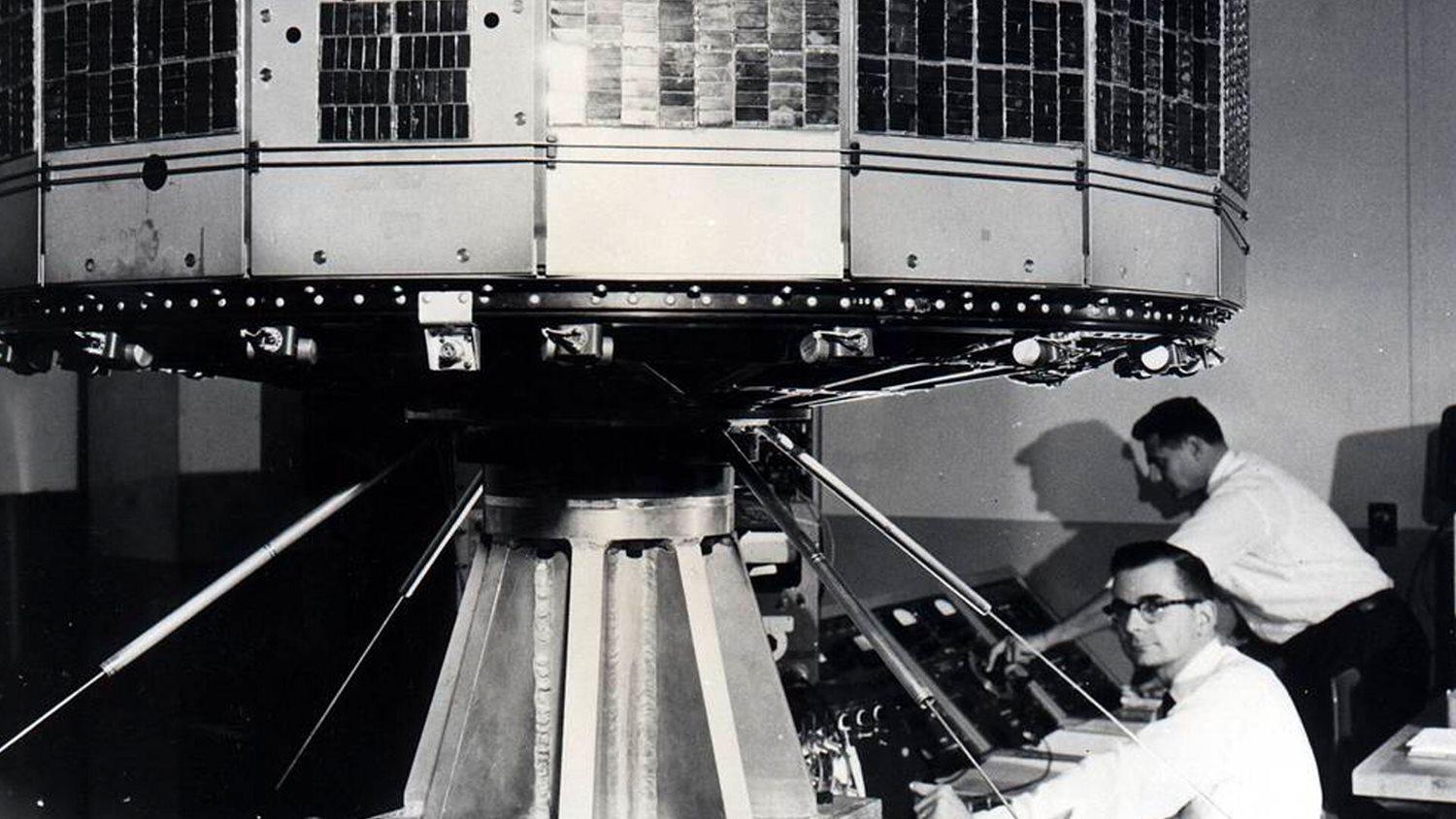
On this day in 1960 the first weather satellite, TIROS 1, became operational, landmarking a huge strive in the field of meteorology.
TIROS 1, or the Television Infrared Observation Satellite, was launched from Cape Canaveral, Fla., on April 1, 1960. While the satellite’s mission only lasted just 78 days (about 2 and a half months), it was marked a success by proving satellites are useful tools to observe the Earth.
TIROS-1 was designed by the Radio Corporation of America (RCA) and was quite small. The satellite’s diameter was only a mere 42 inches in diameter with a height of 19 inches, less than 2 feet. Its small structure allowed for a light weight as well, weighing in at only 270 pounds. Solar cells covered the satellite to charge batteries onboard and two television cameras captured footage of the Earth.
Through the 78 days of pictures, TIROS-1 revealed plenty of shots of clouds covering the surface of the Earth. Large-scale cloud structures were able to be studied through the pictures, improving knowledge of the important weather feature.
Following the April 1960 TIROS-1 launch, a second launch of TIROS-2 occurred in November 1960. By 1962, TIROS began taking images of Earth continuously and today, satellites are one of the main tools meteorologists use to study and forecast the weather.
Source: nasa.gov
----------
Story Image: The TIROS satellite as it undergoes vibration testing at Radio Corporation of America (RCA) in Princeton, N.J. (NASA).
TIROS 1, or the Television Infrared Observation Satellite, was launched from Cape Canaveral, Fla., on April 1, 1960. While the satellite’s mission only lasted just 78 days (about 2 and a half months), it was marked a success by proving satellites are useful tools to observe the Earth.
TIROS-1 was designed by the Radio Corporation of America (RCA) and was quite small. The satellite’s diameter was only a mere 42 inches in diameter with a height of 19 inches, less than 2 feet. Its small structure allowed for a light weight as well, weighing in at only 270 pounds. Solar cells covered the satellite to charge batteries onboard and two television cameras captured footage of the Earth.
Through the 78 days of pictures, TIROS-1 revealed plenty of shots of clouds covering the surface of the Earth. Large-scale cloud structures were able to be studied through the pictures, improving knowledge of the important weather feature.
Following the April 1960 TIROS-1 launch, a second launch of TIROS-2 occurred in November 1960. By 1962, TIROS began taking images of Earth continuously and today, satellites are one of the main tools meteorologists use to study and forecast the weather.
Source: nasa.gov
----------
Story Image: The TIROS satellite as it undergoes vibration testing at Radio Corporation of America (RCA) in Princeton, N.J. (NASA).