Back to forecast
On This Day in 1969: Powerful Camille Strikes Gulf Coast
August 17, 2023 at 10:21 AM EDT
By WeatherBug Meteorologist, Matt Mehallow
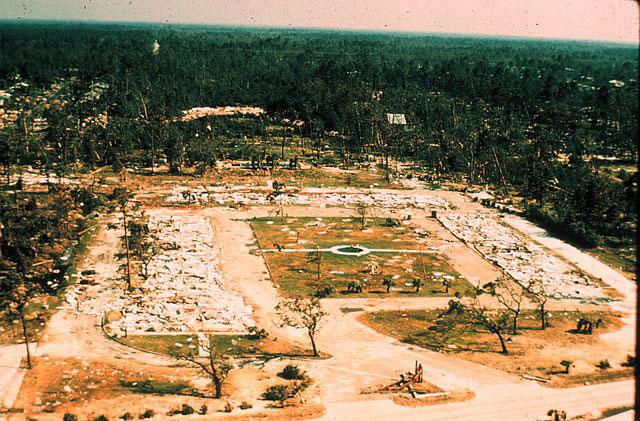
Fifty-four years ago, Hurricane Camille blasted the United States Gulf Coast as a Category 5 storm, making it one of the strongest storms to directly strike the United States in the 20th century.
Camille’s origin is traced to a tropical wave that exited the coast of Africa on August 5, 1969. On August 9, the wave was still moving westward as it approached the Caribbean's Leeward islands. By August 14, Camille had strengthened into a tropical storm with maximum sustained winds of 55 mph near Grand Cayman Island.
Early on August 15, Camille developed into a small but robust hurricane as it moved northwesterly toward western Cuba. By that afternoon, Camille’s winds reached 115 mph, making it a Category 3 Hurricane. Camille weakened slightly over western Cuba while producing hurricane-force winds and heavy rainfall. Camille then tracked north-northwestward across the Gulf of Mexico and became a Category 5 hurricane on August 16. The hurricane maintained this intensity until it made landfall along the Mississippi coast late on the 17th.
At landfall, Camille had peak sustained winds of 175 mph, which battered the coast. Its minimum central pressure of 909 millibars was reported in Bay St. Louis, Mississippi, which makes Camille the second most intense hurricane of record to hit the United States. Columbia, Mississippi, located 75 miles inland, reported 120 mph sustained winds. A storm tide of 24.6 ft occurred at Pass Christian, Mississippi.
Camille weakened to a tropical depression as it moved through Mississippi into western Tennessee and Kentucky, then it tracked eastward across West Virginia and Virginia. The cyclone pushed into the Atlantic Ocean on August 20, then regained tropical storm strength before becoming extratropical on the 22nd.
The heaviest rain totals up to 10 inches occurred along the Gulf Coast. As Camille passed over the Virginias, it produced a round of torrential rain, leading to 12-to-20-inch rain totals with localized totals of up to 31 inches. Most of this rain occurred in 3 to 5 hours, resulting in catastrophic flash flooding.
The combination of winds, surges, and rainfalls led to 256 deaths (143 on the Gulf Coast and 113 in the Virginia floods) and $1.42 billion in damage (equivalent to $11.8 billion in 2023).
Camille is one of only four Category 5 hurricanes ever to make landfall in the continental United States (Atlantic Basin). The others include the 1935 Labor Day Hurricane, which hit the Florida Keys, Hurricane Andrew in 1992, which affected south Florida, and Hurricane Michael in 2018, which impacted the Florida panhandle.
Story Image: Damage from Hurricane Camille. (17 August 1969, NOAA)
Camille’s origin is traced to a tropical wave that exited the coast of Africa on August 5, 1969. On August 9, the wave was still moving westward as it approached the Caribbean's Leeward islands. By August 14, Camille had strengthened into a tropical storm with maximum sustained winds of 55 mph near Grand Cayman Island.
Early on August 15, Camille developed into a small but robust hurricane as it moved northwesterly toward western Cuba. By that afternoon, Camille’s winds reached 115 mph, making it a Category 3 Hurricane. Camille weakened slightly over western Cuba while producing hurricane-force winds and heavy rainfall. Camille then tracked north-northwestward across the Gulf of Mexico and became a Category 5 hurricane on August 16. The hurricane maintained this intensity until it made landfall along the Mississippi coast late on the 17th.
At landfall, Camille had peak sustained winds of 175 mph, which battered the coast. Its minimum central pressure of 909 millibars was reported in Bay St. Louis, Mississippi, which makes Camille the second most intense hurricane of record to hit the United States. Columbia, Mississippi, located 75 miles inland, reported 120 mph sustained winds. A storm tide of 24.6 ft occurred at Pass Christian, Mississippi.
Camille weakened to a tropical depression as it moved through Mississippi into western Tennessee and Kentucky, then it tracked eastward across West Virginia and Virginia. The cyclone pushed into the Atlantic Ocean on August 20, then regained tropical storm strength before becoming extratropical on the 22nd.
The heaviest rain totals up to 10 inches occurred along the Gulf Coast. As Camille passed over the Virginias, it produced a round of torrential rain, leading to 12-to-20-inch rain totals with localized totals of up to 31 inches. Most of this rain occurred in 3 to 5 hours, resulting in catastrophic flash flooding.
The combination of winds, surges, and rainfalls led to 256 deaths (143 on the Gulf Coast and 113 in the Virginia floods) and $1.42 billion in damage (equivalent to $11.8 billion in 2023).
Camille is one of only four Category 5 hurricanes ever to make landfall in the continental United States (Atlantic Basin). The others include the 1935 Labor Day Hurricane, which hit the Florida Keys, Hurricane Andrew in 1992, which affected south Florida, and Hurricane Michael in 2018, which impacted the Florida panhandle.
Story Image: Damage from Hurricane Camille. (17 August 1969, NOAA)