Back to forecast
On This Day in 1985: "Freeze of the Century" Brings Record Cold to the U.S.
January 14, 2021 at 05:51 AM EST
By WeatherBug's Chris Sayles
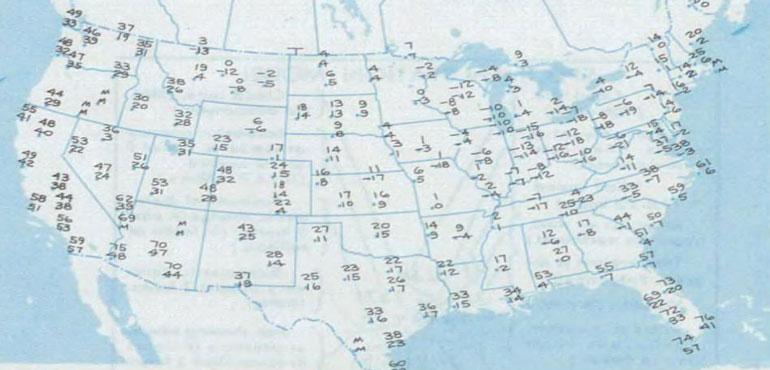
It was an event shaping up to be the most intense arctic outbreak of the century. The Great Cold Wave of 1985 saw numerous record low temperatures across the U.S.
It all started over 35 years ago on January 18, 1985 when Arctic air began to plummet across the U.S. This massive plume would send cold air blitzing through the Great Plains, Mississippi Valley, Great Lakes and Northeast in the coming days. Temperatures would dip into minus-30 degrees or lower across the Dakotas and throughout the Corn Belt.
This deadly freeze also impacted the East Coast between Jan. 19 and 21. State records were broken across the Carolinas and Virginia, where the temperature dropped to minus-30 degrees in Mountain Lake, Va., minus-34 degrees in Mt. Mitchell, N.C., and minus-19 degrees in Caesar’s Head, S.C.
Thanks to the jet stream dipping so far south, this allowed for this polar vortex to build and spin over half of the U.S. In fact, the associated cold front sunk as far south as Florida and Cuba by January 21 and 22! Myrtle Beach, S.C., would observe their all-time lowest temperature of 7 degrees, Pensacola Regional Airport in Florida would see the mercury drop to 5 degrees and Miami Beach would stay just above freezing at 34 degrees.
By the time this large-scale event would end, many lives were lost and damages skyrocketed. The freezing air would lead to many water main pipes bursting and an uptick in house fires due to improper use of heaters. Newspaper reports at the time said that 165 people succumbed to the deadly conditions, and an estimated $2.5 billion in damages would rack up the bill. This weather was so frighteningly dangerous that Ronald Regan’s second inauguration had to be moved indoors due to deadly wind chills well below zero.
This series of unfortunate events would be aptly deemed the “Freeze of the Century” as it saw the majority of the U.S. wrapped in a cold nutshell. It is important to note that a large swath of the U.S. typically experiences their coldest days between January 20 to 22.
Source(s): weather.gov
Story image: A map of the United States on January 21, 1985, detailing unusually cold temperatures for various cities as the January 1985 Arctic outbreak was in full effect. Numbers on the top depict the day's high temperatures in degrees Fahrenheit, while the numbers on the bottom denote the lowest. (NOAA/Wikimedia Commons)
It all started over 35 years ago on January 18, 1985 when Arctic air began to plummet across the U.S. This massive plume would send cold air blitzing through the Great Plains, Mississippi Valley, Great Lakes and Northeast in the coming days. Temperatures would dip into minus-30 degrees or lower across the Dakotas and throughout the Corn Belt.
This deadly freeze also impacted the East Coast between Jan. 19 and 21. State records were broken across the Carolinas and Virginia, where the temperature dropped to minus-30 degrees in Mountain Lake, Va., minus-34 degrees in Mt. Mitchell, N.C., and minus-19 degrees in Caesar’s Head, S.C.
Thanks to the jet stream dipping so far south, this allowed for this polar vortex to build and spin over half of the U.S. In fact, the associated cold front sunk as far south as Florida and Cuba by January 21 and 22! Myrtle Beach, S.C., would observe their all-time lowest temperature of 7 degrees, Pensacola Regional Airport in Florida would see the mercury drop to 5 degrees and Miami Beach would stay just above freezing at 34 degrees.
By the time this large-scale event would end, many lives were lost and damages skyrocketed. The freezing air would lead to many water main pipes bursting and an uptick in house fires due to improper use of heaters. Newspaper reports at the time said that 165 people succumbed to the deadly conditions, and an estimated $2.5 billion in damages would rack up the bill. This weather was so frighteningly dangerous that Ronald Regan’s second inauguration had to be moved indoors due to deadly wind chills well below zero.
This series of unfortunate events would be aptly deemed the “Freeze of the Century” as it saw the majority of the U.S. wrapped in a cold nutshell. It is important to note that a large swath of the U.S. typically experiences their coldest days between January 20 to 22.
Source(s): weather.gov
Story image: A map of the United States on January 21, 1985, detailing unusually cold temperatures for various cities as the January 1985 Arctic outbreak was in full effect. Numbers on the top depict the day's high temperatures in degrees Fahrenheit, while the numbers on the bottom denote the lowest. (NOAA/Wikimedia Commons)