


Back to forecast
On This Day in 1992: Hurricane Andrew Slams into Florida
August 23, 2022 at 02:51 PM EDT
By WeatherBug's Richard Romkee
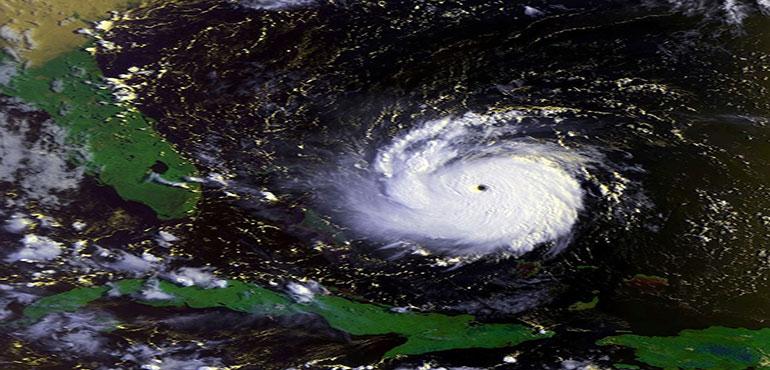
On this day in 1992, the cataclysmic Hurricane Andrew slammed into the Floridian coastline causing severe destruction in areas south of Miami.
Like most hurricanes, Andrew had humble beginnings as a tropical wave far east of the Caribbean islands, first being noticed off the west coast of Africa on August 14, 1992. The system trekked westward and rapidly organized itself into a tropical depression on August 16. Eventually, this depression developed into Tropical Storm Andrew on the morning of August 17.
Andrew continued to strengthen in a relatively healthy environment throughout the 17th and 18th, but then reached an area of strong upper-level winds which began to weaken the storm from its peak sustained winds. Andrew retained its tropical storm intensity based on the continued presence of wind speeds above 40 mph, but it was a relatively disorganized system between August 19 and August 21 as it moved northwest.
By the end of August 21, upper-level winds relented and Andrew quickly became stronger and better organized. An eye – the hallmark of a hurricane - began to develop at the center of the circulation by this point. Indeed, Andrew was upgraded to hurricane status about 650 miles south-southeast of Nassau, Bahamas, early on August 22. The forecast at this time called for Hurricane Andrew to make landfall in Jupiter, Fla., as a Category 2 storm on August 25, and a Hurricane Watch was issued for the Bahamas as well as the east coast of Florida at this time.
Andrew moved quickly after taking a slight but swift turn to the due west. It also gained strength quickly in an environment very healthy for nascent hurricanes: relatively light winds aloft and very warm ocean water. The minimum central pressure within Andrew dropped 47 millibars in 24 hours, or around 2 millibars per hour, and by the time it made landfall on Eleuthera Island, Bahamas, it had maximum wind speeds up to 160 mph after a previous peak at 175 mph just offshore.
Though Andrew was moving swiftly, the Bahamas still dealt with significant damage from Andrew. Despite the opening of 58 storm shelters across the archipelago, four deaths were attributed to Hurricane Andrew. 800 homes were destroyed across the island nation, leaving 1700 people homeless and producing around $250 million in damage.
Even before the storm caused severe damage in the Bahamas, evacuations were underway in Florida. An estimated 1.2 million people evacuated in total ahead of Andrew, and 142 shelters were opened to accommodate them.
Andrew did weaken slightly during its encounter with the Bahamas, but it quickly gathered strength again as it sped west directly towards southern Florida. By the time of its first U.S. landfall at Elliott Key, Fla., during the early morning hours of August 24, Andrew was packing sustained winds to 165 mph and a central minimum pressure of 926 millibars. The storm’s second Florida landfall, northeast of the city of Homestead, featured an even lower central pressure of 922 millibars constituting the seventh strongest U.S. hurricane landfall in recorded history.
To say that Andrew devastated southern Florida that day would be an understatement. At the height of the storm on the morning of August 24, 1.4 million residents were without power and a further 150,000 were without phone service. Despite widespread evacuations and pre-storm preparations, 44 fatalities were confirmed in Florida with numerous injuries.
Though the strongest winds spared downtown Miami, the southern parts of the Miami metropolitan area were not as lucky: a total of 101,241 homes were damaged, of which around 63,000 were demolished leaving 175,000 people homeless. The devastation doesn’t end there: 82,000 businesses, 31 schools, 59 healthcare facilities, 9500 traffic signals, 3,300 miles of power lines, and 3,000 miles of water main were damaged or destroyed by the storm as well as 32,900 acres of farmland.
Though Andrew raced across southern Florida, reaching the Gulf of Mexico just four hours after landfall, it left behind a humanitarian crisis that lasted for several weeks after landfall. Malnutrition, heat illness, dehydration, a general lack of infrastructure and looting were all common for survivors in the hardest hit areas. The government response in southern Florida was widely criticized for being late and generally inadequate in the early days of the crisis. All told, Andrew caused around $25 billion in damage to south Florida in addition to large changes to local building codes which were found to be inadequate.
After reaching the Gulf of Mexico, Andrew was not as violent but still powerful packing winds of up to 135 mph. It curved towards the north and set its sights on Louisiana, moving quickly while slowly restrengthening over the warm ocean surface. Oil facilities in the Gulf of Mexico were hit hard by the storm, with $500 million in damage from 33 toppled and 241 damaged oil platforms. Over 1.5 million residents in Texas and Louisiana evacuated in advance of the behemoth storm, mainly in Louisiana. Concerns about severe impacts from flooding in New Orleans led to the closure of 111 floodgates and the closure of New Orleans International Airport.
Andrew made landfall for the final time with sustained winds to 115 mph near Morgan City, La., on the morning of August 26. While the storm tracked inland, it caused more significant damage though fortunately not as much as was experienced in Florida. In total, 23,000 homes were damaged with 985 destroyed in addition to 1,951 mobile homes; 28 schools were also damaged or destroyed in the storm. $1.56 billion in damage was recorded, with approximately 230,000 residents losing power at the height of the storm. Sadly, Andrew also caused 17 deaths in Louisiana, 2 of which were caused by an EF-3 tornado in La Place.
As Andrew moved inland, it weakened significantly while racing northeast like most tropical cyclones. Andrew also triggered a tornado outbreak across the Southeastern U.S. and Mid-Atlantic: 39 twisters touched down across Louisiana and Mississippi on August 26, with 10 more touching down on August 27 in Mississippi, Alabama, Georgia, and Tennessee. Even after Andrew could no longer be classified as a tropical system, it still helped produce 12 tornadoes in Maryland, Pennsylvania and Delaware on August 28. Andrew produced 61 tornadoes in total, the fourth largest recorded outbreak of tornadoes caused by a tropical cyclone.
All told, Andrew produced around $27.3 billion in damage, or $58 billion when adjusted for inflation. Sixty-five people were killed by Andrew across two countries, and millions of lives were changed forever. Andrew constituted the costliest hurricane in U.S. history until Hurricane Katrina in 2005: it is now the seventh costliest storm in U.S. history as of August 2022. The disaster also led to population shifts across southeastern Florida, significant mental health issues among survivors, and large changes to building codes in the area.
Considering this devastation, the name Andrew was unsurprisingly retired from all tropical cyclone name lists across the globe by the World Meteorological Organization. The name was replaced by Alex, which has been used multiple times most recently in 2020.
Sources: Wikipedia.org, National Hurricane Center
Story image: Hurricane Andrew on August 23 at approximately 1231 UTC. This image was produced from data from NOAA-12, provided by NOAA. (NOAA/Satellite and Information Service)
Like most hurricanes, Andrew had humble beginnings as a tropical wave far east of the Caribbean islands, first being noticed off the west coast of Africa on August 14, 1992. The system trekked westward and rapidly organized itself into a tropical depression on August 16. Eventually, this depression developed into Tropical Storm Andrew on the morning of August 17.
Andrew continued to strengthen in a relatively healthy environment throughout the 17th and 18th, but then reached an area of strong upper-level winds which began to weaken the storm from its peak sustained winds. Andrew retained its tropical storm intensity based on the continued presence of wind speeds above 40 mph, but it was a relatively disorganized system between August 19 and August 21 as it moved northwest.
By the end of August 21, upper-level winds relented and Andrew quickly became stronger and better organized. An eye – the hallmark of a hurricane - began to develop at the center of the circulation by this point. Indeed, Andrew was upgraded to hurricane status about 650 miles south-southeast of Nassau, Bahamas, early on August 22. The forecast at this time called for Hurricane Andrew to make landfall in Jupiter, Fla., as a Category 2 storm on August 25, and a Hurricane Watch was issued for the Bahamas as well as the east coast of Florida at this time.
Andrew moved quickly after taking a slight but swift turn to the due west. It also gained strength quickly in an environment very healthy for nascent hurricanes: relatively light winds aloft and very warm ocean water. The minimum central pressure within Andrew dropped 47 millibars in 24 hours, or around 2 millibars per hour, and by the time it made landfall on Eleuthera Island, Bahamas, it had maximum wind speeds up to 160 mph after a previous peak at 175 mph just offshore.
Though Andrew was moving swiftly, the Bahamas still dealt with significant damage from Andrew. Despite the opening of 58 storm shelters across the archipelago, four deaths were attributed to Hurricane Andrew. 800 homes were destroyed across the island nation, leaving 1700 people homeless and producing around $250 million in damage.
Even before the storm caused severe damage in the Bahamas, evacuations were underway in Florida. An estimated 1.2 million people evacuated in total ahead of Andrew, and 142 shelters were opened to accommodate them.
Andrew did weaken slightly during its encounter with the Bahamas, but it quickly gathered strength again as it sped west directly towards southern Florida. By the time of its first U.S. landfall at Elliott Key, Fla., during the early morning hours of August 24, Andrew was packing sustained winds to 165 mph and a central minimum pressure of 926 millibars. The storm’s second Florida landfall, northeast of the city of Homestead, featured an even lower central pressure of 922 millibars constituting the seventh strongest U.S. hurricane landfall in recorded history.
To say that Andrew devastated southern Florida that day would be an understatement. At the height of the storm on the morning of August 24, 1.4 million residents were without power and a further 150,000 were without phone service. Despite widespread evacuations and pre-storm preparations, 44 fatalities were confirmed in Florida with numerous injuries.
Though the strongest winds spared downtown Miami, the southern parts of the Miami metropolitan area were not as lucky: a total of 101,241 homes were damaged, of which around 63,000 were demolished leaving 175,000 people homeless. The devastation doesn’t end there: 82,000 businesses, 31 schools, 59 healthcare facilities, 9500 traffic signals, 3,300 miles of power lines, and 3,000 miles of water main were damaged or destroyed by the storm as well as 32,900 acres of farmland.
Though Andrew raced across southern Florida, reaching the Gulf of Mexico just four hours after landfall, it left behind a humanitarian crisis that lasted for several weeks after landfall. Malnutrition, heat illness, dehydration, a general lack of infrastructure and looting were all common for survivors in the hardest hit areas. The government response in southern Florida was widely criticized for being late and generally inadequate in the early days of the crisis. All told, Andrew caused around $25 billion in damage to south Florida in addition to large changes to local building codes which were found to be inadequate.
After reaching the Gulf of Mexico, Andrew was not as violent but still powerful packing winds of up to 135 mph. It curved towards the north and set its sights on Louisiana, moving quickly while slowly restrengthening over the warm ocean surface. Oil facilities in the Gulf of Mexico were hit hard by the storm, with $500 million in damage from 33 toppled and 241 damaged oil platforms. Over 1.5 million residents in Texas and Louisiana evacuated in advance of the behemoth storm, mainly in Louisiana. Concerns about severe impacts from flooding in New Orleans led to the closure of 111 floodgates and the closure of New Orleans International Airport.
Andrew made landfall for the final time with sustained winds to 115 mph near Morgan City, La., on the morning of August 26. While the storm tracked inland, it caused more significant damage though fortunately not as much as was experienced in Florida. In total, 23,000 homes were damaged with 985 destroyed in addition to 1,951 mobile homes; 28 schools were also damaged or destroyed in the storm. $1.56 billion in damage was recorded, with approximately 230,000 residents losing power at the height of the storm. Sadly, Andrew also caused 17 deaths in Louisiana, 2 of which were caused by an EF-3 tornado in La Place.
As Andrew moved inland, it weakened significantly while racing northeast like most tropical cyclones. Andrew also triggered a tornado outbreak across the Southeastern U.S. and Mid-Atlantic: 39 twisters touched down across Louisiana and Mississippi on August 26, with 10 more touching down on August 27 in Mississippi, Alabama, Georgia, and Tennessee. Even after Andrew could no longer be classified as a tropical system, it still helped produce 12 tornadoes in Maryland, Pennsylvania and Delaware on August 28. Andrew produced 61 tornadoes in total, the fourth largest recorded outbreak of tornadoes caused by a tropical cyclone.
All told, Andrew produced around $27.3 billion in damage, or $58 billion when adjusted for inflation. Sixty-five people were killed by Andrew across two countries, and millions of lives were changed forever. Andrew constituted the costliest hurricane in U.S. history until Hurricane Katrina in 2005: it is now the seventh costliest storm in U.S. history as of August 2022. The disaster also led to population shifts across southeastern Florida, significant mental health issues among survivors, and large changes to building codes in the area.
Considering this devastation, the name Andrew was unsurprisingly retired from all tropical cyclone name lists across the globe by the World Meteorological Organization. The name was replaced by Alex, which has been used multiple times most recently in 2020.
Sources: Wikipedia.org, National Hurricane Center
Story image: Hurricane Andrew on August 23 at approximately 1231 UTC. This image was produced from data from NOAA-12, provided by NOAA. (NOAA/Satellite and Information Service)