Back to forecast
On This Day in 1992: Hurricane Andrew Strikes Florida
August 24, 2022 at 11:04 AM EDT
By WeatherBug's Intern Meteorologist, Christopher Smith
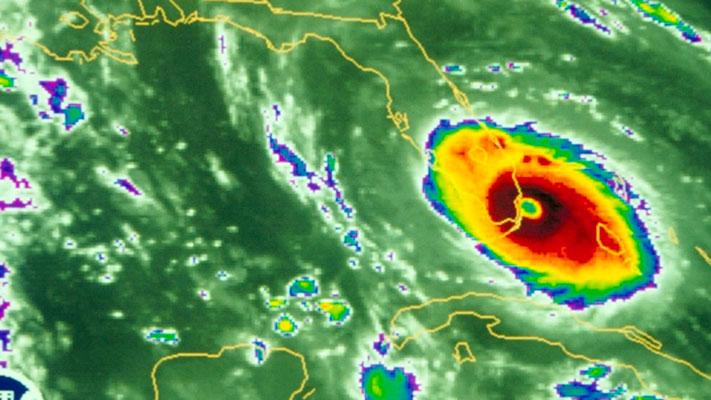
As we approach the height of the Atlantic Hurricane Season, we remember one of the strongest hurricanes on record to make landfall in southern Florida 30 years ago today.
Hurricane Andrew likely rings a bell to many Floridians as a storm to remember and that’s because the hurricane made landfall as a major Category 5 storm. This is the highest category on the Saffir-Simpson Scale with winds greater than 155 mph. Initially, the hurricane was declared a Category 4 hurricane at landfall with sustained winds of 145 mph, but a post-analysis of surface winds upgraded the hurricane to the next category.
The damage across south Florida was extensive and catastrophic. Storm surge up to 16.9 feet, higher than a one-story home, was recorded at Burger King International Headquarters on the western shore of Biscayne Bay and just south of Miami. Across southern Dade County alone, more than 125,000 homes were either damaged or destroyed, including in Homestead, Fla., where more than 99% of the mobile homes were destroyed.
After raking through southern Florida, Hurricane Andrew made an additional landfall in south-central Louisiana as a major Category 3 hurricane early on August 26th, 1992.
Following its path of destruction, Andrew was declared the costliest hurricane at the time, with damage of greater than $28 billion in today’s currency. The record Andrew set was outdone in 2005 by the memorable Hurricane Katrina, which cost a whopping $81-billion. In total, Andrew was responsible for 65 deaths.
Sources: nhc.noaa.gov, nps.gov
----------
Story Image: Satellite imagery of Hurricane Andrew making landfall south of Miami early on August 24, 1992 (NOAA Photo Library).
Hurricane Andrew likely rings a bell to many Floridians as a storm to remember and that’s because the hurricane made landfall as a major Category 5 storm. This is the highest category on the Saffir-Simpson Scale with winds greater than 155 mph. Initially, the hurricane was declared a Category 4 hurricane at landfall with sustained winds of 145 mph, but a post-analysis of surface winds upgraded the hurricane to the next category.
The damage across south Florida was extensive and catastrophic. Storm surge up to 16.9 feet, higher than a one-story home, was recorded at Burger King International Headquarters on the western shore of Biscayne Bay and just south of Miami. Across southern Dade County alone, more than 125,000 homes were either damaged or destroyed, including in Homestead, Fla., where more than 99% of the mobile homes were destroyed.
After raking through southern Florida, Hurricane Andrew made an additional landfall in south-central Louisiana as a major Category 3 hurricane early on August 26th, 1992.
Following its path of destruction, Andrew was declared the costliest hurricane at the time, with damage of greater than $28 billion in today’s currency. The record Andrew set was outdone in 2005 by the memorable Hurricane Katrina, which cost a whopping $81-billion. In total, Andrew was responsible for 65 deaths.
Sources: nhc.noaa.gov, nps.gov
----------
Story Image: Satellite imagery of Hurricane Andrew making landfall south of Miami early on August 24, 1992 (NOAA Photo Library).