Back to forecast
On This Day in 2006: Pluto Demoted To A Dwarf Planet
August 23, 2023 at 01:55 PM EDT
By WeatherBug Meteorologist, Matt Mehallow
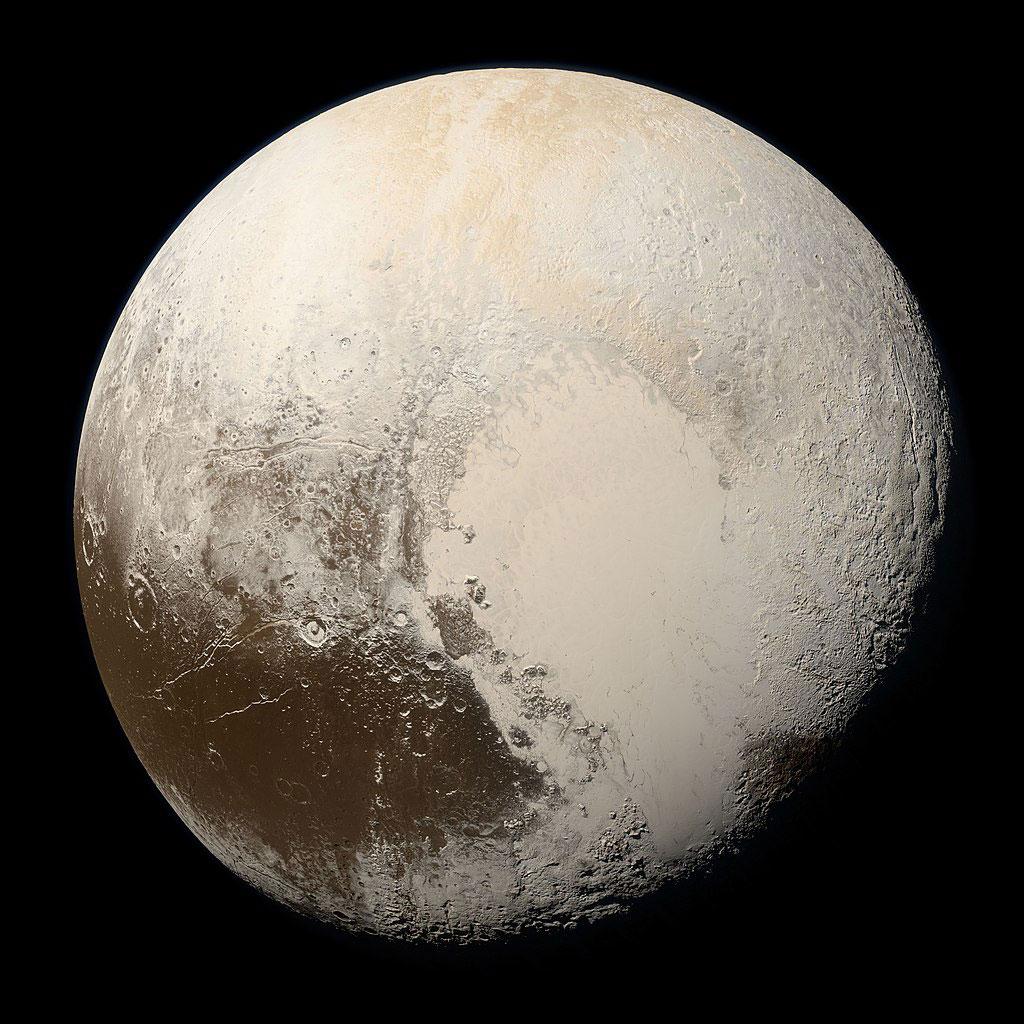
Seventeen years ago today, the International Astronomical Union downgraded the status of Pluto to a "dwarf planet," ending its position as the ninth planet from the Sun. The decision was met with objection from many across the world based on tradition and principle, though the judgement was supported by scientific reasoning.
Pluto was discovered in 1930, though because of its small size and enormous distance from Earth, astronomers did not know its composition and other characteristics. Since there was no indication that many other similar bodies would be discovered in the outer extent of the solar system, or that a comparable type of body existed in the region, astronomers deemed designating the new discovery as the ninth planet a scientifically accurate decision.
However, a need to reevaluate that decision occurred once a large spherical body named “Xena” was discovered on January 8, 2005, at Palomar Observatory in California. A Kuiper-belt object like Pluto, but slightly less reddish-yellow, Xena was determined to have a diameter of 1,490 miles (with an uncertainty of 60 miles) by NASA’s Hubble Space Telescope in April 2006 while Pluto's diameter is 1,422 miles.
Both Pluto and Xena are located in the Kuiper belt, which was named in honor of Dutch astronomer Gerard Kuiper, who speculated the existence of a similar belt in 1951. Kuiper believed that there was a region in the outer solar system beyond Neptune that could contain many icy, comet-like objects too faint to be observed with the telescopes of his time. The Kuiper belt was demonstrated to exist in the 1990s, and astronomers have been finding objects of varying size in the region since then.
That said, little to no astronomers had previously called for the Kuiper-belt objects to be called planets, because most were substantially smaller than Pluto. But the announcement of Xena's discovery brought a need for a more precise definition of which objects are planets and which are not.
This meant that the root of the planet debate surrounding Pluto and Xena was the fact that before the resolution that was passed in 2006 declaring Pluto a dwarf planet, the term planet had no working definition. A planet was based on classification from before some of the major modern discoveries within the universe that were made possible by advances in technology.
After the 2006 declaration, there was now a specific definition for planets. A planet must orbit a star, must be big enough to have enough gravity to force a spherical shape, and it must be big enough that its gravity cleared away any objects of a similar size near its orbit.
At its root, the judgment meant that only the rocky worlds of the inner solar system and the gas giants of the outer system would thereafter be designated as planets. Thus, Pluto and Xena would be considered dwarf planets from that point forward, ending a period of considerable astronomical controversy.
Source: NASA, Wikipedia
----------
Story Image: New Horizon's true color view of Pluto as it approached the planet on July 14, 2015. (NASA courtesy of Wikimedia Commons)
Pluto was discovered in 1930, though because of its small size and enormous distance from Earth, astronomers did not know its composition and other characteristics. Since there was no indication that many other similar bodies would be discovered in the outer extent of the solar system, or that a comparable type of body existed in the region, astronomers deemed designating the new discovery as the ninth planet a scientifically accurate decision.
However, a need to reevaluate that decision occurred once a large spherical body named “Xena” was discovered on January 8, 2005, at Palomar Observatory in California. A Kuiper-belt object like Pluto, but slightly less reddish-yellow, Xena was determined to have a diameter of 1,490 miles (with an uncertainty of 60 miles) by NASA’s Hubble Space Telescope in April 2006 while Pluto's diameter is 1,422 miles.
Both Pluto and Xena are located in the Kuiper belt, which was named in honor of Dutch astronomer Gerard Kuiper, who speculated the existence of a similar belt in 1951. Kuiper believed that there was a region in the outer solar system beyond Neptune that could contain many icy, comet-like objects too faint to be observed with the telescopes of his time. The Kuiper belt was demonstrated to exist in the 1990s, and astronomers have been finding objects of varying size in the region since then.
That said, little to no astronomers had previously called for the Kuiper-belt objects to be called planets, because most were substantially smaller than Pluto. But the announcement of Xena's discovery brought a need for a more precise definition of which objects are planets and which are not.
This meant that the root of the planet debate surrounding Pluto and Xena was the fact that before the resolution that was passed in 2006 declaring Pluto a dwarf planet, the term planet had no working definition. A planet was based on classification from before some of the major modern discoveries within the universe that were made possible by advances in technology.
After the 2006 declaration, there was now a specific definition for planets. A planet must orbit a star, must be big enough to have enough gravity to force a spherical shape, and it must be big enough that its gravity cleared away any objects of a similar size near its orbit.
At its root, the judgment meant that only the rocky worlds of the inner solar system and the gas giants of the outer system would thereafter be designated as planets. Thus, Pluto and Xena would be considered dwarf planets from that point forward, ending a period of considerable astronomical controversy.
Source: NASA, Wikipedia
----------
Story Image: New Horizon's true color view of Pluto as it approached the planet on July 14, 2015. (NASA courtesy of Wikimedia Commons)