Back to forecast
On This Day in 2010: Southern California Pineapple Express
December 13, 2021 at 01:48 PM EST
By WeatherBug's Intern Meteorologist, Christopher Smith
On this day 11 years ago, a Pineapple Express was set to pound California, delivering feet of snow, and yes, even feet of rain.
The forecast for the winter of 2010 was a dry one with a similar setup to this year’s with a La-Niña in place. However, in the span of one week in mid-December, that forecast was spoiled. An upper-level trough in place just off the coast along with subtropical Pacific moisture centered across the state, setting up a track that brought storm after storm right into the Golden State. This storm track was set up along an intense atmospheric river known as the Pineapple Express, transporting rich tropical moisture originating from near Hawaii all the way to California.
Late on December 15, 2010, into December 16, the rain and mountain snow would begin, and it would persist for a week straight. Snow levels remained rather low for northern California thanks to cold air spilling south, limiting high volumes of runoff and flooding for the valleys below. However, milder air in place across the southern end of the state would not spell the same fate.
Throughout the week when a firehose of moisture was pointed at southern California, snow levels mainly stayed up above 8,000 to 9,000 feet, delivering rain to most of the mountains. Enhanced by topography, downpours helped rain totals add up to staggering amounts.
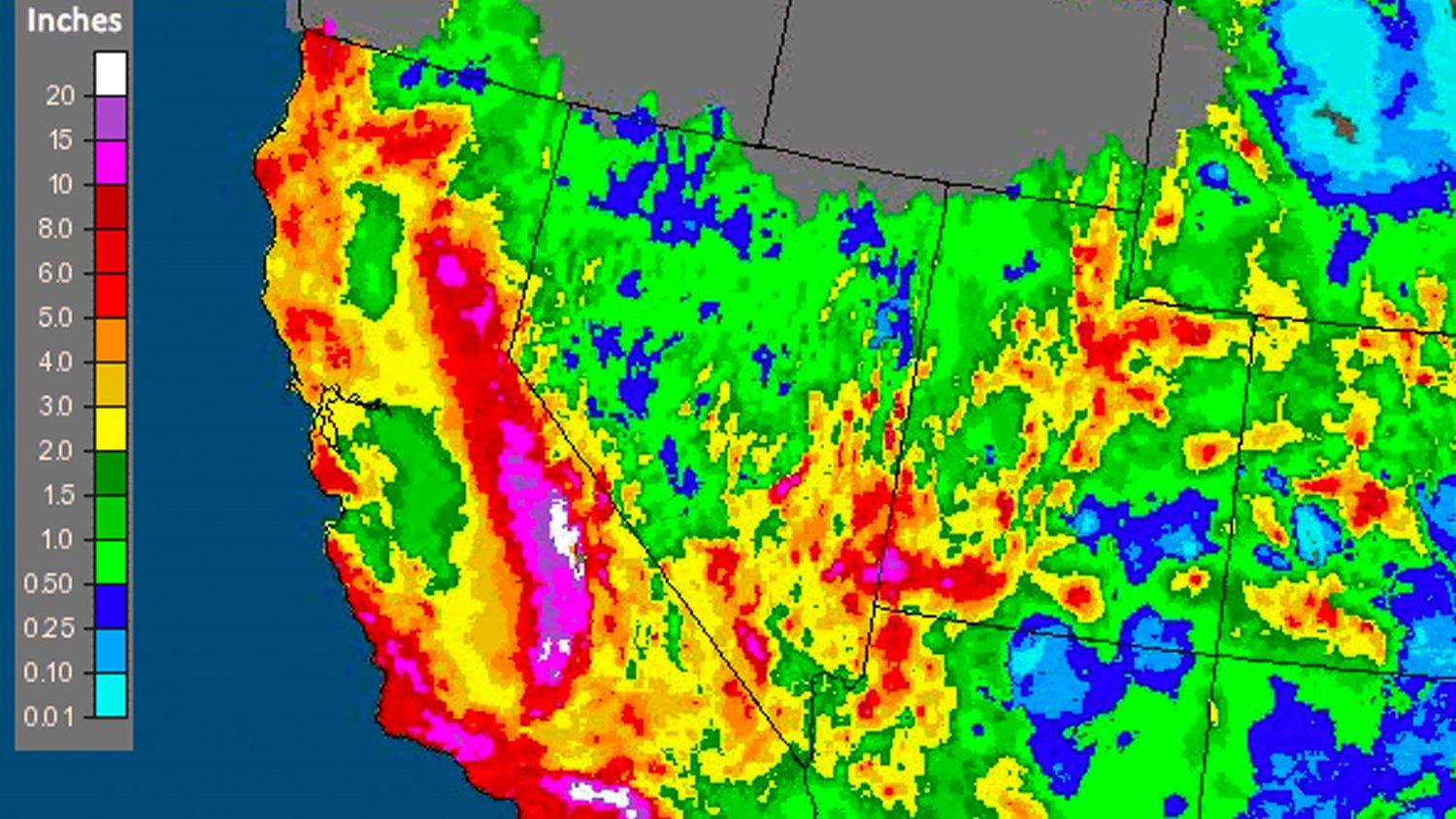
Rainfall amounts up to 20 inches were recorded just below the highest peaks of the eastern San Gabriel and western San Bernardino Mountains. The lower elevations from Los Angeles to San Diego received anywhere from 4 to over 8 inches of rain. Meanwhile, the high mountain peaks of southern and central California picked up feet of snow with Sequoia National Park gaining 17 feet to the snowpack.
Widespread heavy rain caused over 70 homes to be submerged in feet of mud near San Bernardino, Calif., while more than 25,000 motorists contacted AAA for assistance on December 20, 2010, a 24-hour record. Damages mounted to over $75 million in today’s currency.
Sources: cnfrc.noaa.gov, ncdc.noaa.gov, oceanservice.noaa.gov
----------
Story Image: Observed precipitation from December 16 to December 23, 2010 (NOAA).
The forecast for the winter of 2010 was a dry one with a similar setup to this year’s with a La-Niña in place. However, in the span of one week in mid-December, that forecast was spoiled. An upper-level trough in place just off the coast along with subtropical Pacific moisture centered across the state, setting up a track that brought storm after storm right into the Golden State. This storm track was set up along an intense atmospheric river known as the Pineapple Express, transporting rich tropical moisture originating from near Hawaii all the way to California.
Late on December 15, 2010, into December 16, the rain and mountain snow would begin, and it would persist for a week straight. Snow levels remained rather low for northern California thanks to cold air spilling south, limiting high volumes of runoff and flooding for the valleys below. However, milder air in place across the southern end of the state would not spell the same fate.
Throughout the week when a firehose of moisture was pointed at southern California, snow levels mainly stayed up above 8,000 to 9,000 feet, delivering rain to most of the mountains. Enhanced by topography, downpours helped rain totals add up to staggering amounts.
Rainfall amounts up to 20 inches were recorded just below the highest peaks of the eastern San Gabriel and western San Bernardino Mountains. The lower elevations from Los Angeles to San Diego received anywhere from 4 to over 8 inches of rain. Meanwhile, the high mountain peaks of southern and central California picked up feet of snow with Sequoia National Park gaining 17 feet to the snowpack.
Widespread heavy rain caused over 70 homes to be submerged in feet of mud near San Bernardino, Calif., while more than 25,000 motorists contacted AAA for assistance on December 20, 2010, a 24-hour record. Damages mounted to over $75 million in today’s currency.
Sources: cnfrc.noaa.gov, ncdc.noaa.gov, oceanservice.noaa.gov
----------
Story Image: Observed precipitation from December 16 to December 23, 2010 (NOAA).