Back to forecast
Perseid Meteor Shower Peaks August 12-13
August 9, 2024 at 11:31 PM EDT
By Weatherbug Meteorologist, John Benedict
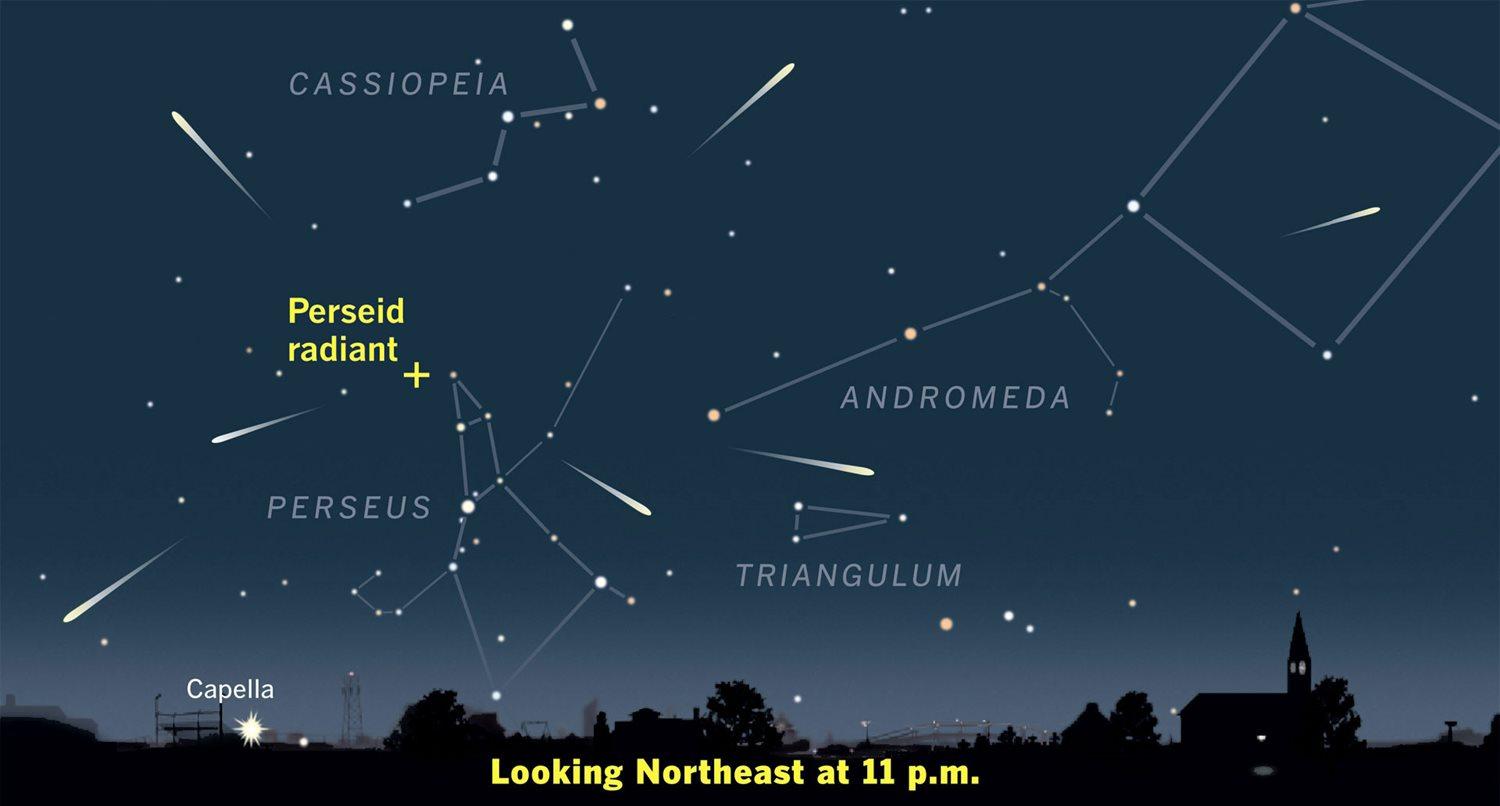
One of the most popular meteor showers of the year, the Perseids, will display its peak of shooting stars in the night sky late this weekend into early next week. The Perseids owe their reputation to the high volume of meteors and pleasant, warm summertime weather.
The Perseids are a stream of debris that is located along the orbit of the comet Swift–Tuttle, which was discovered in 1862 by Lewis Swift and Horace Parnell Tuttle. The comet passes through the inner Solar System, where Earth is located, only once every 133 years. Each August, Earth encounters the trail of debris left behind by the comet, leading to one of the best meteor showers of the year.
The Perseid meteor shower occurs every year from about July 23 to September 1, reaching its peak in the pre-dawn hours of August 11, 12 or 13. This is when around 50 meteors per hour fall. The bits and pieces from Comet Swift-Tuttle, which range in size from a grain of sand to a pebble, streak through Earth’s upper atmosphere at 40 miles per second. That`s more than 200 times faster than the speed of sound!
You will have the best chance of seeing the meteors by finding a dark area far removed from street and highway lights where you can see the entire periphery of the sky.
The meteor shower is named for the constellation from which the meteors originate, which is Perseus the Hero. To find the constellation Perseus, look to the northeastern sky, to the right and above of the bright star Capella or to the left of the constellation Andromeda.
The best advice is to give yourself at least an hour of observing time because the meteors are not constant but instead come in waves. So, if you arrive at your viewing spot between waves, you’ll have to wait a bit for the next meteor shower. Also keep in mind that your eyes can take as long as 20 minutes to adjust to the darkness.
While you are outside to observe the Perseids, you will likely see why its fame comes from the fact that it consistently has the brightest and most numerous meteors. Even if the viewing conditions are not ideal, odds are favorable that you will spot at least a handful of meteors.
The Perseids are a stream of debris that is located along the orbit of the comet Swift–Tuttle, which was discovered in 1862 by Lewis Swift and Horace Parnell Tuttle. The comet passes through the inner Solar System, where Earth is located, only once every 133 years. Each August, Earth encounters the trail of debris left behind by the comet, leading to one of the best meteor showers of the year.
The Perseid meteor shower occurs every year from about July 23 to September 1, reaching its peak in the pre-dawn hours of August 11, 12 or 13. This is when around 50 meteors per hour fall. The bits and pieces from Comet Swift-Tuttle, which range in size from a grain of sand to a pebble, streak through Earth’s upper atmosphere at 40 miles per second. That`s more than 200 times faster than the speed of sound!
You will have the best chance of seeing the meteors by finding a dark area far removed from street and highway lights where you can see the entire periphery of the sky.
The meteor shower is named for the constellation from which the meteors originate, which is Perseus the Hero. To find the constellation Perseus, look to the northeastern sky, to the right and above of the bright star Capella or to the left of the constellation Andromeda.
The best advice is to give yourself at least an hour of observing time because the meteors are not constant but instead come in waves. So, if you arrive at your viewing spot between waves, you’ll have to wait a bit for the next meteor shower. Also keep in mind that your eyes can take as long as 20 minutes to adjust to the darkness.
While you are outside to observe the Perseids, you will likely see why its fame comes from the fact that it consistently has the brightest and most numerous meteors. Even if the viewing conditions are not ideal, odds are favorable that you will spot at least a handful of meteors.