


Back to forecast
Remembering the Tuscaloosa-Birmingham Tornado
May 3, 2026 at 03:24 AM EDT
By WeatherBug's Alexa Maines
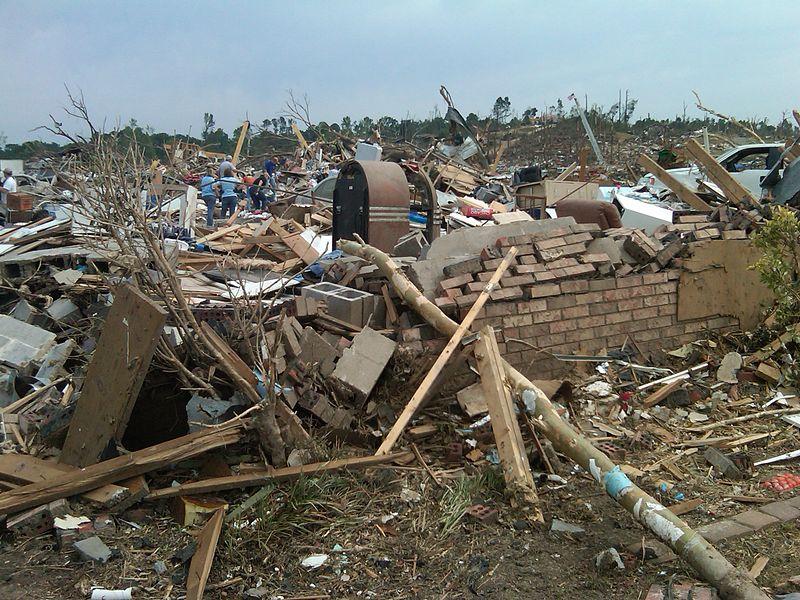
Seven years ago this week, a monster tornado outbreak swept across the southern U.S., causing extensive destruction and death. One of the most destructive tornadoes in history hit Alabama.
In the late afternoon of April 27, 2011, a destructive EF-4 wedge tornado swept through the cities of Tuscaloosa and Birmingham, Ala. More than 1,500 people were injured and 64 died in this tornado. It went down in history as one of the worst tornadoes ever recorded to date.
It all started when a supercell formed a tornado in the late afternoon about 20 miles southwest of Tuscaloosa. The intensifying tornado, now an EF4 with winds estimated at 133 mph quickly approached the city of Tuscaloosa, home of the University of Alabama. Unfortunately, there were numerous houses, apartment buildings, businesses and restaurants in the path of this monstrous tornado and they were immediately flattened. Thousands of trees were snapped, ripped from the ground, or stripped of leaves and bark. People in Birmingham reported debris falling from 20 miles away.
The tornado tracked to the northeast and eventually blew through the western suburbs of Birmingham, where it destroyed everything in its path. It also skimmed the city of Birmingham, causing damage in a couple of the neighborhoods within the city limits. The storm began to weaken as it moved to the northeast of Birmingham and it finally ended – more than 80 miles away from its starting point and almost two hours after it touched down.
Sadly, there was extensive damage and thousands were left homeless after this devastating storm. There were 65 fatalities, 44 occurring in Tuscaloosa alone. The tornado’s maximum path width was 1.5 miles and the maximum winds were 190 mph, which is equivalent to a strong Category 5 hurricane. Damages from this storm alone added up to $2.4 billion, making it the costliest tornado ever recorded until the Joplin, Mo., tornado ripped through Missouri less than a month later.
There were debates about the storm’s rating after it received its EF-4 rating, as many believed that it should have been rated an EF-5 due to the extent of damages, injuries and fatalities. In order for a tornado to be rated as an EF-5, anchored buildings with reinforced concrete and up to code foundations have to be completely destroyed and swept away. Shrubs and trees must also be completely stripped of leaves and bark and the ground needs to be visibly scoured. Since the majority of the buildings destroyed in wake of this storm were not properly anchored or reinforced and some trees and shrubs in the tornado’s path kept their bark and leaves, survey teams agreed that this storm should be classified as an EF-4 tornado.
In the late afternoon of April 27, 2011, a destructive EF-4 wedge tornado swept through the cities of Tuscaloosa and Birmingham, Ala. More than 1,500 people were injured and 64 died in this tornado. It went down in history as one of the worst tornadoes ever recorded to date.
It all started when a supercell formed a tornado in the late afternoon about 20 miles southwest of Tuscaloosa. The intensifying tornado, now an EF4 with winds estimated at 133 mph quickly approached the city of Tuscaloosa, home of the University of Alabama. Unfortunately, there were numerous houses, apartment buildings, businesses and restaurants in the path of this monstrous tornado and they were immediately flattened. Thousands of trees were snapped, ripped from the ground, or stripped of leaves and bark. People in Birmingham reported debris falling from 20 miles away.
The tornado tracked to the northeast and eventually blew through the western suburbs of Birmingham, where it destroyed everything in its path. It also skimmed the city of Birmingham, causing damage in a couple of the neighborhoods within the city limits. The storm began to weaken as it moved to the northeast of Birmingham and it finally ended – more than 80 miles away from its starting point and almost two hours after it touched down.
Sadly, there was extensive damage and thousands were left homeless after this devastating storm. There were 65 fatalities, 44 occurring in Tuscaloosa alone. The tornado’s maximum path width was 1.5 miles and the maximum winds were 190 mph, which is equivalent to a strong Category 5 hurricane. Damages from this storm alone added up to $2.4 billion, making it the costliest tornado ever recorded until the Joplin, Mo., tornado ripped through Missouri less than a month later.
There were debates about the storm’s rating after it received its EF-4 rating, as many believed that it should have been rated an EF-5 due to the extent of damages, injuries and fatalities. In order for a tornado to be rated as an EF-5, anchored buildings with reinforced concrete and up to code foundations have to be completely destroyed and swept away. Shrubs and trees must also be completely stripped of leaves and bark and the ground needs to be visibly scoured. Since the majority of the buildings destroyed in wake of this storm were not properly anchored or reinforced and some trees and shrubs in the tornado’s path kept their bark and leaves, survey teams agreed that this storm should be classified as an EF-4 tornado.