Back to forecast
Solar Eclipses Throughout History
April 3, 2024 at 10:59 AM EDT
By WeatherBug Meteorologist, Fred Allen
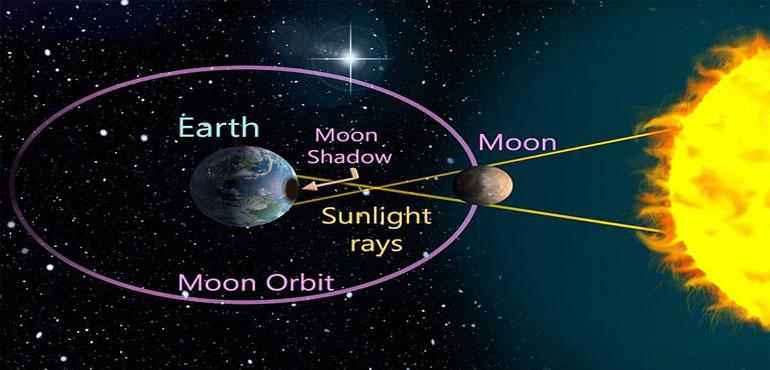
Solar eclipses have been villainized throughout history, but are remarkable, harmless, and occur naturally. A fascinating phenomena, let’s have a discussion about eclipse history and a mid-October event that will sweep across the Americas.
What types of solar eclipses are there?
What types of solar eclipses are there?
- Total Solar Eclipse: This is when the Moon completely blocks the Sun’s bright rays, allowing only the edges of the faint “solar corona” to be visible. During any one eclipse, the best viewing occurs in a narrow track of the Earth’s surface known as the “path of totality.”
- Annular Solar Eclipse: The Sun and Moon are exactly in line with the Earth. In this case, the Moon’s size is smaller than the Sun, leaving a bright ring, or “annulus.” which surrounds the dark disk of the Moon.
- Hybrid Solar Eclipse: Referred to as shifts between “annular or total eclipse.” At different points on the Earth’s surface, it could appear as a total eclipse, whereas other spots it would have an annular appearance. Hybrid eclipses are rare, however.
- Partial Solar Eclipse: This is when the Sun and Moon don’t line up exactly with the Earth, leaving the Sun partially obscured by the Moon. This type of eclipse can be seen by larger part of the Earth outside the track of an “annular or total eclipse.”
The history behind solar eclipses is fascinating, especially if you’re a fan of astronomy. The word “eclipse” comes from “ekleipsis,” an ancient Greek word that means “abandoned.” Eclipses have been thought of as bad omen, when really, they’re harmless. Sir Arthur Eddington, a British astronomer and mathematician, tested Albert Einstein’s theory of general relativity in a total solar eclipse of May 29, 1919. Pictures of the stars around the Sun during totality revealed that gravity can bend light. This was known as gravitational deflection.
Helium was discovered after a solar eclipse on August 18, 1868, by French astronomer Jules Janssen. As early as 2500 BCE, surviving records showed Babylonians and ancient Chinese were able to predict solar eclipses. Solar eclipses in China at the time were directly related to health and success of the emperor. A failed prediction meant he was in danger. Horrifically, two astrologers, Hsi and Ho, were executed due to their failed attempts on October 22, 2134, BCE. This is believed to be the oldest solar eclipse in history.
Are you clamoring for more solar eclipse history? If so, clay tablets found at ancient archaeological sites show that Babylonians earliest solar eclipse occurred on May 3, 1375, BCE, and they were pretty accurate in predicting them. They were the first people to use saros cycle to predict eclipses, which has a relationship to the lunar cycle of about 6,585.3 days, or 18 years, 11 days, and 8 hours long. Ironically, the same bad omens existed for kings and rulers as in China emperors.
Other notable eclipses included one in 585, BCE, which stopped a war between the Lydians and Medes. The dark sky was viewed as a peace gesture. Greek astronomer Hipparchus used a solar eclipse to determine the Moon was about 268,000 miles away (429,000 km) from the Earth. It wasn’t until 1605 that astronomer Johannes Kepler gave a scientific description of a total solar eclipse. Edmund Halley, more than a century later, predicted the timing and path of a total solar eclipse on May 3, 1975. His calculations were a mere 4 minutes and about 18 miles off from the actual time and path of the eclipse.
There are more notable solar eclipses, too. January 27, 632, an annular eclipse was visible in Medina, Saudi Arabia. On August 2, 1133, King Henry died shortly after the total eclipse. This is where the spread of superstition eclipses had been villainized. On May 15, 1836, English Astronomer Francis Baily first discovered and described Baily’s beads. This is a phenomenon that occurs in the seconds after totality in a total solar eclipse and annularity in an annular solar eclipse. The first photograph of the Sun’s corona was taken on July 28, 1851. Lastly, the longest total solar eclipse in the 21st century occurred on July 21-22, 2009, which lasted for 6 minutes and 39 seconds.
In just several days, a total solar eclipse will cut through south-central U.S. to the Northeast on Monday, April 8th, 2024. Just a few months ago, the West and south-central U.S. experienced an annular solar eclipse.
---
A visual demonstration of a solar eclipse is seen here. (Debi Brady from Pixabay)
Helium was discovered after a solar eclipse on August 18, 1868, by French astronomer Jules Janssen. As early as 2500 BCE, surviving records showed Babylonians and ancient Chinese were able to predict solar eclipses. Solar eclipses in China at the time were directly related to health and success of the emperor. A failed prediction meant he was in danger. Horrifically, two astrologers, Hsi and Ho, were executed due to their failed attempts on October 22, 2134, BCE. This is believed to be the oldest solar eclipse in history.
Are you clamoring for more solar eclipse history? If so, clay tablets found at ancient archaeological sites show that Babylonians earliest solar eclipse occurred on May 3, 1375, BCE, and they were pretty accurate in predicting them. They were the first people to use saros cycle to predict eclipses, which has a relationship to the lunar cycle of about 6,585.3 days, or 18 years, 11 days, and 8 hours long. Ironically, the same bad omens existed for kings and rulers as in China emperors.
Other notable eclipses included one in 585, BCE, which stopped a war between the Lydians and Medes. The dark sky was viewed as a peace gesture. Greek astronomer Hipparchus used a solar eclipse to determine the Moon was about 268,000 miles away (429,000 km) from the Earth. It wasn’t until 1605 that astronomer Johannes Kepler gave a scientific description of a total solar eclipse. Edmund Halley, more than a century later, predicted the timing and path of a total solar eclipse on May 3, 1975. His calculations were a mere 4 minutes and about 18 miles off from the actual time and path of the eclipse.
There are more notable solar eclipses, too. January 27, 632, an annular eclipse was visible in Medina, Saudi Arabia. On August 2, 1133, King Henry died shortly after the total eclipse. This is where the spread of superstition eclipses had been villainized. On May 15, 1836, English Astronomer Francis Baily first discovered and described Baily’s beads. This is a phenomenon that occurs in the seconds after totality in a total solar eclipse and annularity in an annular solar eclipse. The first photograph of the Sun’s corona was taken on July 28, 1851. Lastly, the longest total solar eclipse in the 21st century occurred on July 21-22, 2009, which lasted for 6 minutes and 39 seconds.
In just several days, a total solar eclipse will cut through south-central U.S. to the Northeast on Monday, April 8th, 2024. Just a few months ago, the West and south-central U.S. experienced an annular solar eclipse.
---
A visual demonstration of a solar eclipse is seen here. (Debi Brady from Pixabay)