Back to forecast
Stay Safe From Landslides!
October 23, 2023 at 12:24 PM EDT
By WeatherBug Meteorologist, Alyssa Robinette
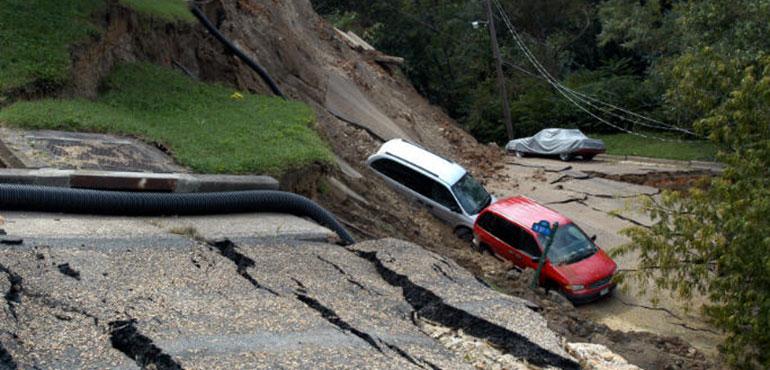
Landslides can occur anywhere at anytime and affect lives, property, infrastructure and the environment. Understanding when, where and how landslides occur can help to reduce the risk of these natural hazards.
A landslide occurs when masses of rock, mud or debris move down a slope. Landslides are caused by many factors, including snowmelt, earthquakes, volcanic eruptions and human modifications of land. The most common cause of landslides is heavy rain occurring over a wildfire burn scar. When a wildfire burns a slope, it increases the chance of landslides for many years.
The most dangerous, life-threatening and deadliest landslides are the ones that occur quickly, often with little notice. However, not all landslides are fast. Some landslides are very slow, can start and stop and advance very little. While these landslides rarely cause loss of life, they can cause damage to land and property over time.
To prepare for landslides, you must be able to recognize the warning sounds. If you are near a wildfire burn area, sign up for emergency alerts, have a NOAA Weather Radio and pay attention to weather forecasts for the burn area. If there is rain in the forecast, be ready to evacuate promptly.
You should also watch for slow-moving landslides that pose threats to property. These warning signs include:
- Changes occurring to your landscape, such as patterns of storm-water drainage on slopes, land movement, small slides, flows or progressively leaning trees.
- Doors or windows jam for the first time.
- New cracks appear in plaster, tile, brick or foundations.
- Outside walls, walkways or stairs begin pulling away from the building.
- Slowly developing, widening cracks appear on the ground or on paved areas, such as streets or driveways.
- Underground utility lines break.
- Building ground appears at the base of a slope.
- Water breaks through the ground surface in new locations.
- Fences, retaining walls, utility poles or trees tilt or move.
- The ground slopes downward in one direction and may begin shifting in that direction under your feet.
If you are at risk for landslides, there are many other ways to prepare, including:
- Build an emergency kit.
- Make a plan for your household, including your pets, so that you and your family know what to do and where to go in the event of a landslide.
- Leave if you have been told to evacuate or you feel it is unsafe to remain in your home.
- Consult a professional for advice on appropriate preventative measures for your home or business, such as flexible pipe fittings, which can resist breakage better.
- Protect your property based on recommendations from a qualified geotechnical professional and/or local city/county guidance on protection from debris flow and flooding. You can't stop or change the path of a debris flow. However, you may be able to protect your property from floodwaters or mud by use of sandbags, retaining walls or k-rails.
- In mud and debris flow areas, consider building channels or deflection walls to try to direct the flow around buildings. Be aware, however, that when a flow is big enough, it goes where it pleases. Also, you may be liable for damages if you divert a flow, and it flows on a neighbor's property.
- Talk to your insurance agent if you are at risk of a landslide. Debris flow may be covered by flood insurance policies.
If a landslide does occur, always follow the instructions from local emergency managers. They provide the latest recommendations based on the threat in your community. Other tips to remember if there is a landslide or a risk of a landslide:
- Stay alert and awake during a storm that could cause a landslide. Many deaths from landslides occur while people are sleeping.
- Be aware that by the time you are sure a debris flow is coming, it will be too late to get away safely. Never cross a road with water or mud flowing. Never cross a bridge if you see a flow approaching because it can grow faster and larger too quickly for you to escape.
- If you do get stuck in the path of a landslide move uphill as quickly as possible.
- Avoid river valleys and low-lying areas during times of danger.
- If you are near a stream or channel, be alert for any sudden increase or decrease in water flow or water that changes from clear to muddy. These can be signs that a landslide is coming.
Landslides can happen quickly and with little to no notice. Staying prepared ahead of a landslide will help increase your chances of survival.
Source: Ready.gov
------
Image: This section of E. Grace Street, Richmond, VA, collapsed during tropical storm Gaston. (Liz Roll, FEMA Photo Library via Wikimedia Commons; August, 31, 2006)