


Back to forecast
The Deadly New York City Smog Disaster of 1966
November 23, 2021 at 05:45 AM EST
By WeatherBug Meteorologist Matt Mehallow
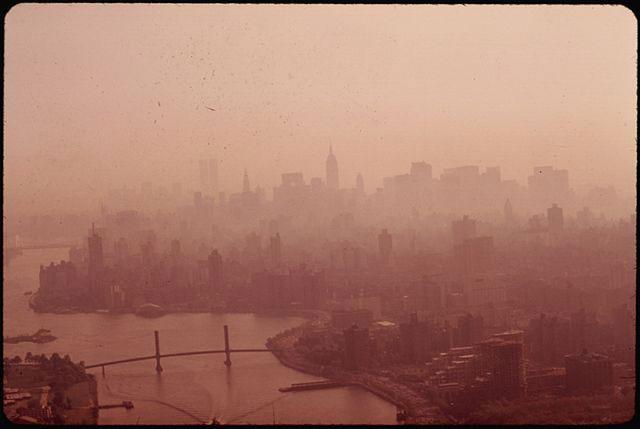
Air pollution has dramatically improved over the last several decades across the United States, but it was not always this way. One of the worst places for unhealthy air quality in the 20th century was New York City, which experienced severe bouts of deadly smog in the 1950s and 1960s, the most serious in November of 1966.
Starting on November 23, 1966, a major air pollution event and tragedy took place, lasting through the Thanksgiving holiday weekend. A stagnant area of high pressure set up over the Northeast, limiting the usual cycle of ventilation each day. The development of temperature inversions resulted in a thick layer of smog building over New York City and its surrounding area, filling the air with damaging levels of several toxic pollutants.
For the next three days, the greater New York metropolitan area dealt with dangerously high levels of carbon monoxide, sulfur dioxide, smoke, and haze. As the smog became more severe, regional leaders announced a "first-stage alert", urging residents and industry to take voluntary steps to reduce emissions. Health officials advised people with respiratory or heart conditions to stay indoors. Finally, a cold front arrived and dispersed the smog on November 26, so the alert ended.
In the aftermath, the smog's impact on health was initially downplayed and city officials insisted that the smog had not caused any deaths. However, it soon became quite evident the smog had drastically affected public health negatively. In December 1966, a private health research group reported that about 10 percent of New York's residents suffered some type of ill effects such as smarting eyes, difficulty in breathing, coughing, and wheezing under the blanket of air pollution. Furthermore, a statistical analysis published in October 1967 found that 168 deaths had likely been caused by the smog.
The smog spurred on greater national awareness of air pollution as a serious health problem and a political issue. The government of New York City updated local laws on air-pollution control. At the federal level, President Lyndon B. Johnson and members of Congress endeavored to pass federal legislation regulating air pollution in the United States. Their efforts culminated in the 1967 Air Quality Act and the 1970 Clean Air Act, which resulted in a major shift in the federal government's role in air pollution control.
The Air Quality Act expanded federal government activities by enabling enforcement of interstate air pollution transport, and for the first time, the federal government conducted extensive ambient monitoring studies and stationary source inspections. The Clean Air Act legislation authorized the development of comprehensive federal and state regulations to limit emissions from both industrial sources and mobile sources.
Though the smog event of 1966 was a terrible tragedy, it resulted in positive developments concerning air quality, which has led to reduced air pollution and given future generations much cleaner air to breathe.
Starting on November 23, 1966, a major air pollution event and tragedy took place, lasting through the Thanksgiving holiday weekend. A stagnant area of high pressure set up over the Northeast, limiting the usual cycle of ventilation each day. The development of temperature inversions resulted in a thick layer of smog building over New York City and its surrounding area, filling the air with damaging levels of several toxic pollutants.
For the next three days, the greater New York metropolitan area dealt with dangerously high levels of carbon monoxide, sulfur dioxide, smoke, and haze. As the smog became more severe, regional leaders announced a "first-stage alert", urging residents and industry to take voluntary steps to reduce emissions. Health officials advised people with respiratory or heart conditions to stay indoors. Finally, a cold front arrived and dispersed the smog on November 26, so the alert ended.
In the aftermath, the smog's impact on health was initially downplayed and city officials insisted that the smog had not caused any deaths. However, it soon became quite evident the smog had drastically affected public health negatively. In December 1966, a private health research group reported that about 10 percent of New York's residents suffered some type of ill effects such as smarting eyes, difficulty in breathing, coughing, and wheezing under the blanket of air pollution. Furthermore, a statistical analysis published in October 1967 found that 168 deaths had likely been caused by the smog.
The smog spurred on greater national awareness of air pollution as a serious health problem and a political issue. The government of New York City updated local laws on air-pollution control. At the federal level, President Lyndon B. Johnson and members of Congress endeavored to pass federal legislation regulating air pollution in the United States. Their efforts culminated in the 1967 Air Quality Act and the 1970 Clean Air Act, which resulted in a major shift in the federal government's role in air pollution control.
The Air Quality Act expanded federal government activities by enabling enforcement of interstate air pollution transport, and for the first time, the federal government conducted extensive ambient monitoring studies and stationary source inspections. The Clean Air Act legislation authorized the development of comprehensive federal and state regulations to limit emissions from both industrial sources and mobile sources.
Though the smog event of 1966 was a terrible tragedy, it resulted in positive developments concerning air quality, which has led to reduced air pollution and given future generations much cleaner air to breathe.