The History of St. Patrick's Day
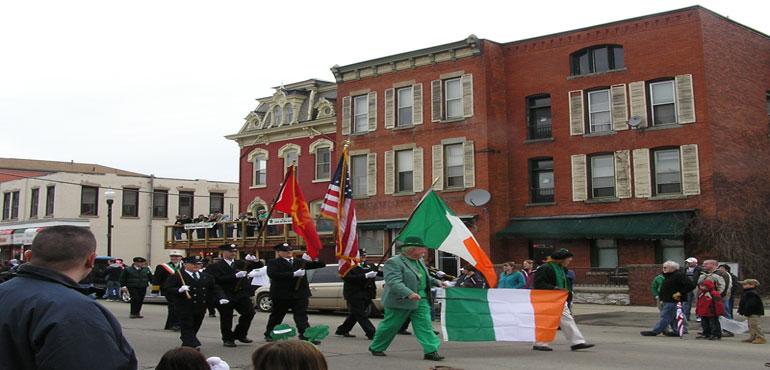
A widely accepted holiday around the world has arrived, but did you know today was known to be a day of feasting? The late-great Saint Patrick would be commemorated in Ireland by way of a grand feast held in his honor.
Starting over a thousand years ago, St. Patrick’s Day has been celebrated through the years with feasts across Ireland in honor of Saint Patrick. History has it that Saint Patrick was born during the fifth century in Roman Britain, and he was kidnapped and sold into slavery at the age of 16. Apparently, Patrick would escape his Roman imprisoners and flee to his homeland of Ireland where he became a well-known priest in the Church of England.
Saint Patrick’s work as a priest would precede him as he would be seen spreading biblical teachings throughout Ireland while assisting the needs of Irish community. In fact, one of the big beliefs or folklore is that Saint Patrick would use a three-leaf clover to explain the Holy Trinity. Saint Patrick was a well-known, decorated priest for the Church of England up until his death on March 17, 461 A.D. He was buried in Northern Ireland in a town called Downpatrick soon after.
The first celebration of the now St. Patrick’s Day dates back to about the ninth or tenth century when the Roman Catholic Church would set a feast in honor of Saint Patrick. In fact, parades were held even to celebrate the day in the U.S. on March 17, 1601, in what is now St. Augustine, Fla. This was made possible by a bishop in the Irish Roman Catholic Church named Richard Arthur.
St. Patrick’s Day was also a day known for activism in the past. Active soldiers in the English military who were Irish would march through the streets of New York City and Boston on March 17, 1772. The idea was to bring honor and awareness to Saint Patrick and as well as an attempt to return back to Ireland.
Over the years, St. Patrick’s Day has become synonymous with wearing green clothing or green accessories such as a hat, gloves, jewelry and other items. This began because Saint Patrick himself was seen wearing such color-themed clothing as well as sporting a shamrock or three-leaved clover. St. Patrick’s Day continues to be celebrated throughout the globe, with many celebrations taking place across the U.S. annually.
Coincidently, St. Patrick’s Day takes place just a few days removed from the start of astronomical spring in the Northern Hemisphere, allowing for an increased chance of seeing some of those shamrocks popping up across greenery.
Source(s): History.com
Story Image: The 2011 St. Patrick's Day Parade in Hornell, New York. (Marduk via Wikimedia Commons)