


Back to forecast
This Day In History: Benjamin Franklin Completed His Lightning Experiment
June 14, 2020 at 12:18 PM EDT
By WeatherBug Meteorologist, Alyssa Robinette
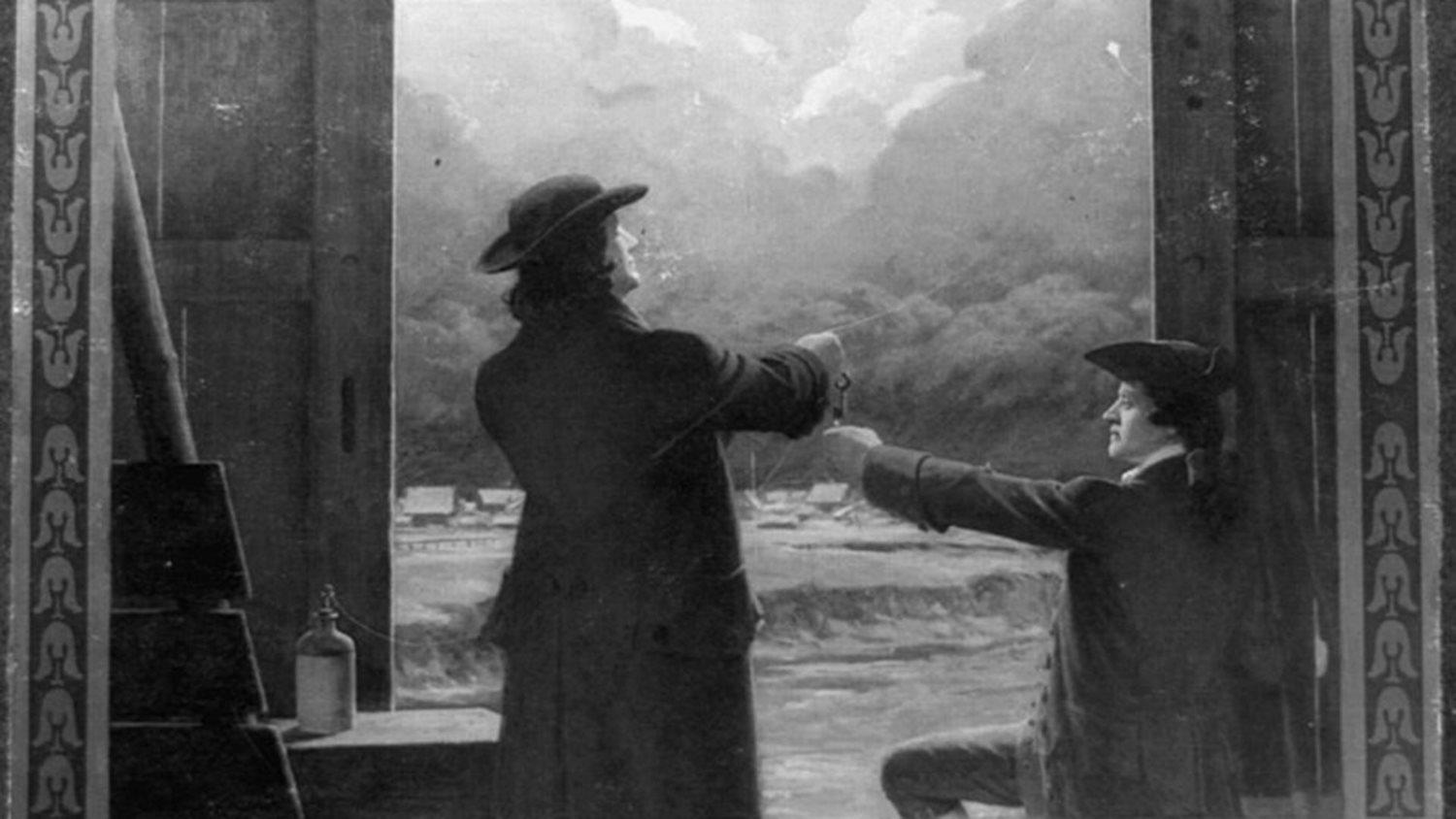
Benjamin Franklin was many things to America, but he changed electricity forever on this date in 1752.
Background
Benjamin Franklin’s fascination with electricity started in 1746 when he saw several lectures by Archibald Spencer, a physicist from Maryland. His friend and fellow scientist, Peter Collinson, also sent him an electricity tube. Franklin spent the next few years investigating electricity and how charged objects interacted. He concluded that lightning was merely a massive electric spark that was created by charged forces and was one of the first to call these charges positive and negative.
Around 1750, Franklin began proposing an experiment that would draw lightning through a 30-foot rod. He hypothesized that lightning and electricity were linked and that metal objects could be used to draw lightning to protect structures from being hit. Franklin originally proposed to conduct the experiment atop a Philadelphia church spire, but eventually realized that he would not be able to get his conductor high enough into the clouds to do any good. He was going to have to come up with another way.
Experiment
In the summer of 1752, Benjamin Franklin realized that he could complete his experiment with a kite instead of a conductor on top of a church spire. The materials he gathered include a large silk handkerchief, a hemp string, aslick string, a house key, a Leyden jar (a device that could store an electrical charge for later use) and a sharp wire. His son, William, would also assist him.
The exact date of the famous experiment is uncertain but has been narrowed down to somewhere between June 10 through June 15, 1752. Franklin constructed a simple kite and attached a wire to the top of it to act as a lightning rod. The bottom of the kite was attached to a hemp string, which was then attached to a silk string. Both strings were needed as the hemp string would become wet by rain and would conduct an electrical charge quickly. The silk string was kept dry and would be held by Franklin in the doorway of a shed. Lastly, the key was attached to the hemp string.
Once a thunderstorm began, Benjamin and his son got the kite in the air. They did have to wait some and almost gave up, but then Benjamin noticed loose threads of the hemp string standing upright. He then moved his finger near the key. The negative charges in the metal piece were attracted to the positive charges in his hand, which caused him to feel a spark. He then used the Leyden jar to collect electricity that could later be discharged later.
Benjamin Franklin’s kite was not struck by lightning as he would have been electrocuted and potentially died if it had. Instead, the kite was able to pick up the electrical change from the storm. These charges from the storm and metal on the kite became attracted to each other and eventually caused a spark.
Results
It should be noted that Benjamin Franklin was not the first person to discover electricity as this had been recognized for more than a thousand years. He also was not the first person to perform this experiment. In fact, Thomas- François Dalibard of France conducted the experiment about a month earlier using a 40-foot-tall iron rod instead of a kite and was able to extract electrical sparks from a cloud. Georg Wilhelm Richmann in Russia also attempted this experiment but died while doing it.
Franklin’s experiment did demonstrate the connection between lightning and electricity, which led to the invention of the lightning rod. From this experiment, it was determined that conductors with a sharp point rather than a smooth point could discharge electrical currents silently, and at a far greater distance to help protect buildings from lightning. He also created a device called “lightning bells” that would jingle when lightning was in the air.
------------
Image: Library of Congress (Mills, Charles E.)
Background
Benjamin Franklin’s fascination with electricity started in 1746 when he saw several lectures by Archibald Spencer, a physicist from Maryland. His friend and fellow scientist, Peter Collinson, also sent him an electricity tube. Franklin spent the next few years investigating electricity and how charged objects interacted. He concluded that lightning was merely a massive electric spark that was created by charged forces and was one of the first to call these charges positive and negative.
Around 1750, Franklin began proposing an experiment that would draw lightning through a 30-foot rod. He hypothesized that lightning and electricity were linked and that metal objects could be used to draw lightning to protect structures from being hit. Franklin originally proposed to conduct the experiment atop a Philadelphia church spire, but eventually realized that he would not be able to get his conductor high enough into the clouds to do any good. He was going to have to come up with another way.
Experiment
In the summer of 1752, Benjamin Franklin realized that he could complete his experiment with a kite instead of a conductor on top of a church spire. The materials he gathered include a large silk handkerchief, a hemp string, aslick string, a house key, a Leyden jar (a device that could store an electrical charge for later use) and a sharp wire. His son, William, would also assist him.
The exact date of the famous experiment is uncertain but has been narrowed down to somewhere between June 10 through June 15, 1752. Franklin constructed a simple kite and attached a wire to the top of it to act as a lightning rod. The bottom of the kite was attached to a hemp string, which was then attached to a silk string. Both strings were needed as the hemp string would become wet by rain and would conduct an electrical charge quickly. The silk string was kept dry and would be held by Franklin in the doorway of a shed. Lastly, the key was attached to the hemp string.
Once a thunderstorm began, Benjamin and his son got the kite in the air. They did have to wait some and almost gave up, but then Benjamin noticed loose threads of the hemp string standing upright. He then moved his finger near the key. The negative charges in the metal piece were attracted to the positive charges in his hand, which caused him to feel a spark. He then used the Leyden jar to collect electricity that could later be discharged later.
Benjamin Franklin’s kite was not struck by lightning as he would have been electrocuted and potentially died if it had. Instead, the kite was able to pick up the electrical change from the storm. These charges from the storm and metal on the kite became attracted to each other and eventually caused a spark.
Results
It should be noted that Benjamin Franklin was not the first person to discover electricity as this had been recognized for more than a thousand years. He also was not the first person to perform this experiment. In fact, Thomas- François Dalibard of France conducted the experiment about a month earlier using a 40-foot-tall iron rod instead of a kite and was able to extract electrical sparks from a cloud. Georg Wilhelm Richmann in Russia also attempted this experiment but died while doing it.
Franklin’s experiment did demonstrate the connection between lightning and electricity, which led to the invention of the lightning rod. From this experiment, it was determined that conductors with a sharp point rather than a smooth point could discharge electrical currents silently, and at a far greater distance to help protect buildings from lightning. He also created a device called “lightning bells” that would jingle when lightning was in the air.
------------
Image: Library of Congress (Mills, Charles E.)