


Back to forecast
This Day in History: The Devastating Greensburg, Kansas Tornado
May 4, 2020 at 10:36 AM EDT
By WeatherBug's Christopher Smith
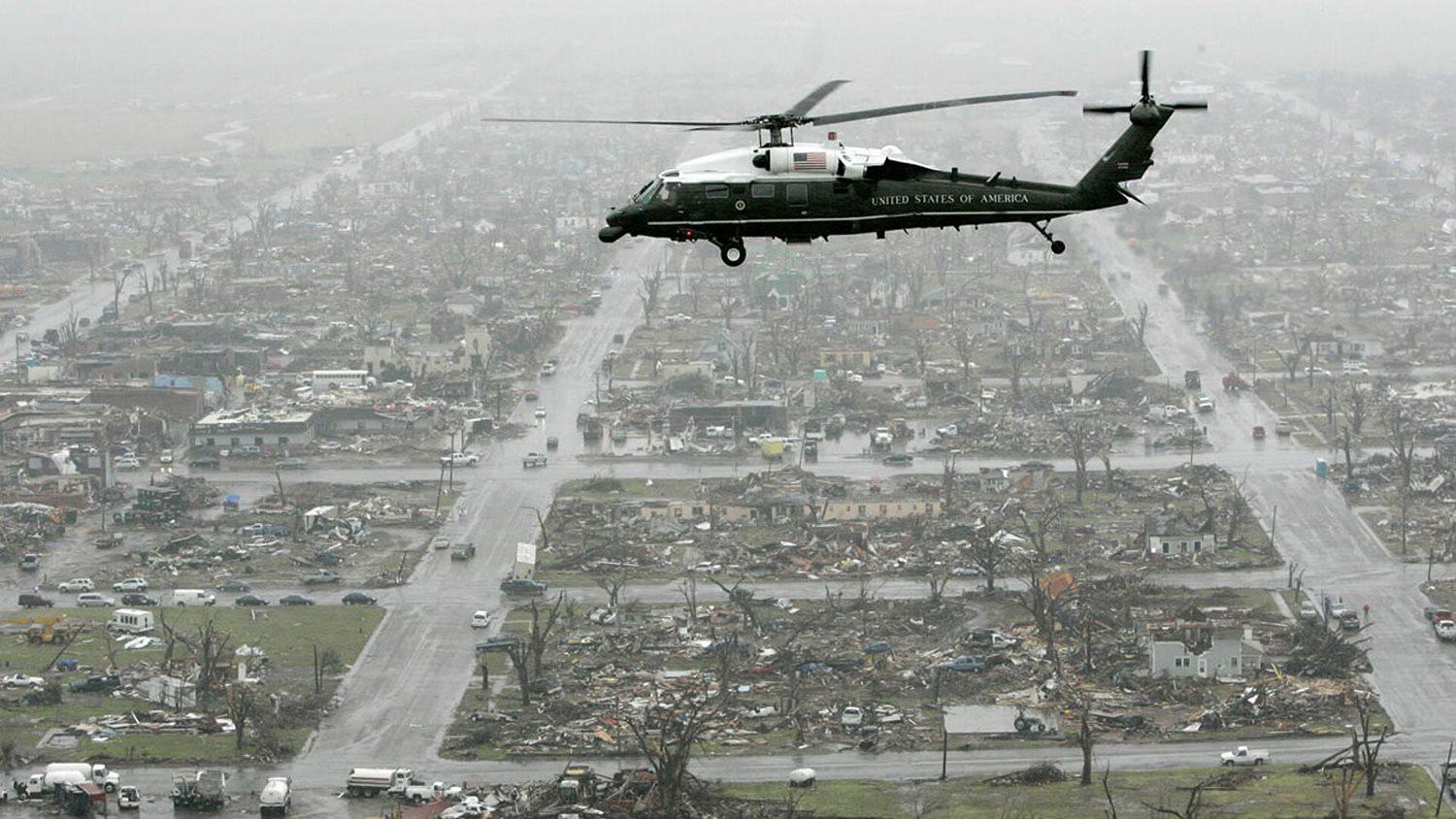
Today marks the 13th anniversary since a central Plains town was changed forever. A devastating EF5 tornado- the strongest on the Enhanced Fujita scale- destroyed 90 percent of Greensburg, Kan., but the town has not only come out of the rubble but is now stronger following the catastrophe.
During a multi-day tornado outbreak on May 4, 2007, one tornado in particular stood out like a sore thumb. That tornado struck Greensburg, Kan., around 9:45 p.m., killing 11 of the town’s 1,500 people.
The warning signs came early for this dangerous thunderstorm. A tornado warning was issued by the National Weather Service 26 minutes before the tornado struck the town.
The tornado was likely at its strongest point when it reached Greensburg, Kan. The tornado’s winds were approximately 205 mph when it tore straight through the town. Homes and businesses were destroyed, downtown became unrecognizable and the town’s water tower was leveled.
However, there is positive news that comes out of this disaster. Greensburg, Kan., has been coming back in a “green” way since the tornado struck 13 years ago.
Following the tornado, the town took the opportunity to rebuild their community in a way that lived with the land and the weather. The town council passed a law for all commercial buildings of more than 4,000 square feet to average 42 percent electricity use when compared to standard buildings.
Since Greensburg, Kan., is in a favored spot for wind, officials elected to construct The Greensburg Wind Farm. It provides enough energy to power 4,000 homes while the remainder of the energy is sold back to the Kansas Power Pool (KPP) for renewable energy use.
The efforts to become more environmentally friendly have even trickled down to the schools. The newly constructed Greensburg School for students grades K-12 provides natural light at almost every angle of the school to limit electricity use. The school also has a geothermal heating and cooling system, an on-campus wind turbine and rainwater is filtered and reused to irrigate campus grounds.
Not to be outdone, Greensburg, Kan., was the first U.S. city to use 100 percent light-emitting diode (LED) streetlights. These LED lights lower light pollution, increase lighting efficiency by 40 percent and reduce maintenance and energy costs by up to 70 percent.
Even the Kiowa County Hospital in Greensburg, Kan., is one of the only platinum “Leadership in Energy and Environmental Design” (LEED) critical access hospitals in the nation. Its advanced air system separates the air from isolation rooms and the air from the emergency room. A wind turbine on the hospital grounds powers the facility.
Greensburg, Kan., is a great example of a town that turned tragedy into opportunity. A town whose focus wasn’t always on clean energy now runs on 100 percent renewable energy. The town’s resiliency and care for the environment is something we all can admire following the devastating EF5 tornado that struck 13 years ago today.
Sources: energy.gov, weather.gov
----------
Story Image: Marine One flies over tornado damage in Greensburg, Kan., Wednesday, May 9, 2007. (Charles Dharapak/AP Photo)
During a multi-day tornado outbreak on May 4, 2007, one tornado in particular stood out like a sore thumb. That tornado struck Greensburg, Kan., around 9:45 p.m., killing 11 of the town’s 1,500 people.
The warning signs came early for this dangerous thunderstorm. A tornado warning was issued by the National Weather Service 26 minutes before the tornado struck the town.
The tornado was likely at its strongest point when it reached Greensburg, Kan. The tornado’s winds were approximately 205 mph when it tore straight through the town. Homes and businesses were destroyed, downtown became unrecognizable and the town’s water tower was leveled.
However, there is positive news that comes out of this disaster. Greensburg, Kan., has been coming back in a “green” way since the tornado struck 13 years ago.
Following the tornado, the town took the opportunity to rebuild their community in a way that lived with the land and the weather. The town council passed a law for all commercial buildings of more than 4,000 square feet to average 42 percent electricity use when compared to standard buildings.
Since Greensburg, Kan., is in a favored spot for wind, officials elected to construct The Greensburg Wind Farm. It provides enough energy to power 4,000 homes while the remainder of the energy is sold back to the Kansas Power Pool (KPP) for renewable energy use.
The efforts to become more environmentally friendly have even trickled down to the schools. The newly constructed Greensburg School for students grades K-12 provides natural light at almost every angle of the school to limit electricity use. The school also has a geothermal heating and cooling system, an on-campus wind turbine and rainwater is filtered and reused to irrigate campus grounds.
Not to be outdone, Greensburg, Kan., was the first U.S. city to use 100 percent light-emitting diode (LED) streetlights. These LED lights lower light pollution, increase lighting efficiency by 40 percent and reduce maintenance and energy costs by up to 70 percent.
Even the Kiowa County Hospital in Greensburg, Kan., is one of the only platinum “Leadership in Energy and Environmental Design” (LEED) critical access hospitals in the nation. Its advanced air system separates the air from isolation rooms and the air from the emergency room. A wind turbine on the hospital grounds powers the facility.
Greensburg, Kan., is a great example of a town that turned tragedy into opportunity. A town whose focus wasn’t always on clean energy now runs on 100 percent renewable energy. The town’s resiliency and care for the environment is something we all can admire following the devastating EF5 tornado that struck 13 years ago today.
Sources: energy.gov, weather.gov
----------
Story Image: Marine One flies over tornado damage in Greensburg, Kan., Wednesday, May 9, 2007. (Charles Dharapak/AP Photo)