


Back to forecast
Typhoons, Hurricanes, Cyclones: Is There Any Difference?
June 18, 2020 at 06:52 AM EDT
By WeatherBug Sr. Meteorologist, James West
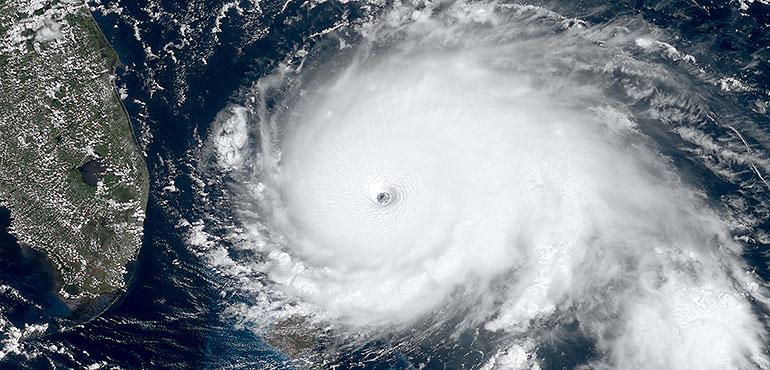
Tropical storm systems, whether they are called hurricanes, typhoons, Willy-willy or cyclones, can bring destructive winds and devastating flooding from coastal storm surge and inland flooding. Even though they have different names, they are all a type of tropical cyclone.
What is a Tropical Cyclone?
Commonly referred to as hurricanes in the eastern Pacific, north Atlantic, Caribbean Sea and the Gulf of Mexico, tropical cyclones are large swirling storm systems that have a common pinwheel shape in satellite images.
Powered by the energy stored in the warm tropical waters, cyclones go through numerous stages. They often begin as a cluster of tropical thunderstorms called a tropical wave. When conditions are just right, these waves will eventually organize into an even larger system with a central circulation - - counter-clockwise in the northern hemisphere, clockwise south of the equator. This becomes known as a tropical depression.
Once top sustained winds reach 39 mph or higher, these depressions become classified as a tropical storm and are usually given a name off a list of storm names maintained for that region of the world. The list of annual storm names maintained by the U.S. National Hurricane Center for the Atlantic and eastern Pacific Ocean hurricane basins rotates every six years with significant storm names —Katrina, Rita and Michael, to name a few — retired from the list.
These storm machines, if they stay over tropical waters with temperatures greater than 80 degrees Fahrenheit and remain in a relatively low shear environment, have a good chance to grow stronger. Once maximum sustained winds exceed 74 mph, these storms become classified as a hurricane, typhoon, Willy-willy or Cyclone. These systems, when making landfall, can cause massive and devastating wind and flood damage.
Many countries around the world have been hit by devastating tropical cyclones. In 2019 alone, tropical cyclones caused more than $60 billion in damage worldwide. Countries hit by tropical cyclones in 2019 that caused more than a billion dollars in damage included:
Tropical cyclones generally form in any ocean where water temperatures are greater than 80 degrees Fahrenheit and the upper-level winds are benign. Here are oceans where they can form and their commonly used names:
However, a rare hurricane-strength tropical cyclone did form just off the Brazilian Atlantic Coast in March 2004. This cyclone made landfall on the Brazilian coast with winds estimated to be 100 mph, causing millions of dollars of damage. Still rare but weaker tropical systems have formed over the southern Atlantic Ocean, with none coming ashore.
Tropical cyclones, whether called typhoons, hurricanes or cyclones, can bring destruction to far flung locations of the world.
Source: National Hurricane Center, World Meteorological Organization
Image: Hurricane Dorian at peak intensity on September 1, 2019 near the Bahamas. (NOAA)
What is a Tropical Cyclone?
Commonly referred to as hurricanes in the eastern Pacific, north Atlantic, Caribbean Sea and the Gulf of Mexico, tropical cyclones are large swirling storm systems that have a common pinwheel shape in satellite images.
Powered by the energy stored in the warm tropical waters, cyclones go through numerous stages. They often begin as a cluster of tropical thunderstorms called a tropical wave. When conditions are just right, these waves will eventually organize into an even larger system with a central circulation - - counter-clockwise in the northern hemisphere, clockwise south of the equator. This becomes known as a tropical depression.
Once top sustained winds reach 39 mph or higher, these depressions become classified as a tropical storm and are usually given a name off a list of storm names maintained for that region of the world. The list of annual storm names maintained by the U.S. National Hurricane Center for the Atlantic and eastern Pacific Ocean hurricane basins rotates every six years with significant storm names —Katrina, Rita and Michael, to name a few — retired from the list.
These storm machines, if they stay over tropical waters with temperatures greater than 80 degrees Fahrenheit and remain in a relatively low shear environment, have a good chance to grow stronger. Once maximum sustained winds exceed 74 mph, these storms become classified as a hurricane, typhoon, Willy-willy or Cyclone. These systems, when making landfall, can cause massive and devastating wind and flood damage.
Many countries around the world have been hit by devastating tropical cyclones. In 2019 alone, tropical cyclones caused more than $60 billion in damage worldwide. Countries hit by tropical cyclones in 2019 that caused more than a billion dollars in damage included:
- Mozambique, Malawi, Madagascar, Zimbabwe (Idai, more than $2 billion)
- Timor and Western Australia (Veronica, $1.2 billion)
- Sri Lanka and India (Fani, $8.12 billion)
- Philippines, Taiwan, China, Korea (Lekima/Hanna, 9.28 billion)
- Caribbean Lesser and Greater Antilles and the Bahamas (Dorian, $4.68 billion)
- Japan and Wake Island (Faxai, $8.12 billion)
- Southern Plains of U.S. (Imelda, $5 billion)
- Mariana Islands, South Korea, Japan (Hagibis, $15 billion)
- Eastern India and Bangladesh (Bulbul, approx. $2.6 billion).
Tropical cyclones generally form in any ocean where water temperatures are greater than 80 degrees Fahrenheit and the upper-level winds are benign. Here are oceans where they can form and their commonly used names:
- North Atlantic (including Caribbean and Gulf of Mexico): Hurricanes
- Eastern and Central North Pacific: Hurricanes
- Western Northern Pacific: Typhoons
- Arabian Sea/Northern Indian Ocean: Tropical Cyclones
- South Indian Ocean: Tropical Cyclones/Willy-Willy for southwest Australia
- Coral Sea/South Pacific: Tropical Cyclone
However, a rare hurricane-strength tropical cyclone did form just off the Brazilian Atlantic Coast in March 2004. This cyclone made landfall on the Brazilian coast with winds estimated to be 100 mph, causing millions of dollars of damage. Still rare but weaker tropical systems have formed over the southern Atlantic Ocean, with none coming ashore.
Tropical cyclones, whether called typhoons, hurricanes or cyclones, can bring destruction to far flung locations of the world.
Source: National Hurricane Center, World Meteorological Organization
Image: Hurricane Dorian at peak intensity on September 1, 2019 near the Bahamas. (NOAA)