Back to forecast
U.S. Tornado Death Toll About Average Despite a Hyperactive Season
June 7, 2019 at 02:38 PM EDT
By WeatherBug's Erik Gates
By the numbers, 2019 has been a very busy tornado season. Does the sheer number of tornadoes equate to larger death tolls this year?
According to the National Weather Service’s Severe Prediction Center there has been a total of 988 preliminary reports of tornadoes through May 29, 2019. From 2005 to 2015 the average number of tornadoes in the same time frame hovers at 749, and this number includes two statistical outliers in the 2008 and 2011 seasons — 1,205 and 1,384 tornadoes respectively.
There has been 498 preliminary tornadoes reported in May of this year alone. This is the most in a single month since April of 2011, a month that contained the largest continuous outbreak of tornadoes in history.
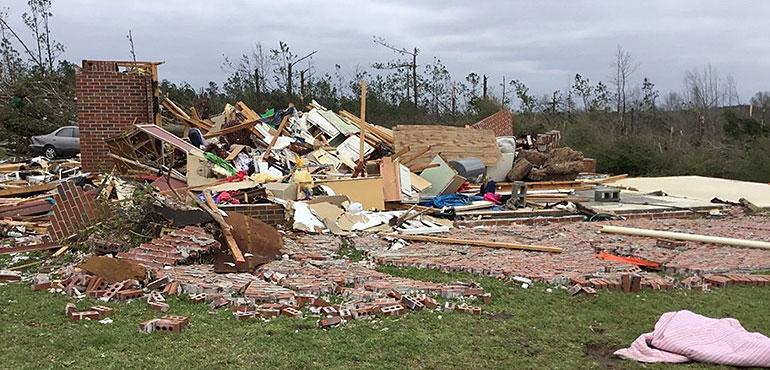
Fortunately, out of 988 tornadoes reported year to date, only 10 tornadoes have been deadly, with 38 total deaths. Only a single tornado has killed more than three people this year. That deadly EF-4 twister killed 23 people in Lee County, Ala on March 3rd. Compared to the deadly 2008 and 2011 tornado seasons, this year’s death toll is trending lower.
In 2011, by May 24th, 54 tornadoes had been fatal, with a total of 543 deaths. The infamous tornadoes in Joplin, Mo., and Tuscaloosa, Ala., both occurred in this tornado season. These devastating tornadoes were rated as EF-5 and EF-4 respectively and resulted in 222 total deaths. The trend of more tornadoes resulting in more deaths also occurred in 2008. By late May, 29 tornadoes killed 114 people.
This year’s fatality rate is more akin to modest tornado seasons like 2015. That year, 35 people were killed by eight tornadoes, even though only 430 tornadoes touched down by the end of May. This is only three fewer deaths than 2019, even with twice the number of tornadoes reported this year.
Are more people beginning to heed watches and warnings, or are less populous areas being impacted by tornadoes? These will be the questions scientists will likely research once the severe season concludes. Ultimately, this year has produced a large number of tornadoes with a disproportional, below-average number of casualties.
Source: NOAA/NWS Storm Prediction Center
According to the National Weather Service’s Severe Prediction Center there has been a total of 988 preliminary reports of tornadoes through May 29, 2019. From 2005 to 2015 the average number of tornadoes in the same time frame hovers at 749, and this number includes two statistical outliers in the 2008 and 2011 seasons — 1,205 and 1,384 tornadoes respectively.
There has been 498 preliminary tornadoes reported in May of this year alone. This is the most in a single month since April of 2011, a month that contained the largest continuous outbreak of tornadoes in history.
Fortunately, out of 988 tornadoes reported year to date, only 10 tornadoes have been deadly, with 38 total deaths. Only a single tornado has killed more than three people this year. That deadly EF-4 twister killed 23 people in Lee County, Ala on March 3rd. Compared to the deadly 2008 and 2011 tornado seasons, this year’s death toll is trending lower.
In 2011, by May 24th, 54 tornadoes had been fatal, with a total of 543 deaths. The infamous tornadoes in Joplin, Mo., and Tuscaloosa, Ala., both occurred in this tornado season. These devastating tornadoes were rated as EF-5 and EF-4 respectively and resulted in 222 total deaths. The trend of more tornadoes resulting in more deaths also occurred in 2008. By late May, 29 tornadoes killed 114 people.
This year’s fatality rate is more akin to modest tornado seasons like 2015. That year, 35 people were killed by eight tornadoes, even though only 430 tornadoes touched down by the end of May. This is only three fewer deaths than 2019, even with twice the number of tornadoes reported this year.
Are more people beginning to heed watches and warnings, or are less populous areas being impacted by tornadoes? These will be the questions scientists will likely research once the severe season concludes. Ultimately, this year has produced a large number of tornadoes with a disproportional, below-average number of casualties.
Source: NOAA/NWS Storm Prediction Center