


Back to forecast
Ursid Meteor Shower Peaks December 21-22
December 19, 2022 at 05:37 AM EST
By Weatherbug Meteorologist John Benedict
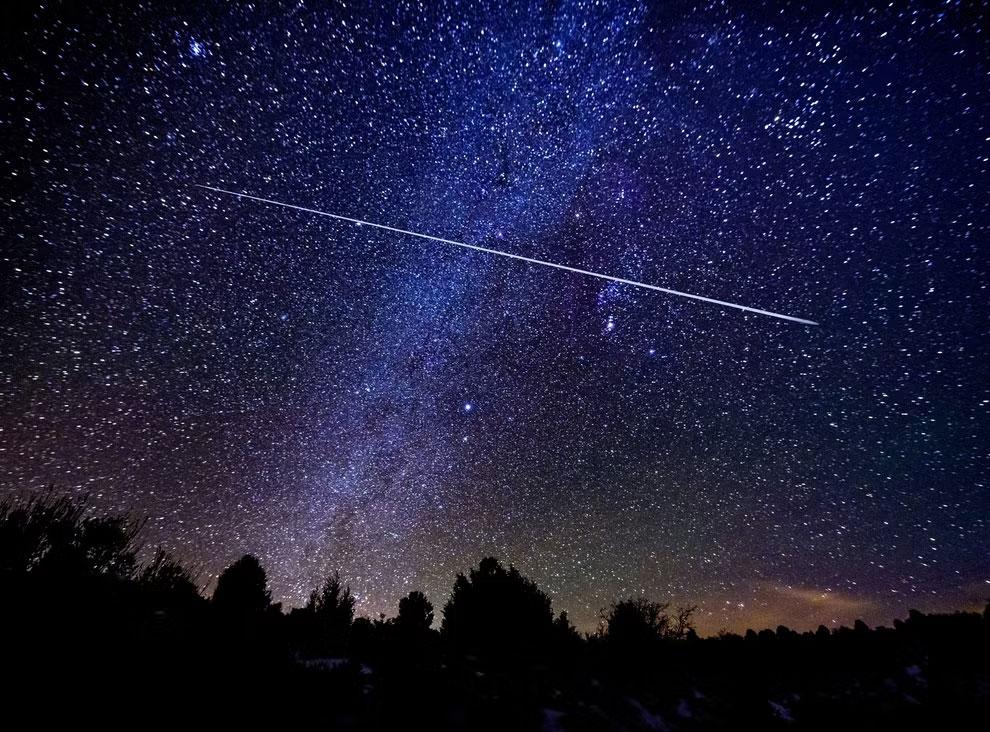
The final meteor shower of 2022 is set to peak December 21-22. The Ursid Meteor Shower is one of the lesser-known meteor showers as it tends to only offer five to ten meteors per hour during its peak.
The Ursids are active between December 17 and December 24 and always peak around the Winter Solstice. This shower largely flies under the radar as they are often overshadowed by the more active Geminid Meteor shower which peaks just a week before the Ursids. The source for the Ursid meteor shower is the comet 8P/Tuttle which orbits between Earth and Saturn and has an orbital period of 13.6 years. Typically only five to ten meteors occur per hour during the Ursids, but occasional outbursts have happened when nearly 100 meteors per hour occurred in 1945 and 1986.
Like all meteor showers, the Ursids are named for the point where they radiate outward from. The radiant for the Ursids is the star Beta Ursae Minoris, also known as Kochab which is found in the constellation Ursa Minor which contains the Little Dipper. To find the radiant, look for the Polaris or the North Star and Kochab is found at end of the Little Dipper. The Little Dipper is often more difficult to spot, but one can trace an imaginary line from the two outer stars in the more identifiable Big Dipper’s bowl which always points to the North Star.
The best viewing is generally during the middle of the night between 1 am and 5 am local time. While many of this year’s meteor showers were dimmed by a bright moon, a new moon on December 23 will allow for darker skies during the peak of the Ursids this year. The best viewing locations across the U.S. this year for the Ursids will be across the West, Southwest and Texas. The Plains, Midwest and the East will be beneath ample cloud cover as an expansive storm system will be developing across the eastern half of the United States.
Image: The Ursid meteor shower peaks on 21-22 December, 2021, coinciding with the Winter Solstice
(Getty Images)
The Ursids are active between December 17 and December 24 and always peak around the Winter Solstice. This shower largely flies under the radar as they are often overshadowed by the more active Geminid Meteor shower which peaks just a week before the Ursids. The source for the Ursid meteor shower is the comet 8P/Tuttle which orbits between Earth and Saturn and has an orbital period of 13.6 years. Typically only five to ten meteors occur per hour during the Ursids, but occasional outbursts have happened when nearly 100 meteors per hour occurred in 1945 and 1986.
Like all meteor showers, the Ursids are named for the point where they radiate outward from. The radiant for the Ursids is the star Beta Ursae Minoris, also known as Kochab which is found in the constellation Ursa Minor which contains the Little Dipper. To find the radiant, look for the Polaris or the North Star and Kochab is found at end of the Little Dipper. The Little Dipper is often more difficult to spot, but one can trace an imaginary line from the two outer stars in the more identifiable Big Dipper’s bowl which always points to the North Star.
The best viewing is generally during the middle of the night between 1 am and 5 am local time. While many of this year’s meteor showers were dimmed by a bright moon, a new moon on December 23 will allow for darker skies during the peak of the Ursids this year. The best viewing locations across the U.S. this year for the Ursids will be across the West, Southwest and Texas. The Plains, Midwest and the East will be beneath ample cloud cover as an expansive storm system will be developing across the eastern half of the United States.
Image: The Ursid meteor shower peaks on 21-22 December, 2021, coinciding with the Winter Solstice
(Getty Images)