Weekly Flu Update: Flu Continues To Ravage US
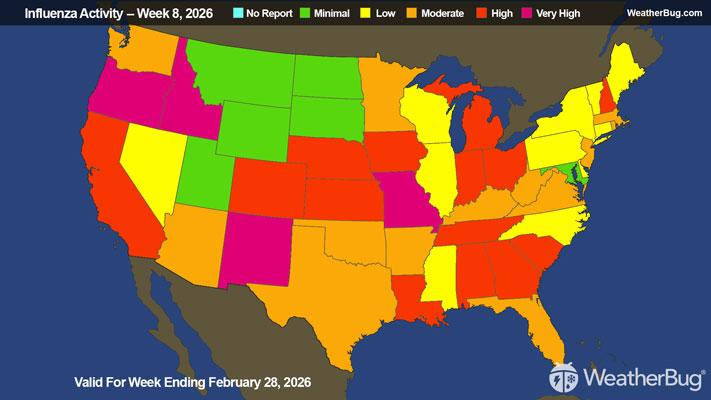
As the calendar switched from February to March, flu activity is starting to decline. There’s still a ways to go and it remains elevated.
Clinical laboratories reported 15.8% positivity for influenza, and 3.9% of outpatient visits were for respiratory illness—still above baseline. Influenza‑attributed mortality registered 0.7% of all deaths. The CDC reported 11 additional pediatric deaths this week, with a season total of 90. CDC’s in‑season framework classifies overall severity this season as moderate.
Our flu surveillance product will continue to focus on the severity of the flu rather than the geographic spread. This information is reported to the U.S. Centers for Disease Control and Prevention (CDC) by each state’s health department, ranging on a scale from “minimal” to “very high” levels of activity.
States and territories reporting flu include the following activity and trends:
Very High (4 states): Idaho, Missouri, New Mexico and Oregon.
- All states remain at the Very High level that they were at last week.
High (14 states): Alabama, California, Colorado, Georgia, Indiana, Iowa, Kansas, Louisiana, Michigan, Nebraska, New Hampshire, Ohio, South Carolina and Tennessee.
- Alabama, California, Colorado, Georgia, Indiana, Kansas, Michigan, New Hampshire, Ohio and Tennessee all saw no change this past week.
- Iowa, Louisiana, Nebraska and South Carolina saw flu levels drop a level from Very High to High.
Moderate (13 states): Arizona, Arkansas, Florida, Kentucky, Massachusetts, Minnesota, New Jersey, Oklahoma, Rhode Island, Texas, Virginia, Washington and West Virginia.
- Rhode Island saw an increase in flu activity this week from Low to Moderate.
- Kentucky, Minnesota, New Jersey, Oklahoma, Texas and Virginia kept flu activity remaining at Moderate levels from last week to this week.
- Arizona, Arkansas, Florida, Massachusetts, Washington and West Virginia saw a decrease in flu activity from High to Moderate levels.
Low (12 states): Alaska, Connecticut, Delaware, Illinois, Maine, Mississippi, Nevada, New York, North Carolina, Pennsylvania, Vermont and Wisconsin.
- Alaska, Connecticut, Delaware, Illinois, Pennsylvania and Wisconsin remained at Low flu activity levels.
- Maine, Nevada, New York, North Carolina and Vermont had their flu activity drop from Moderate to Low this week.
- Mississippi witnessed a two-step drop in activity from High to Low.
Minimal (7 states, the Northern Marianas, Puerto Rico, Washington, D.C., New York City and the Virgin Islands): Hawaii, Maryland, Montana, North Dakota, South Dakota, Utah and Wyoming.
- The Northern Marianas, Washington, D.C., Hawaii, Maryland, Montana, New York City, North Dakota, Puerto Rico, Utah, the Virgin Islands and Wyoming remain at a Minimal level of flu activity.
- South Dakota’s flu activity decreased from Low to Minimal.
Flu Facts:
The CDC recommends that everyone older than six months get the seasonal flu vaccine, either via an injection or nasal spray. Consult with your doctor or pharmacist to learn about flu vaccine side effects, precautions, and vaccine options—several multi-strain variations are available this year.
Due to certain health restrictions, not everyone is eligible to receive the flu shot. If you cannot get vaccinated, there are other ways to minimize your risk of contracting and spreading the flu:
- Avoid close contact with those who are sick.
- If you are sick, avoid exposing others by staying home from work or school.
- Cover your mouth and nose when sneezing or coughing.
- Wash your hands frequently.
- Avoid touching your eyes, nose, or mouth.
Lastly, getting a flu shot is not a guarantee that you won’t catch the flu, but it can help reduce the risk and severity of symptoms. The CDC urges doctors to prescribe one or a combination of the three available prescription antiviral drugs to patients with flu-like symptoms. If given early enough, antivirals can lessen the intensity and duration of influenza symptoms.
---
Source: U.S. Centers for Disease Control and Prevention