Back to forecast
What Makes a Supermoon Super?
June 12, 2022 at 05:13 PM EDT
By WeatherBug Meteorologist, Christian Sayles
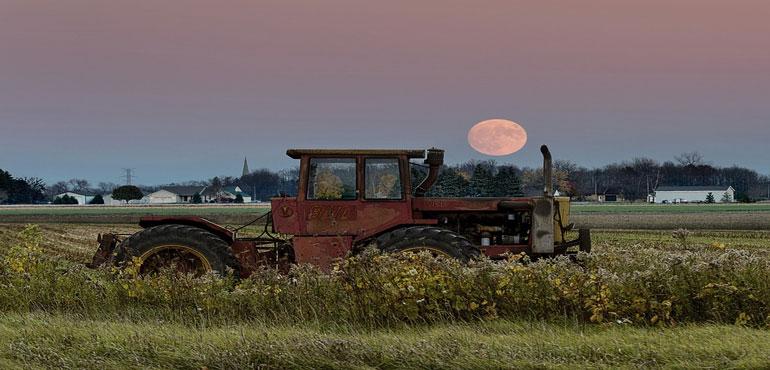
They’re always amazing to gaze upon but have you ever wondered what brings about a supermoon?
Our moon goes through quite a few phases over the course of a month. The main phases that dictate if we are going to experience a supermoon is when the moon is full or new. Additionally, when our moon reaches its closes point to Earth it is called a perigee which basically means “near Earth.” So, when the moon is full, or it is new and has reached its perigee then we get a supermoon!
This phenomenon has taken place quite a few times in history, but the term supermoon is fairly new to society. Astrologer Richard Nolle was the first to coin the moniker “supermoon” and described it as a full or new moon with 90% of its closest approach to Earth. When the Moon reaches perigee, it is at an average distance of 226,000 miles from Earth.
Since the Moon’s orbit around Earth is elliptical (oval-shaped that allows it to be closer or farther as it travels around the Earth), the closest point to earth has seen some fluctuations over time. For example, in 2016, the Moon’s radius and diameter appeared to be about 2% larger than the typical average perigee. Additionally, the full moon’s appearance was also less than 8% larger than a typical full moon at its normal distance from the Earth.
The supermoons of this year will take place on June 14, July 13 and August 12, with the closest supermoon being July 13 when the Moon will be about 222,089 miles away.
Though this interstellar show in the sky is cool to gaze at, there have been some negative astronomical effects known to accompany a supermoon. When the full or new moon is at perigee, high tides along coastal region can see a drastic increase in their levels. Additionally, if there is a tropical system currently spinning amok than this can lead to increased storm surge and wave heights.
Source(s): NASA, earthsky.org
(Image provided by Pixabay.com)
Our moon goes through quite a few phases over the course of a month. The main phases that dictate if we are going to experience a supermoon is when the moon is full or new. Additionally, when our moon reaches its closes point to Earth it is called a perigee which basically means “near Earth.” So, when the moon is full, or it is new and has reached its perigee then we get a supermoon!
This phenomenon has taken place quite a few times in history, but the term supermoon is fairly new to society. Astrologer Richard Nolle was the first to coin the moniker “supermoon” and described it as a full or new moon with 90% of its closest approach to Earth. When the Moon reaches perigee, it is at an average distance of 226,000 miles from Earth.
Since the Moon’s orbit around Earth is elliptical (oval-shaped that allows it to be closer or farther as it travels around the Earth), the closest point to earth has seen some fluctuations over time. For example, in 2016, the Moon’s radius and diameter appeared to be about 2% larger than the typical average perigee. Additionally, the full moon’s appearance was also less than 8% larger than a typical full moon at its normal distance from the Earth.
The supermoons of this year will take place on June 14, July 13 and August 12, with the closest supermoon being July 13 when the Moon will be about 222,089 miles away.
Though this interstellar show in the sky is cool to gaze at, there have been some negative astronomical effects known to accompany a supermoon. When the full or new moon is at perigee, high tides along coastal region can see a drastic increase in their levels. Additionally, if there is a tropical system currently spinning amok than this can lead to increased storm surge and wave heights.
Source(s): NASA, earthsky.org
(Image provided by Pixabay.com)