


Back to forecast
What is Burn Scar Flooding?
September 24, 2023 at 11:49 AM EDT
By WeatherBug's Mark Skaggs
After a wildfire is controlled, you may think that the danger is over and there is no need for further worry. However, wildfires and the burn scars they leave behind will have lasting effects on the landscape, and potentially cause devasting impacts for years to come, such as flooding.
How does burn scar flooding occur?
Believe it or not, wildfire burn scars are a serious flood risk. They can cause debris flows, which are fast-moving, deadly landslides. They are a powerful mixture of mud, boulders, entire trees, and sometimes homes or vehicles.
Debris flows occur most commonly during intense rain after wildfires. A debris flow doesn’t need a long rain or a saturated, moist slope… It can start on a dry slope after only a few minutes of intense rain.
“Intense” rain means a burst of rain at a very fast rate, about half an inch in an hour. With debris flows, the rainfall rate matters more than the total rainfall.
Why are these floods so dangerous?
These floods are fast and unpredictable. They can travel faster than you can run – and they can catch up to your car! Also, no one can say precisely and accurately where a debris flow will start or where it will go. It may begin in a stream channel, then jump out and spread through a neighborhood. A debris flow may happen where others have occurred, or in a place that has never seen one before.
Who is at risk?
Locations that are downhill and downstream from burned areas are the most susceptible to flash flooding and debris flows, especially in and near steeper terrain. The susceptibility to flash flood within the burned area is greatest during the first two years following the fire.
How should one best prepare?
The best thing you can do is have a plan to react to flash flooding and debris flows. Plan your evacuation route, and if you have time, use it. Your best option may be to climb uphill safely. Purchase a Flood Insurance Policy – it takes 30 days for it to go in effect. Stay informed before and during any potential event – know where to obtain National Weather Service outlooks, watches, and warnings.
During the flood, monitor the weather. During a storm that can cause a landslide, stay alert and awake. Most deaths from landslides occur while people are asleep. Be ready to move if a warning is issued or if you see flooding or debris flows. Because the time between rainfall and flash flooding will be short, you may not receive a warning. Call 911 if you are caught in a flash flood or debris flow.
Credit: NWS
--------------------
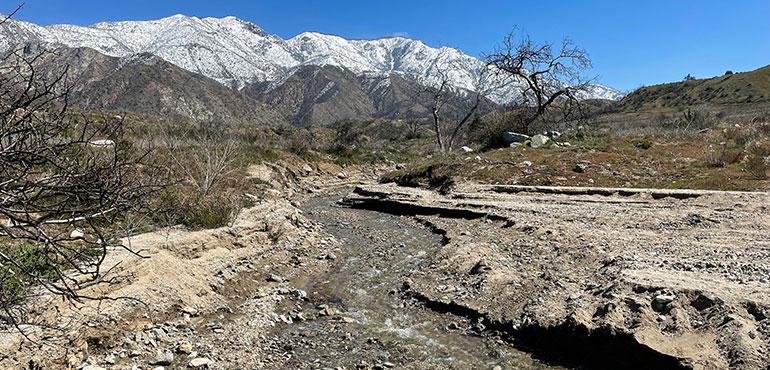
Story Image: The Recovery and Flooding Aftermath of the El Dorado Fire Area in California looking at the Plants trying to recover and the Excess Runoff causing a flood delta and erosion. (Gerald Peplow via Shutterstock)
How does burn scar flooding occur?
Believe it or not, wildfire burn scars are a serious flood risk. They can cause debris flows, which are fast-moving, deadly landslides. They are a powerful mixture of mud, boulders, entire trees, and sometimes homes or vehicles.
Debris flows occur most commonly during intense rain after wildfires. A debris flow doesn’t need a long rain or a saturated, moist slope… It can start on a dry slope after only a few minutes of intense rain.
“Intense” rain means a burst of rain at a very fast rate, about half an inch in an hour. With debris flows, the rainfall rate matters more than the total rainfall.
Why are these floods so dangerous?
These floods are fast and unpredictable. They can travel faster than you can run – and they can catch up to your car! Also, no one can say precisely and accurately where a debris flow will start or where it will go. It may begin in a stream channel, then jump out and spread through a neighborhood. A debris flow may happen where others have occurred, or in a place that has never seen one before.
Who is at risk?
Locations that are downhill and downstream from burned areas are the most susceptible to flash flooding and debris flows, especially in and near steeper terrain. The susceptibility to flash flood within the burned area is greatest during the first two years following the fire.
How should one best prepare?
The best thing you can do is have a plan to react to flash flooding and debris flows. Plan your evacuation route, and if you have time, use it. Your best option may be to climb uphill safely. Purchase a Flood Insurance Policy – it takes 30 days for it to go in effect. Stay informed before and during any potential event – know where to obtain National Weather Service outlooks, watches, and warnings.
During the flood, monitor the weather. During a storm that can cause a landslide, stay alert and awake. Most deaths from landslides occur while people are asleep. Be ready to move if a warning is issued or if you see flooding or debris flows. Because the time between rainfall and flash flooding will be short, you may not receive a warning. Call 911 if you are caught in a flash flood or debris flow.
Credit: NWS
--------------------
Story Image: The Recovery and Flooding Aftermath of the El Dorado Fire Area in California looking at the Plants trying to recover and the Excess Runoff causing a flood delta and erosion. (Gerald Peplow via Shutterstock)