


When Is the First Freeze Where You Live
One morning, your garden is doing perfectly fine. The next, the basil looks like it has formally resigned for the season.
The first freeze is one of fall’s clearest turning points. It can end the growing season for sensitive plants, send gardeners scrambling for covers and remind the rest of us that it may finally be time to bring the heavier coat upstairs.
But when does the first freeze normally happen where you live?
First Freeze Versus First Frost
Although people often use the terms interchangeably, the first frost and first freeze are not quite the same thing.
A freeze occurs when the measured air temperature reaches 32 degrees or colder.
Frost forms when water vapor freezes onto surfaces such as grass, cars and rooftops. Those surfaces can become colder than the surrounding air, which means frost may appear even when the official temperature remains slightly above freezing.
That is why you may scrape frost from your windshield before your area has recorded its first official freeze.
A hard freeze usually refers to temperatures of 28 degrees or colder. That level of cold can damage or kill a much wider range of plants.
What the First Freeze Map Shows
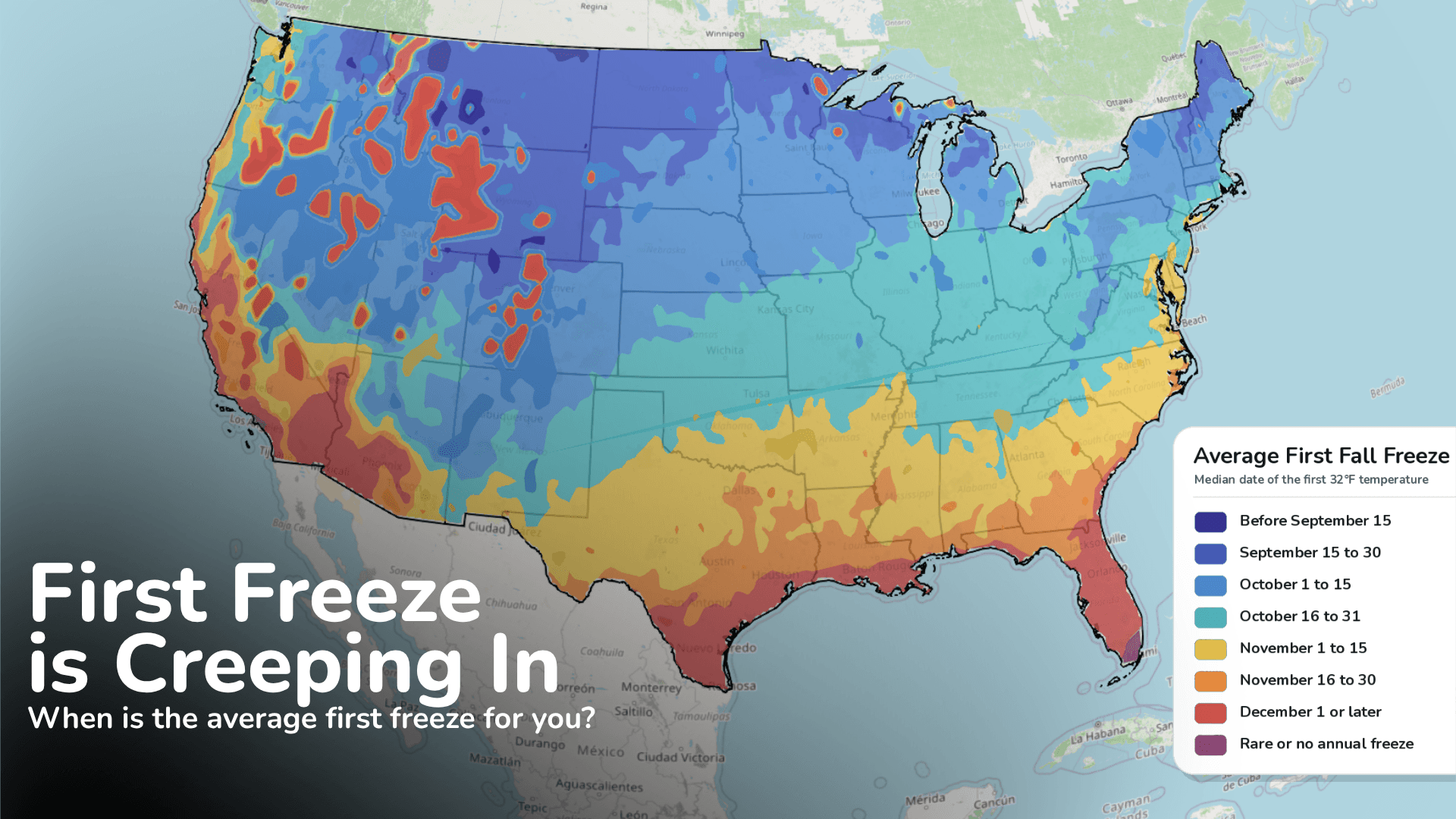
The map is based on NOAA’s 1991 to 2020 climate normals from more than 7,000 weather stations.
Each color represents the median date of the first fall temperature of 32 degrees or colder. In other words, it shows when the first freeze typically arrives, not when it is guaranteed to happen this year.
Weather has never been particularly interested in following a calendar perfectly.
When the First Freeze Normally Arrives
The Rockies and Higher Elevations
The first freeze can arrive before September 15 across some of the highest elevations of the Rockies and other colder mountain locations.
Elevation makes a major difference here. A mountain town may record freezing temperatures weeks before a nearby lower elevation community.
The Northern Plains Upper Midwest and Northern New England
Many locations in these regions typically experience their first freeze between late September and the middle of October.
Northern Minnesota, Wisconsin, Michigan and Maine are often among the first lower elevation areas to reach freezing each fall.
The Great Lakes Central Plains Ohio Valley and Interior Northeast
October is the main first freeze month across much of the country’s central and northeastern regions.
Areas close to the Great Lakes may stay warmer longer because the water releases stored heat. Rural valleys can freeze sooner when cold air settles into lower terrain overnight.
The Mid Atlantic and South
The first freeze often arrives from late October into November across the Mid Atlantic, southern Plains and much of the Southeast.
Higher elevations of Appalachia usually freeze earlier than nearby valleys and coastal areas.
The Gulf Coast and Southern Florida
Many Gulf Coast communities do not reach freezing until late November, December or later.
Parts of southern Florida and other very warm coastal locations may go through some years without recording a freeze at all.
Why Your Neighborhood May Freeze Earlier
The map provides a useful starting point, but local geography can create major differences over surprisingly short distances.
Cold air sinks and collects in valleys, while hillsides may remain several degrees warmer. Cities also tend to hold onto heat longer than surrounding rural areas. Lakes, elevation, cloud cover and wind can all influence how cold a particular night becomes.
Your actual first freeze date can also vary substantially from year to year. A climate normal tells us what usually happens. It does not replace the daily forecast.
What to Do When a Freeze Is Forecast
Bring sensitive potted plants indoors when possible. Cover outdoor plants before sunset so some of the day’s warmth remains trapped underneath, and use frost cloth, sheets or lightweight blankets instead of placing plastic directly against the leaves.
Most importantly, check your local WeatherBug forecast as the average first freeze date approaches. The map can tell you when freezing temperatures normally arrive. The forecast will tell you when they are actually coming.
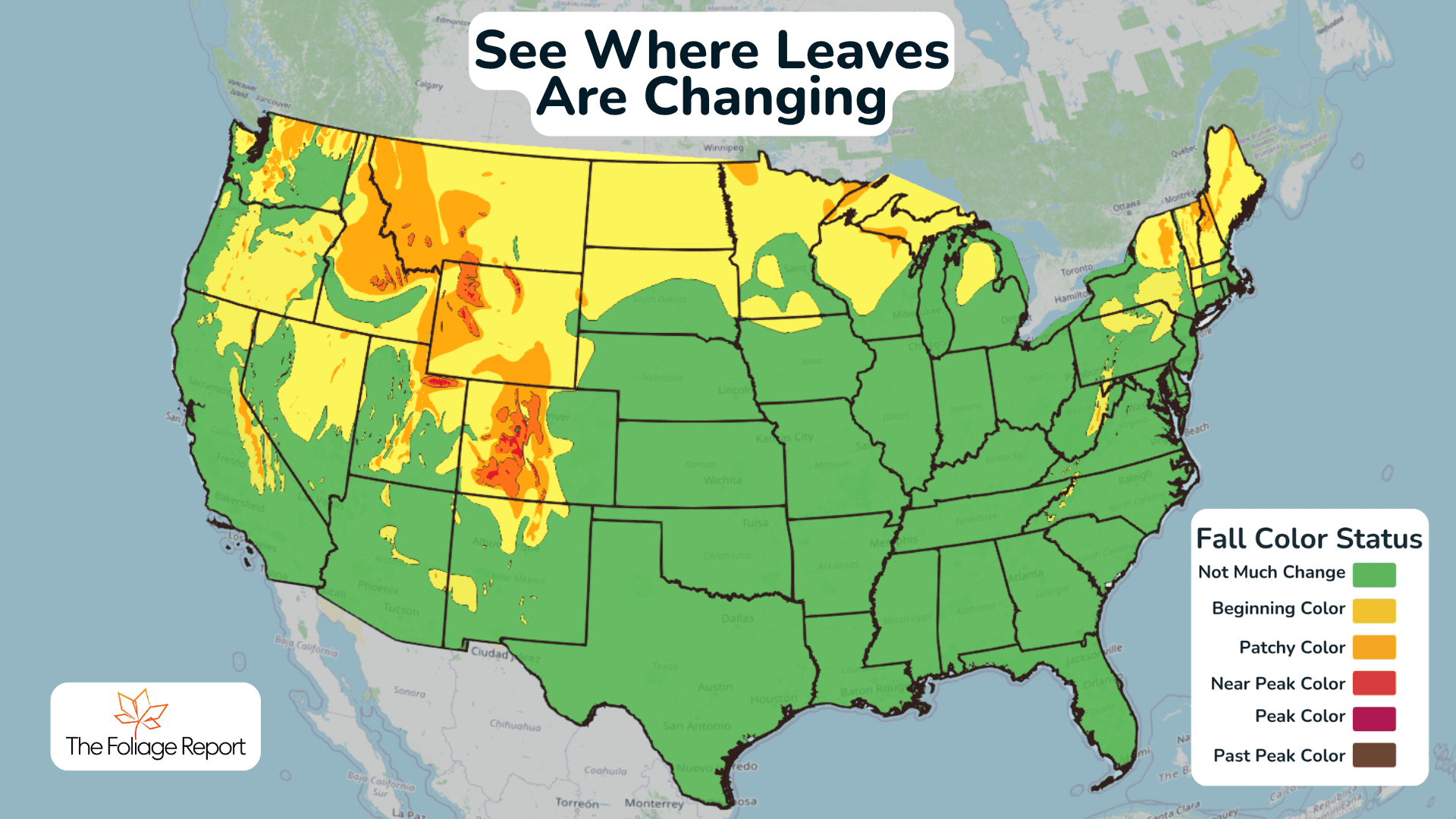
Cold nights can also influence how quickly fall colors develop. See our 2026 fall foliage forecast for more on when leaves could reach peak color across the country.