


Why Do the Days Get Shorter So Fast in September
You leave work at the same time every day, but suddenly the sun seems much closer to the horizon.
You're definitely not imagining it. September is one of the fastest periods of daylight loss in the Northern Hemisphere. Both sunrise and sunset shift, making the change feel especially dramatic even while summer heat hangs around.
Why September Changes So Quickly
Earth is tilted as it travels around the sun.
During summer in the Northern Hemisphere, our half of the planet tilts toward the sun. The sun takes a longer path across the sky, giving us long days and short nights.
As Earth moves toward fall, the Northern Hemisphere begins tilting away from the sun. Its path across our sky becomes shorter, and we lose daylight from both ends of the day.
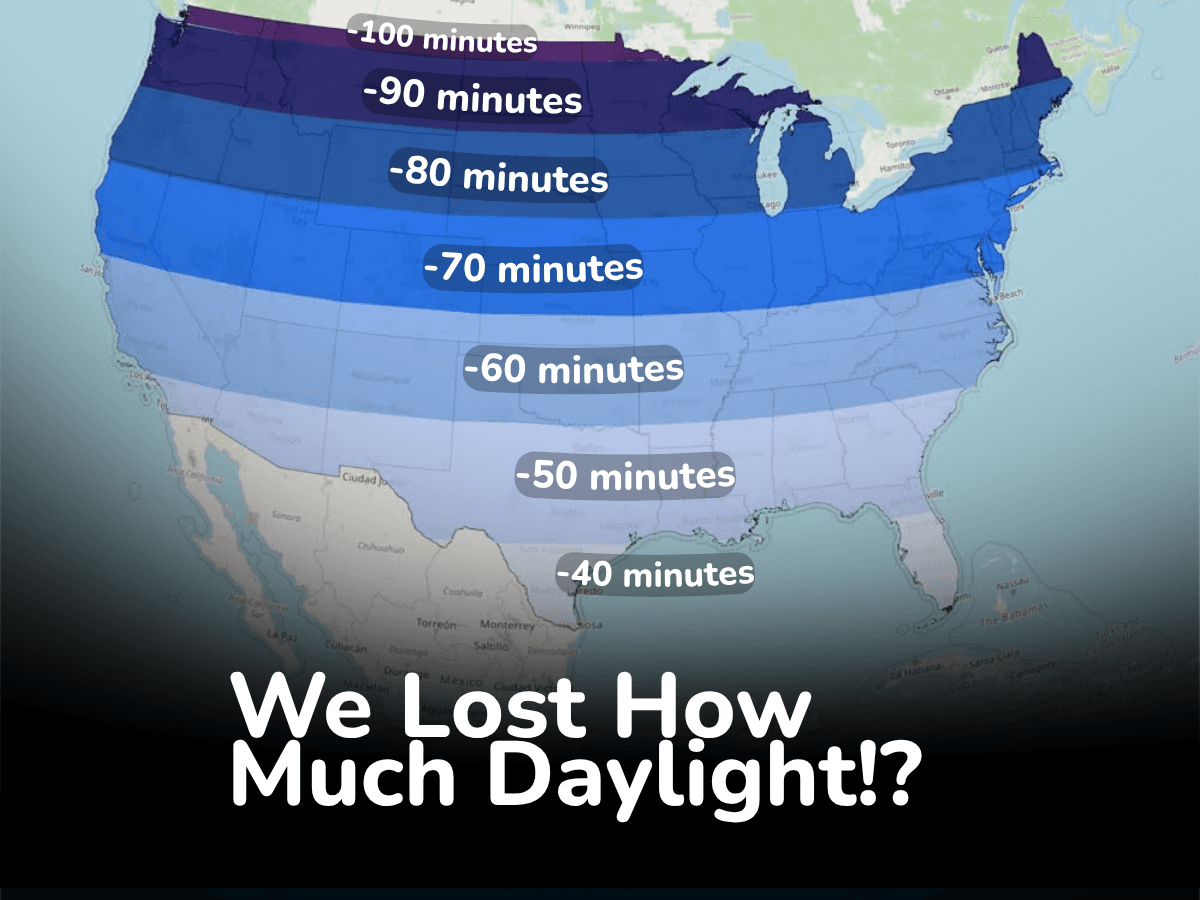
The change happens fastest around the fall equinox, especially across the northern U.S. The farther north you live, the more daylight you generally lose each day.
That is why September can feel like someone suddenly found the dimmer switch.
Are Day and Night Equal at the Equinox?
The word “equinox” roughly translates to “equal night,” but day and night are not exactly 12 hours long on the equinox.
The sun is a disk, not one tiny point in the sky. Sunrise begins when the top edge of that disk appears, while sunset is not complete until the top edge disappears.
Earth’s atmosphere also bends some sunlight, allowing us to see the sun briefly before it technically rises and after it technically sets.
Those extra minutes make the day slightly longer than the night. The date when they are closest to equal comes a few days after the fall equinox in much of the U.S.
Does Daylight Saving Time Make Us Lose Daylight?
No. Changing the clocks only changes what time the sun appears to rise and set.
We are losing daylight because of Earth’s orbit and tilt. When daylight saving time ends, sunset suddenly appears an hour earlier on the clock, but the time change did not remove an hour of sunlight.
It simply moved that daylight to a different part of the day.
Nature Notices Too
Shortening daylight is one of the signals that tells plants and animals the seasons are changing.
It helps trigger fall migration, changes in animal behavior and the process that allows leaves to reveal their red, orange and yellow colors.
Temperatures may still feel like summer, but the sunlight is already moving on. Unfortunately, no amount of denial or iced coffee appears capable of stopping it.