Back to forecast
Winds in Severe Weather
February 22, 2023 at 02:25 PM EST
By WeatherBug's Ali Husain
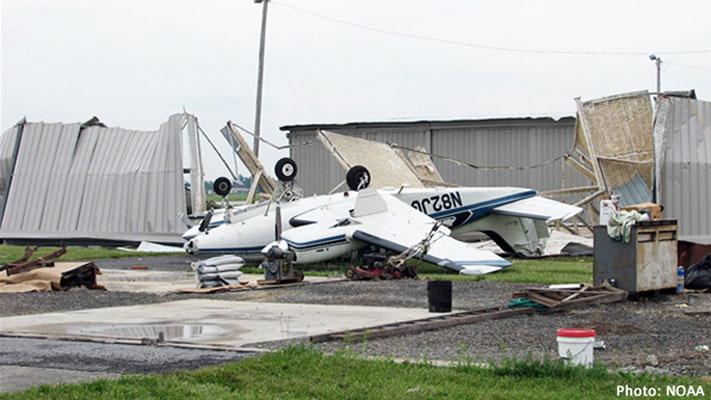
High winds associated with severe weather can pose a significant risk to your safety.
Damaging winds can occur during a severe thunderstorm, in potent weather systems and even from particularly powerful downslope winds. Winds of 40 to 50 miles per hour can cause isolated wind damage, with the scope of wind damage increasing as the speeds increase. During the strongest thunderstorms, straight-line winds can exceed 100 miles per hour, blowing all manners of objects around and posing significant risks to your safety!
Straight-line winds, if not already clear, are winds that occur in a straight line as opposed to rotating winds that occur in a tornado. While most people think of damaging winds in thunderstorms as tornadic winds, in fact, the number of damage reports from straight-line winds far exceed the number of reports from tornadoes in most years.
One of the types of straight-line winds that can cause severe damage is downburst winds. During heavy precipitation, air is dragged down by the rain, sometimes at speeds in excess of 100 miles per hour! When the air hits the ground, it spreads outwards across the land in a straight line.
Another type of straight-line wind events is a derecho. Derechos are long-lived severe, damaging thunderstorms. To be classified as a derecho, the swath of wind damage has to extend for more than 240 miles, with wind gusts of at least 57 miles per hour or greater along most of the storm’s path.
Notable derechos from history include the Super Derecho of 2009, the Mid-South Derecho of 2003, and the “People-Chaser” Derecho of 2001. Tens of thousands of trees were struck down as a result of these storms, with multiple injuries and deaths as well.
Strong winds have the potential to knock over semi-trucks, trees and powerlines. When damaging winds occur and you are indoors, stay away from windows. If you are caught outside without a vehicle or sufficient cover, avoid trees, power lines and other objects that can be blown around. If driving, slow down and keep two hands on the wheel to maintain control of your car. Stay away from semi-trucks and trailers, as a strong gust could topple it over onto your vehicle.
Credit: NWS
-----
Story Image via NOAA
Damaging winds can occur during a severe thunderstorm, in potent weather systems and even from particularly powerful downslope winds. Winds of 40 to 50 miles per hour can cause isolated wind damage, with the scope of wind damage increasing as the speeds increase. During the strongest thunderstorms, straight-line winds can exceed 100 miles per hour, blowing all manners of objects around and posing significant risks to your safety!
Straight-line winds, if not already clear, are winds that occur in a straight line as opposed to rotating winds that occur in a tornado. While most people think of damaging winds in thunderstorms as tornadic winds, in fact, the number of damage reports from straight-line winds far exceed the number of reports from tornadoes in most years.
One of the types of straight-line winds that can cause severe damage is downburst winds. During heavy precipitation, air is dragged down by the rain, sometimes at speeds in excess of 100 miles per hour! When the air hits the ground, it spreads outwards across the land in a straight line.
Another type of straight-line wind events is a derecho. Derechos are long-lived severe, damaging thunderstorms. To be classified as a derecho, the swath of wind damage has to extend for more than 240 miles, with wind gusts of at least 57 miles per hour or greater along most of the storm’s path.
Notable derechos from history include the Super Derecho of 2009, the Mid-South Derecho of 2003, and the “People-Chaser” Derecho of 2001. Tens of thousands of trees were struck down as a result of these storms, with multiple injuries and deaths as well.
Strong winds have the potential to knock over semi-trucks, trees and powerlines. When damaging winds occur and you are indoors, stay away from windows. If you are caught outside without a vehicle or sufficient cover, avoid trees, power lines and other objects that can be blown around. If driving, slow down and keep two hands on the wheel to maintain control of your car. Stay away from semi-trucks and trailers, as a strong gust could topple it over onto your vehicle.
Credit: NWS
-----
Story Image via NOAA