Back to forecast
2023 Year in Review: Atlantic Hurricanes
December 21, 2023 at 07:36 AM EST
By WeatherBug Meteorologist, Andrew Rosenthal
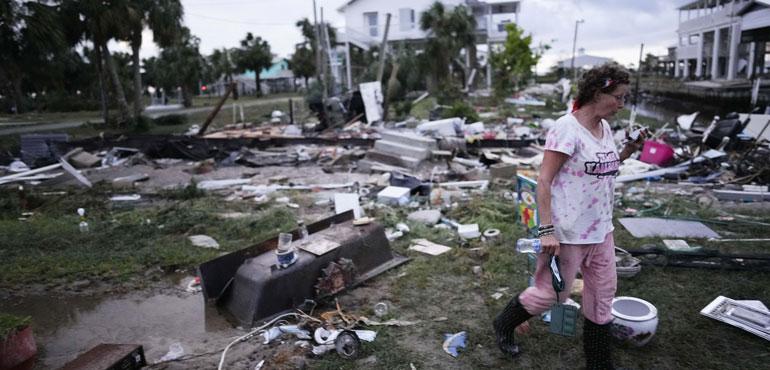
This hurricane season had it all – a preseason storm, a major US landfall and a highly active season. Let’s look at some of the highlights of 2023 in the Atlantic hurricane basin:
Out of this torrent of tropical activity came a few notable storms. Hurricane Franklin formed in the Caribbean Sea on August 20, quickly veering northward across the Dominican Republic and Haiti as a tropical storm. Once in the Atlantic, Franklin intensified into a hurricane on the 25th and attained major hurricane status on August 28 before peaking at 150 mph. Franklin would troll the open Atlantic for a few more days before quietly dissipating.
The season’s “intensity champion” had shown itself of this period as well. Hurricane Lee came to attention on September 5, quickly reaching hurricane intensity the next day. By September 8, Lee reached its peak intensity at a whopping 165 mph. However, Lee would retreat as quickly as it strengthened, bouncing between Category 2 and Category 3 over the next few days. After skirting Bermuda on September 12, Lee would make a beeline for the western Canadian Maritimes, making landfall in southern New Brunswick on September 16. Three deaths were blamed on Lee, two related to strong waves and one person had a tree fall on their vehicle.
The season’s final storm was Hurricane Tammy, which made landfall on Barbuda before slowly moving into the open Atlantic on October 29th. Two additional systems in late October and November vied to become “Vince” with neither being successful, although the latter, Post-Tropical Cyclone #22 caused significant flooding in the Dominican Republic.
In all, 21 named storms formed this past year, the fourth-most in recorded history for the Atlantic basin. Seven of these storms reached hurricane intensity. This was above the climatological average, which is 14.4 named storms with 7 hurricanes.
- A Storm with No Name
- Fireworks in the Tropics
Out of this torrent of tropical activity came a few notable storms. Hurricane Franklin formed in the Caribbean Sea on August 20, quickly veering northward across the Dominican Republic and Haiti as a tropical storm. Once in the Atlantic, Franklin intensified into a hurricane on the 25th and attained major hurricane status on August 28 before peaking at 150 mph. Franklin would troll the open Atlantic for a few more days before quietly dissipating.
The season’s “intensity champion” had shown itself of this period as well. Hurricane Lee came to attention on September 5, quickly reaching hurricane intensity the next day. By September 8, Lee reached its peak intensity at a whopping 165 mph. However, Lee would retreat as quickly as it strengthened, bouncing between Category 2 and Category 3 over the next few days. After skirting Bermuda on September 12, Lee would make a beeline for the western Canadian Maritimes, making landfall in southern New Brunswick on September 16. Three deaths were blamed on Lee, two related to strong waves and one person had a tree fall on their vehicle.
- Autumn Remains Busy
The season’s final storm was Hurricane Tammy, which made landfall on Barbuda before slowly moving into the open Atlantic on October 29th. Two additional systems in late October and November vied to become “Vince” with neither being successful, although the latter, Post-Tropical Cyclone #22 caused significant flooding in the Dominican Republic.
In all, 21 named storms formed this past year, the fourth-most in recorded history for the Atlantic basin. Seven of these storms reached hurricane intensity. This was above the climatological average, which is 14.4 named storms with 7 hurricanes.