Severe Storm Risk - Frisco, TX
Severe Storm Risk
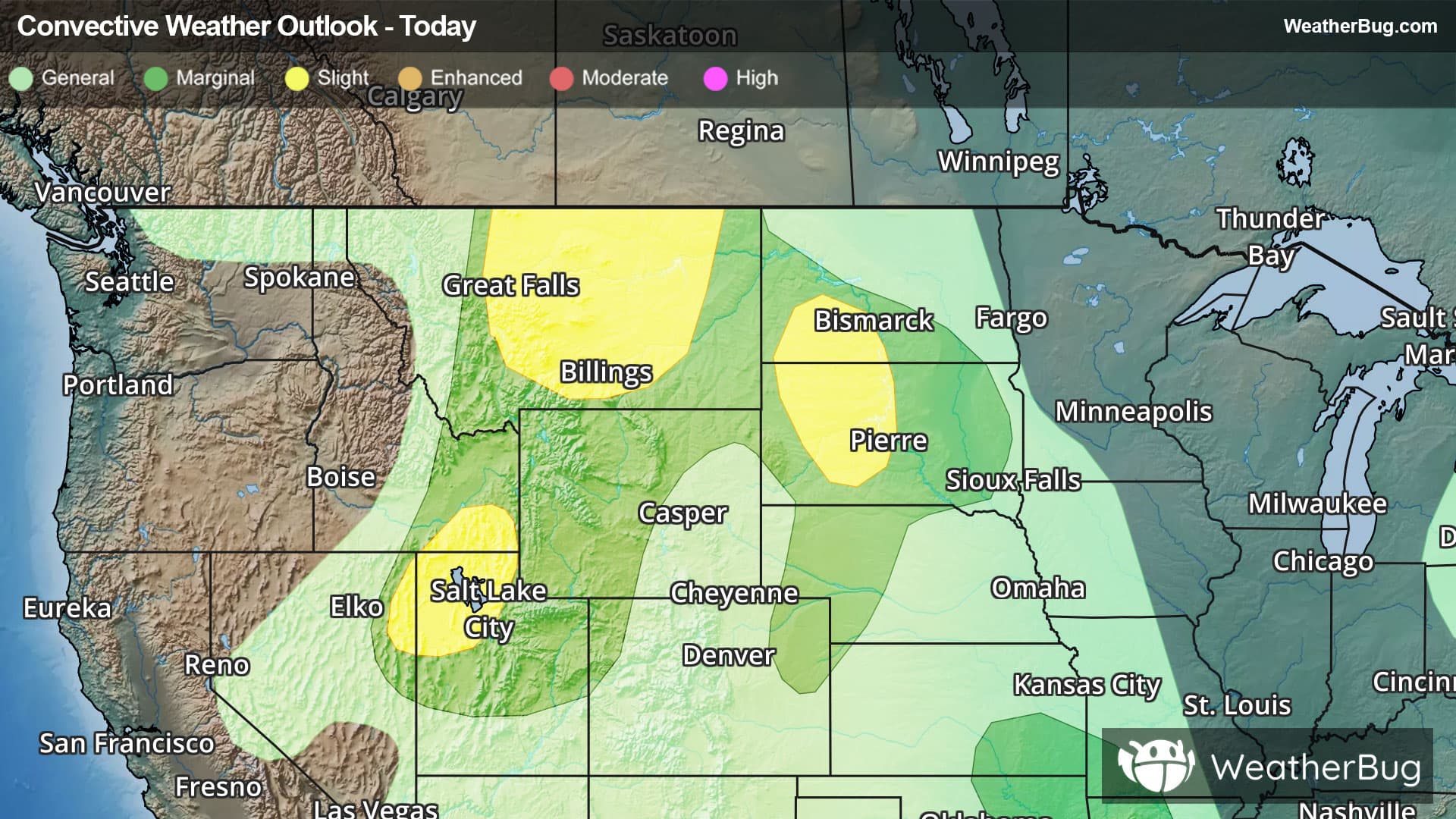
-There is a Slight Severe Storm Risk for your location. Continue reading for today's outlook from the National Weather Service's Storm Prediction Center. -------------------- National Severe Storm Outlook THERE IS AN ENHANCED RISK OF SEVERE THUNDERSTORMS ACROSS THE CENTRAL/SOUTHERN PLAINS AND LOWER MISSOURI VALLEY SUMMARY Scattered severe thunderstorms are expected from mid-afternoon through tonight across parts of the southern/central Plains to the Ozarks and Midwest. The greatest potential for a few strong tornadoes and very large hail should exist across eastern portions of Oklahoma/Kansas/Nebraska into western Arkansas/Missouri and southern Iowa. Central Plains and Midwest/Great Lakes Low-level moisture will continue to stream northward today ahead of the cold front across east-central Nebraska and western Kansas, with upper 50s to low 60s F surface dewpoints common by mid afternoon. Cold temperatures aloft and steepened mid-level lapse rates will support the development of at least 1000-1500 J/kg of MLCAPE with daytime heating. More instability may exist farther south into Kansas where greater low-level moisture will be in place, although such details are complicated by existing convection/cloud cover across eastern Kansas into northwest Missouri at mid-morning. Current expectations are for scattered robust thunderstorms to develop around mid afternoon (20-22Z) across southeast Nebraska/northern Kansas and vicinity, in close proximity to the surface low and ejecting shortwave trough. Strong deep-layer shear associated with a 50-70+ kt mid-level jet will easily support organized updrafts including multiple supercells initially. This activity will pose a risk for large to very large hail, but fairly quick upscale growth into one or more bowing clusters with a wind damage threat seems probable along/ahead of the cold front as convection spreads into Iowa/Missouri this evening. Some risk for at least isolated severe/damaging winds may persist late tonight into early Saturday morning across Wisconsin/Illinois and Lower Michigan if these clusters can maintain intensity, although instability is forecast to become more limited with eastward extent across these areas. A few tornadoes may occur with sustained supercells or embedded QLCS circulations across the central Plains/Midwest along/south of the warm front given favorable low-level shear and enlarged/curved hodographs. Pending development into the warm sector, a strong tornado could occur with any supercells this evening as low-level shear strengthens in tandem with a south-southwesterly low-level jet. Southern Plains and Ozarks Thunderstorms have increased and locally intensified this morning across north-central Oklahoma into southeast Kansas, complicating the later-day scenario somewhat with poorly resolved short-term/convective details in guidance. Convective initiation along the length of the dryline in Oklahoma/Texas still remains a bit uncertain this afternoon/evening, as low-level convergence will be weak and stronger large-scale ascent associated with the ejecting shortwave trough will remain mostly displaced to the north of the region. Even so, especially to the south of aforementioned early day storms, at least isolated deep convective development is plausible into mid/afternoon in areas near the dryline, but perhaps more likely to its east potentially related to differential heating/somewhat richer low-level moisture. Where cells can sustain and mature, they would likely become severe and pose a threat for very large hail given the presence of steep mid-level lapse rates noted on the 12Z OUN observed sounding, along with around 35-45 kt of deep-layer shear aiding updraft organization. The tornado threat would also increase this evening with any persistent supercells as low-level shear gradually strengthens. Additional and more probable robust thunderstorm development remains apparent later this evening/tonight as the cold front accelerates south-southeastward. Both large hail and damaging winds may occur with this overnight activity through the end of the period.