Severe Storm Risk - Medicine Park, OK
Severe Storm Risk
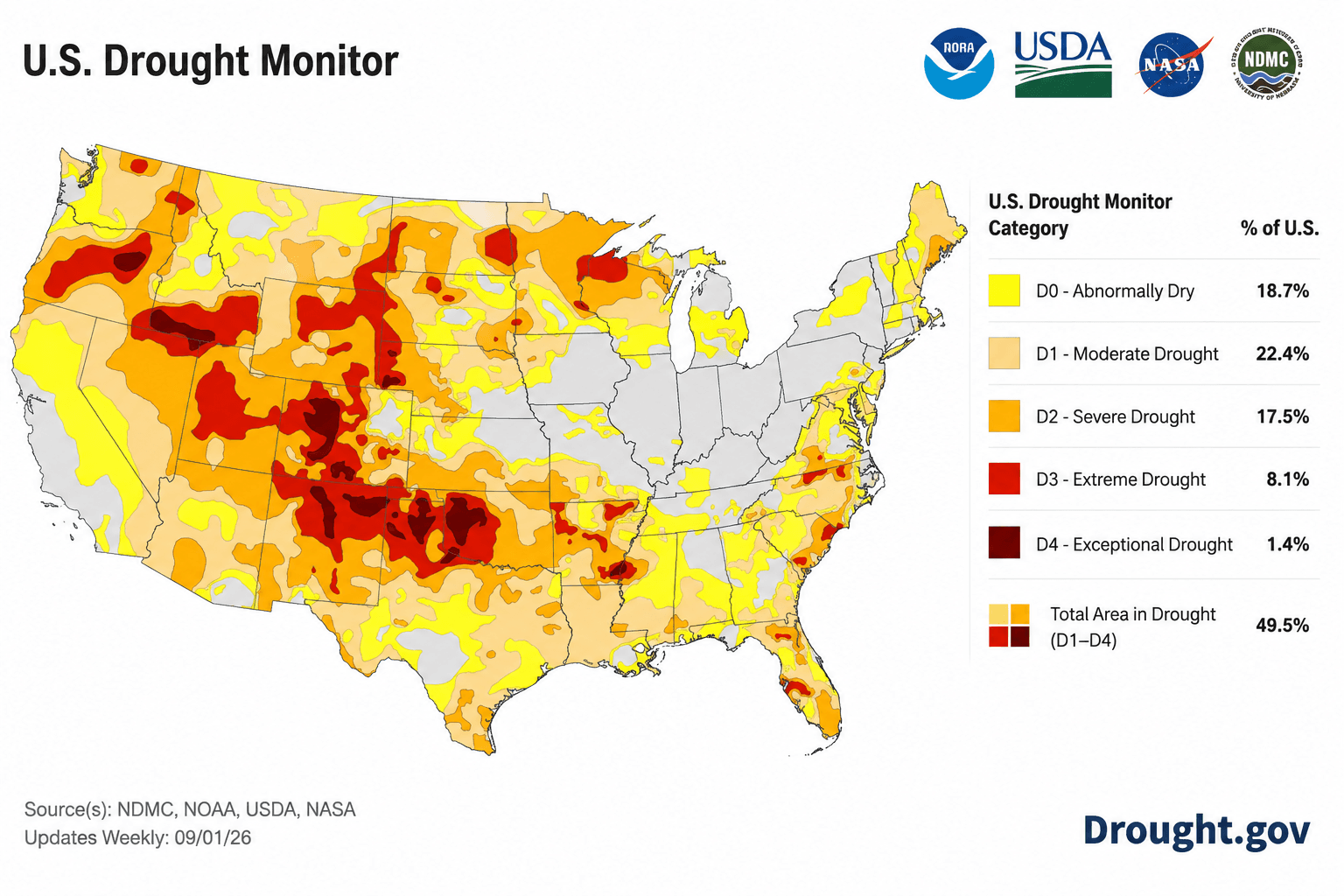
-There is a Enhanced Severe Storm Risk for your location. Continue reading for today's outlook from the National Weather Service's Storm Prediction Center. -------------------- National Severe Storm Outlook THERE IS AN ENHANCED RISK OF SEVERE THUNDERSTORMS ACROSS NORTHWEST TEXAS...WESTERN/CENTRAL OKLAHOMA...AND SOUTH-CENTRAL KANSAS THERE IS A SLIGHT RISK OF SEVERE THUNDERSTORMS PORTIONS OF THE MIDDLE OHIO VALLEY AND MID-ATLANTIC SUMMARY Severe thunderstorms with damaging wind gusts, large hail and a few tornadoes are likely across the southern and central Plains this afternoon and evening. Strong to severe storms are also possible from parts of the Ohio Valley, central Appalachians and Mid-Atlantic. Synopsis Early morning radar and satellite imagery shows a cluster of thunderstorms moving through central MO, just to the north and east of a surface low over far southwest MO. Surface analysis shows a cold front extending from this low northeastward across the OH Valley and Northeast to another low over NH. A stationary boundary also extends southwestward from the southwest MO low across central and southwest OK, and northwest TX to another low over the Permian Basin. Thunderstorms are expected to focus on each of these boundaries today, particularly from the middle OH Valley into the Mid-Atlantic and over large portion of the central/southern Plains and Mid MS Valley. Severe thunderstorms are possible across these regions as well, with the highest severe thunderstorm coverage expected from northwest TX through western OK into south-central KS. Central/Southern Plains Low-level moisture advection is anticipated across the southern Plains today as the shortwave trough currently moving through the southern Great Basin continues quickly eastward, reaching the central Plains by early tomorrow. General expectation is for the stationary boundary mentioned in the synopsis to push north as warm front and for mid 60s dewpoints to cover much of OK by the late afternoon. This increasing low-level moisture beneath steep lapse rates (over 7 to 7.5 deg C per 12Z soundings and recent mesoanalysis) will support moderate to strong buoyancy from southwest TX into much of central and western OK. Height falls attendant to the approaching shortwave will begin spreading over this destabilizing airmass by the early afternoon, combining with low-level convergence along the front and dryline to support convective initiation between 21Z and 00Z. Given the expectation that convective inhibition will be limited, if present at all, widespread development is anticipated from western OK into southwest TX. Kinematic profiles support supercells, but the persistent ascent and extensive nature of the convective initiation suggest that a discrete convective mode will be difficult to maintain and a quick transition to a convective line appears probable. As such, strong gusts appear to be the primary severe risk. Even so, steep lapse rates should still support large hail, even within the convective line. Very large hail (i.e. 2"+ in diameter) is possible if a discrete mode can be maintained. A discrete mode could also increase the tornado potential, but higher probabilities (i.e. 10%) were not introduced given the likely storm interactions and expected quick convective evolution into a line. Some tornado risk will still be present within the line, particularly during the 00-04Z period as low-level hodographs lengthen amid a strengthening low-level jet. This strengthening low-level jet is also expected to support a secondary area of thunderstorm development from northeast OK/southeast KS into central/southern MO during the late afternoon. Large hail (with some isolated instances of hail around 2") is the primary risk with these storms, most likely early in their convective cycles. Ohio Valley into Mid-Atlantic Ongoing cluster over MO will gradually move eastward with time, with the airmass south of the front mentioned in the synopsis destabilizing throughout the day. This destabilization coupled with moderate westerly flow aloft could lead to a reintensification of this cluster and/or new development ahead of it. Vertical shear will be modest but still sufficient for bowing line segments capable of damaging gusts. Greatest storm coverage (and attendant greatest severe potential) is expected over the middle Ohio Valley and the Mid-Atlantic States.