Severe Storm Risk - Mouth of Wilson, VA
Severe Storm Risk
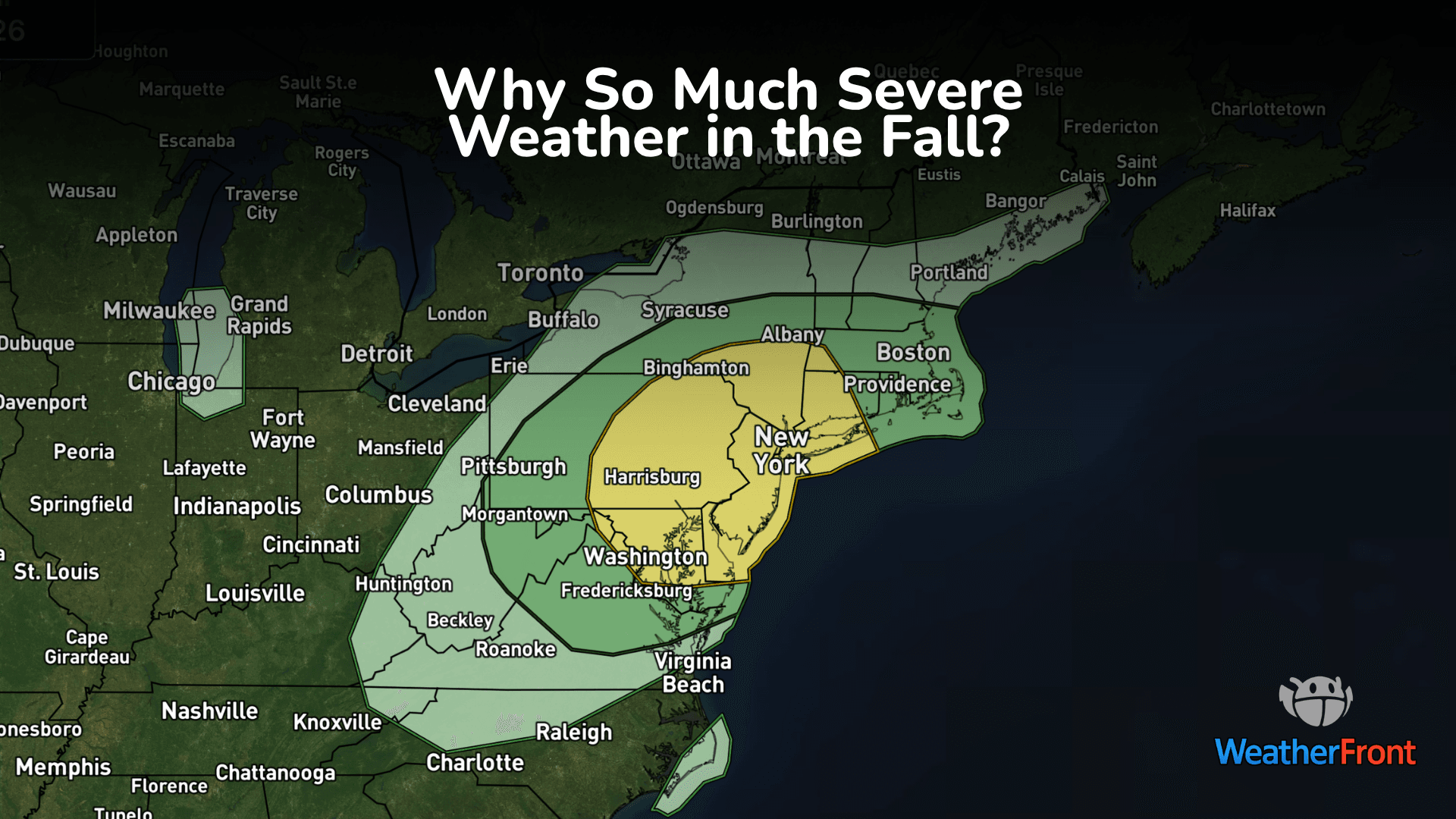
-There is a Marginal Severe Storm Risk for your location. Continue reading for today's outlook from the National Weather Service's Storm Prediction Center. -------------------- National Severe Storm Outlook THERE IS A MODERATE RISK OF SEVERE THUNDERSTORMS THIS AFTERNOON ACROSS PARTS OF CENTRAL MARYLAND...MUCH OF CENTRAL AND EASTERN VIRGINIA...CENTRAL NORTH CAROLINA AND ADJACENT PORTIONS OF SOUTH CAROLINA SUMMARY Fast moving thunderstorms may become widespread and accompanied by the risk for damaging wind gusts and a few tornadoes across the Mid Atlantic today. There is potential that a couple of storms could become capable of producing strong and long track tornadoes. Discussion Models indicate that large-scale mid-level ridging will maintain amplitude across the Pacific coast through the Canadian Prairies and U.S. Rockies into early Tuesday and beyond. At the same time, it appears that downstream ridging will undergo further amplification just east of the Atlantic Seaboard, with only very slow eastward progression of large-scale troughing in between, across the Mississippi Valley into the Atlantic Seaboard. It does appear that one significant short wave perturbation will gradually pivot through the base of the troughing, toward the Cumberland Plateau during the day today, before rapidly accelerating northward near the Appalachians toward southwestern Quebec this evening through the overnight hours. Models suggest that this will eventually provide support for a rapidly deepening secondary surface cyclone across Quebec, downstream of an occluding and weakening cyclone across the lower Great Lakes vicinity. Surface troughing ahead of the trailing cold front is also forecast to undergo notable deepening to the east of the Allegheny Front and Blue Ridge today, and it appears that a rather sharp surface pressure fall/rise couplet will develop and overspread the northern Mid Atlantic coast late this afternoon and evening with the passage of the trough and trailing cold front. The cold front may clear all the Atlantic Seaboard, but perhaps portions of southern Florida and the Keys, by 12Z Tuesday. Atlantic Seaboard Low-level moisture return is underway across the southern into middle Atlantic Seaboard. By early this afternoon, it appears that 60+ F surface dew points will advect as far north as the higher terrain of central through northeastern Pennsylvania, with dew points perhaps as high as the lower/mid 60s F across eastern North Carolina and Virginia. In advance of a pre-frontal squall line, which may be ongoing and beginning to spread to the lee of the southern Appalachians through the eastern Gulf Coast states at the outset of the period, it appears that destabilization and large-scale ascent may support scattered new thunderstorm development fairly early in the day. The extent to which this may impact further destabilization through late afternoon remains unclear. Destabilization may also be impacted by relatively warm air/weak lapse rates in mid/upper-levels, as models suggest that cold air aloft will tend to lag to the west of the surface cold front. Even so, forecast soundings suggest that, with breaks in the overcast, at least weak boundary-layer CAPE on the order of 500-1000 J/kg is possible in the warm sector across the Mid Atlantic. In the presence of very strong southwesterly deep-layer mean flow on the order of 50-60+ kt and strong to extreme low-level shear, including at least modest clockwise curvature, the environment appears potentially conducive to the evolution fast moving supercells with potential to produce strong tornadoes. Barring much interference from other storms, which remains uncertain at this time, at least a couple of these could become long track, given the storm motions. Otherwise, trailing this activity, the lee surface trough/cold front might become a focus for a developing line of storms capable of promoting the downward transfer of momentum with potential to produce widespread damaging wind gusts. Farther south, it appears that the initial squall line may be maintained or re-intensify, with a continuing risk for strong to severe wind gusts and potential for tornadoes into and across the southern Atlantic coast.