


Dangerous Heat Pushes West, Remains in South
Dangerous heat rages on for the South with those in the West seeing concerning temperatures as well.
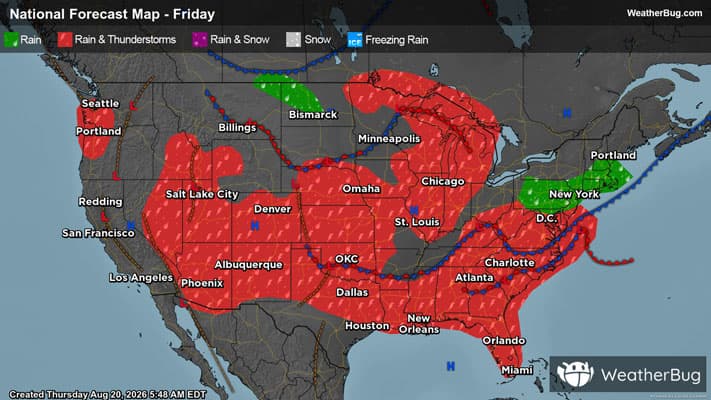
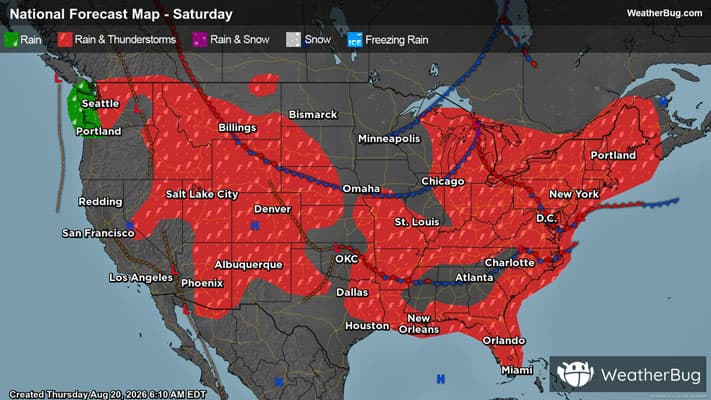
A large area of high pressure aloft remains stationed over the south-central U.S. This system is expected to continue to shift westward. Even with a westward shift, the Deep South will remain excessively hot. Also with this westward shift means residents in the Pacific Northwest down into the Desert Southwest will see hot temperatures.
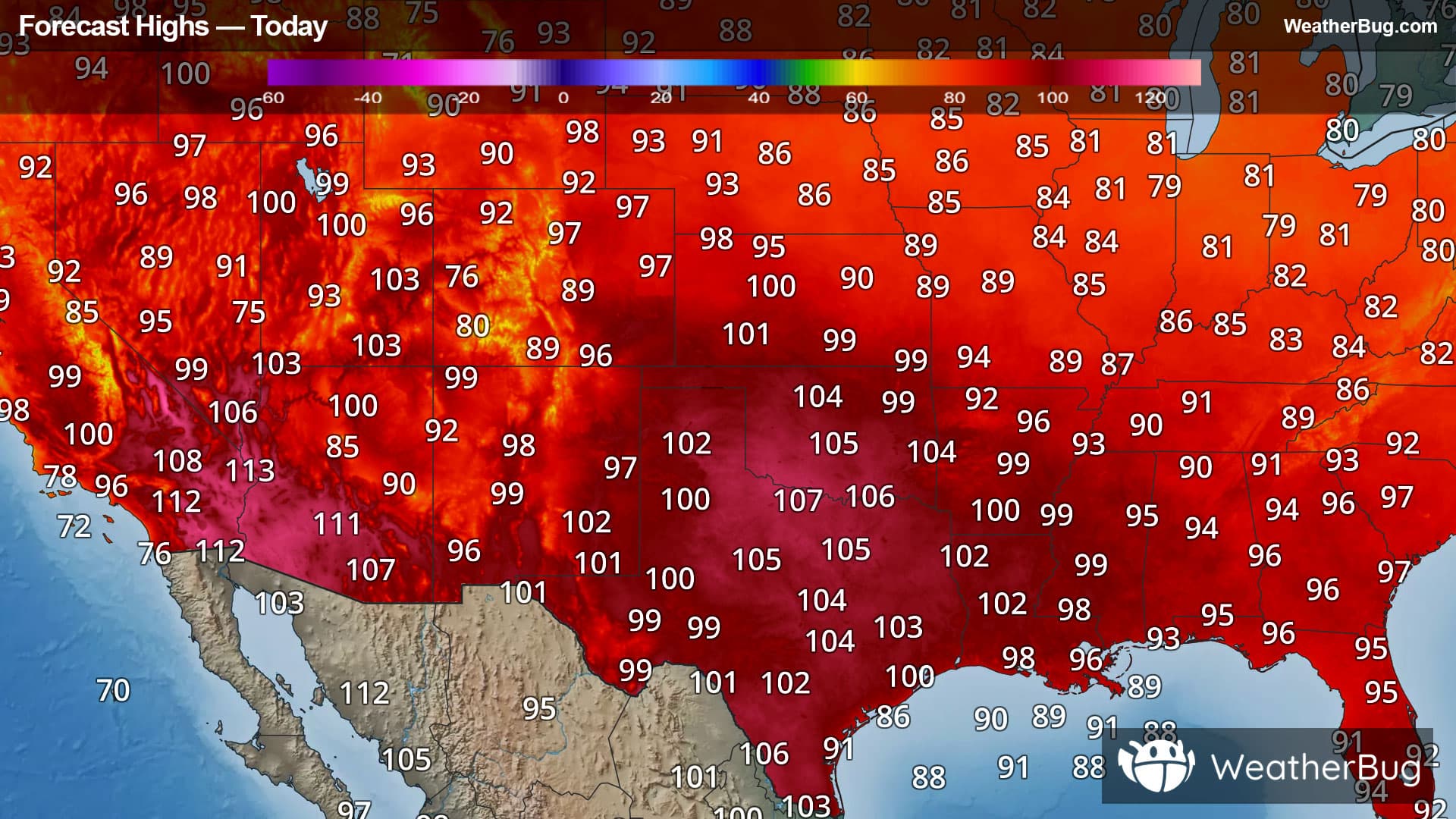
Highs across the south-central U.S. will peak between 100 and 110 degrees. Areas included are Texas, Oklahoma, northern Louisiana, western and southern Arkansas and southwestern Mississippi. For Alabama, the rest of Arkansas and the rest of Mississippi, highs will be in the upper 80s to mid 90s while the rest of Louisiana will be in the mid and upper 90s. With ample moisture as well, heat indices will peak between 105 and 115 degrees for Texas, Oklahoma, northern Louisiana, western and southern Arkansas and southwestern Mississippi. The rest of the Deep South will have heat indices from the mid 90s to up to 105 degrees. Overnight lows will stay in the low 80s for north-central Texas while the rest of the Deep South and south-central U.S. will have morning lows range from the low 70s to the upper 70s.
The Desert Southwest, including southern Nevada, southeastern California and southwestern Arizona, highs will peak between 105 and 115 degrees! Overnight lows here will still be hot, ranging from the mid 80s to the low 90s. In northwestern Utah, temperatures will climb to the mid and upper 90s while eastern Washington, north-central and eastern Oregon and southern Idaho will see highs from the mid 90s to just hitting 105 degrees. Overnight lows will drop to the low to mid 70s.
With little overnight cooling, energy grids and connected air conditioning across these areas will see high stress and a heavy workload, which could cause blackouts where the grid is not adequately prepared. Vulnerable populations, including children and the elderly, are at the highest risk for heat-related illnesses where high temperatures persist overnight.
Heat Advisories have been posted for central and western Washington, north-central and northeastern Oregon, southern Idaho, northwestern Utah, northern, central, eastern and southern Texas, most of Oklahoma, southern and central Arkansas, northwestern Louisiana, west-central and eastern Mississippi, southern and west-central Alabama, northern Florida and far southwestern Georgia. Extreme Heat Warnings have been issued for southeastern California, far southern Nevada, western and southern Arizona, south-central Oklahoma, north-central and far eastern Texas, eastern and southern Louisiana and southwestern Mississippi.
In areas experiencing extremely hot temperatures, it is exceptionally important to stay hydrated and cool. Avoid exposure to the sun from late morning into the early evening. Make sure to take frequent breaks in the air conditioning or shade, eat and dress lightly, and to use sun protection if outdoors. Always check the back seat before exiting your car, as a vehicle can reach 30 to 40 degrees higher than outdoor temperatures. Never leave kids or pets unattended and remember to “Look Before You Lock!”