


Peak, Near Peak or Past Peak: What Fall Color Terms Actually Mean
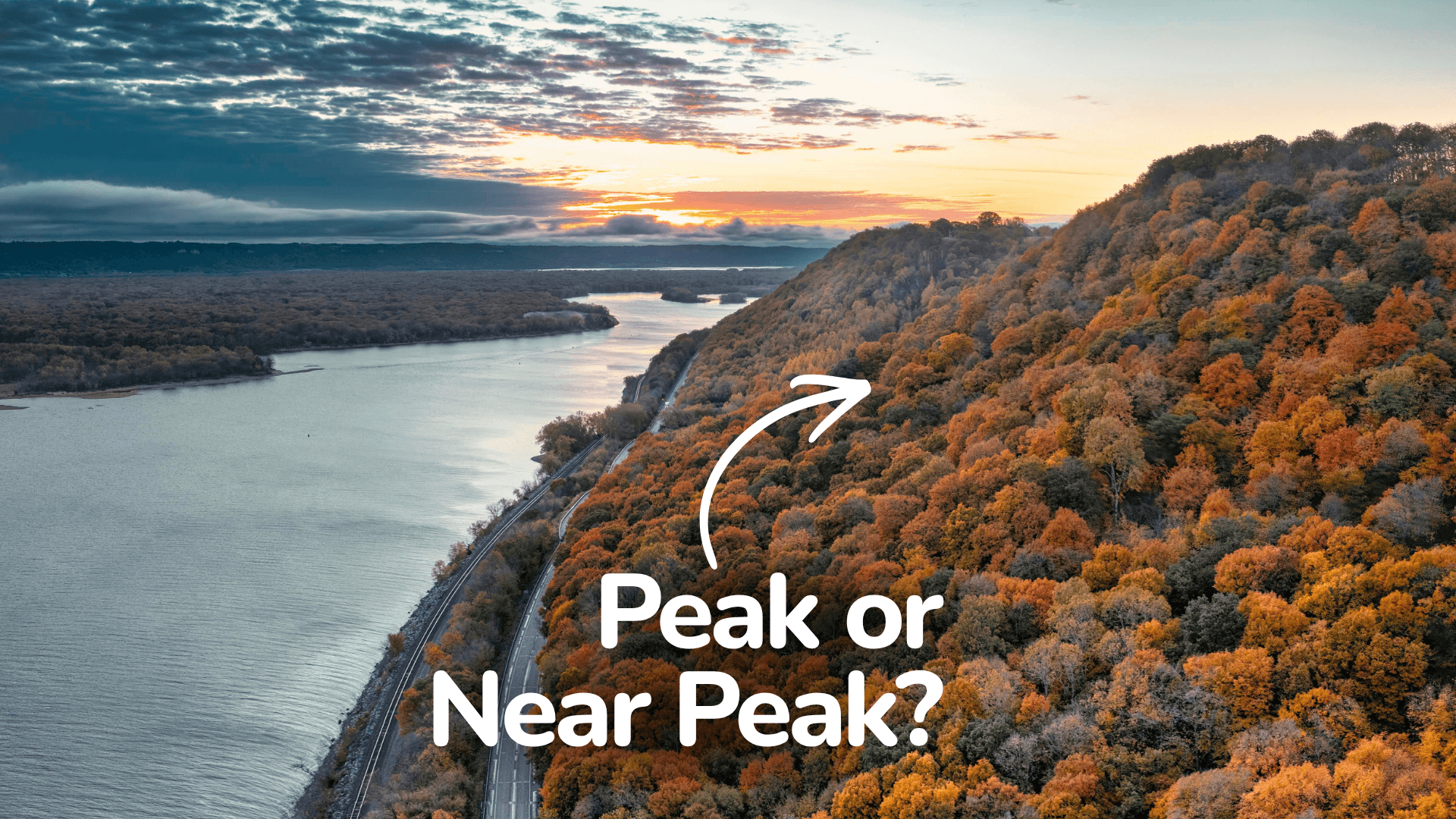
Leaves are officially changing, and whether you're looking for the perfect time to take a beautiful fall hike, grab some seasonal family photos, or plan your annual leaf-peeping trip, there are a few things you need to know.
Fall color maps throw around "peak," "near peak" and "past peak" like you already know what they mean. Here's the breakdown.
The Quick Answer
- Near peak: color is building fast, but most of the canopy hasn't turned yet.
- Peak: the most widespread, vibrant color of the season, all at once.
- Past peak: peak has already happened. Leaves are browning and dropping.
Peak itself is short: usually a few days, rarely more than a week, before leaves begin to drop.
Near Peak: 50%-75% color
A solid share of trees have changed, color is spreading daily, and the display is clearly building — but you're not at the best of it yet. Different species and sun exposure mean trees around you are changing at different rates, so "near peak" can look wildly different hillside to hillside.
Peak: 75%-100% color
The main event: highest color coverage and intensity at once. Three things to know:
- Short: days, not weeks, before it starts fading.
- Local: a regional "peak" label doesn't mean every tree. A valley can be green while a nearby ridge is fully turned.
- Moving: color travels north to south and high to low elevation as the season progresses.
Track it in real time with our weekly fall color report, updated every Tuesday.
Past Peak: 50% of leaves have dropped
The best display has come and gone. Color is fading toward brown and real leaf drop has started. Not bare, but just past its best. If your trip is about photos or scenic drives, this is the stage to plan around, not toward.
Why Timing Varies by Location
- Latitude/elevation: colder areas change first. Alaska and high Rockies terrain is often past peak while much of the South is still green.
- Daylight: shortening days drive the chlorophyll breakdown that reveals color in the first place.
- Cold nights: a stretch of cool, clear nights speeds things up; warmth can stall it. A hard freeze can fast-forward the whole thing. See when the first freeze typically arrives where you live.
- Bigger weather patterns: this year's strengthening El Niño adds another layer of variability on top of the usual timeline.
- Drought: stressed trees can brown and drop early, sometimes skipping a vibrant peak.
How to Check Your Area Right Now
- Live fall color report — better than a static date
- Season-ahead forecast if you're planning weeks out
- Peak timing at 12 top destinations to compare regions
- Watch your elevation, a mountain pass can be past peak while the valley below is still near peak
FAQ
Is near peak worth visiting?
Yes, especially with mixed tree species. A few extra days typically gets you closer to full intensity.
How long does peak last?
Usually days, up to about a week. Calm, dry weather stretches it out; wind and rain cut it short.
Does past peak mean no leaves left?
No, just that the best, widest color has faded and drop has started. Many trees still have leaves.
Why is one town at peak while a nearby town is still near peak?
Elevation and microclimates. Higher, colder spots change first.